
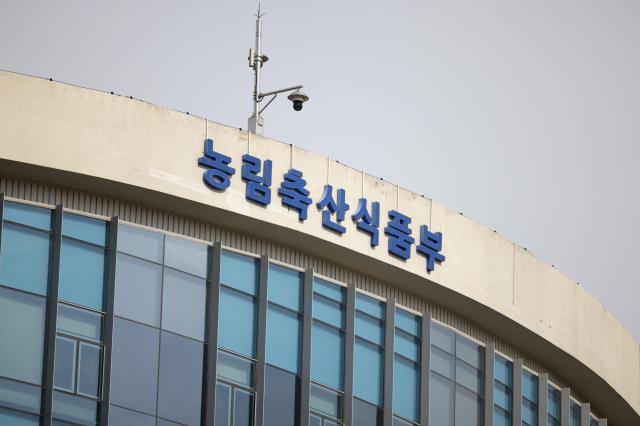
Ministry of Agriculture, Food and Rural Affairs in Sejong City. Photo by Yu Dae-gil.
The South Korean government plans to promote K-Food by featuring information related to the K-Gourmet Belt on the Ministry of Culture, Sports and Tourism's tourism promotion platform. Additionally, it will create 'K-Food Premium Gift Sets' that combine traditional snacks like Hangwa and Jeonggwa with high-end traditional containers such as Najeonchilgi and Baekja for distribution at international conferences.
On June 17, the Ministry of Agriculture, Food and Rural Affairs held the second meeting of the Public-Private Joint K-Food Export Planning Group at the Small and Medium Business Administration's conference room. This meeting aimed to achieve the K-Food export target of $16 billion for the year. Last year, K-Food exports reached a record high of $13.6 billion, raising expectations for further growth.
During the meeting, participants discussed expanding collaboration on K-Initiatives that link K-Food with gourmet tourism, culinary diplomacy, and content integration. To promote gourmet tourism, they suggested posting information about the K-Chicken Belt and visiting breweries on the Ministry's tourism platform.
For culinary diplomacy, the plan includes distributing 'K-Food Premium Gift Sets' containing traditional snacks and beverages in high-quality traditional containers at international conferences and events for foreign diplomats in South Korea. Additionally, strategies for expanding online marketing through initiatives like the 'K-Food Challenge' and global OTT platforms were also discussed.
The meeting also addressed the five key tasks outlined in the 'Global K-Food Expansion Strategy' developed by various ministries last year. These tasks include fostering strategic products by region, resolving one-stop challenges, promoting K-Initiatives, integrating digital technology, and exploring new markets.
Minister of Agriculture, Food and Rural Affairs Jeong Hwang-joon emphasized the need for increased collaboration among ministries to boost K-Food exports. He called for the Ministry of Industry to significantly enhance the use of local joint logistics centers to enter potential markets in India, Africa, and Latin America, and urged the Ministry of Culture, Sports and Tourism to collaborate with K-content sectors such as music, webtoons, and film.
Furthermore, he requested the Ministry of SMEs and Startups and the Korean Intellectual Property Office to expedite the establishment of the 'K-Food Smart Manufacturing Alliance' and to devise measures to increase participation in Korean product certification programs. He also called on the Ministry of Food and Drug Safety to proactively address overseas food regulations, including revising registration rules for Chinese overseas production companies.
"To ensure the global rise of K-Food, we will enhance export support through inter-ministerial collaboration based on the voices of export companies," said Minister Jeong. He added, "We aim to elevate the brand value of South Korea through collaboration between K-Food and K-Initiatives."
On June 17, the Ministry of Agriculture, Food and Rural Affairs held the second meeting of the Public-Private Joint K-Food Export Planning Group at the Small and Medium Business Administration's conference room. This meeting aimed to achieve the K-Food export target of $16 billion for the year. Last year, K-Food exports reached a record high of $13.6 billion, raising expectations for further growth.
During the meeting, participants discussed expanding collaboration on K-Initiatives that link K-Food with gourmet tourism, culinary diplomacy, and content integration. To promote gourmet tourism, they suggested posting information about the K-Chicken Belt and visiting breweries on the Ministry's tourism platform.
For culinary diplomacy, the plan includes distributing 'K-Food Premium Gift Sets' containing traditional snacks and beverages in high-quality traditional containers at international conferences and events for foreign diplomats in South Korea. Additionally, strategies for expanding online marketing through initiatives like the 'K-Food Challenge' and global OTT platforms were also discussed.
The meeting also addressed the five key tasks outlined in the 'Global K-Food Expansion Strategy' developed by various ministries last year. These tasks include fostering strategic products by region, resolving one-stop challenges, promoting K-Initiatives, integrating digital technology, and exploring new markets.
Minister of Agriculture, Food and Rural Affairs Jeong Hwang-joon emphasized the need for increased collaboration among ministries to boost K-Food exports. He called for the Ministry of Industry to significantly enhance the use of local joint logistics centers to enter potential markets in India, Africa, and Latin America, and urged the Ministry of Culture, Sports and Tourism to collaborate with K-content sectors such as music, webtoons, and film.
Furthermore, he requested the Ministry of SMEs and Startups and the Korean Intellectual Property Office to expedite the establishment of the 'K-Food Smart Manufacturing Alliance' and to devise measures to increase participation in Korean product certification programs. He also called on the Ministry of Food and Drug Safety to proactively address overseas food regulations, including revising registration rules for Chinese overseas production companies.
"To ensure the global rise of K-Food, we will enhance export support through inter-ministerial collaboration based on the voices of export companies," said Minister Jeong. He added, "We aim to elevate the brand value of South Korea through collaboration between K-Food and K-Initiatives."
* This article has been translated by AI.
Copyright ⓒ Aju Press All rights reserved.