
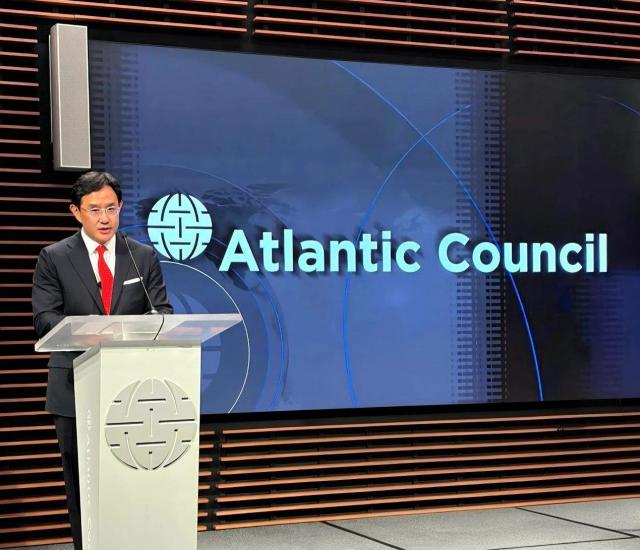
Concerns have been raised that China's dominance in the battery supply chain could threaten the security of the United States and its allies. A recent report from the Atlantic Council, a U.S. think tank, emphasizes the need for enhanced cooperation between the U.S. and South Korea across mining development, refining, and battery manufacturing.
According to the report titled "The U.S. and Korea Must Collaborate to Counter China's Dual-Use Battery Dominance," the China-centric global battery supply chain poses significant military and economic risks to the U.S. and its allies. The report identifies batteries as a dual-use technology, applicable not only in electric vehicles and energy storage systems (ESS) but also in military applications such as drones, robots, unmanned underwater vehicles, and intelligence, surveillance, and reconnaissance (ISR) systems. It highlights China's overwhelming competitiveness in battery production and critical mineral refining, which is expanding its influence over the global supply chain.
The report stresses the importance of maintaining South Korea's competitiveness as the world's second-largest battery producer. While Chinese companies like CATL and BYD are increasing their global presence, South Korean battery firms face a range of challenges, including changes in U.S. electric vehicle subsidy policies and intensified competition in the European market.
The Atlantic Council suggests that the U.S. and South Korea should establish a comprehensive cooperation framework across the entire supply chain. This includes joint investments in mineral acquisition, refining, material production, and battery manufacturing.
It also points to the relatively overlooked refining sector as a critical element for securing supply chain competitiveness. Although efforts are underway to build a battery supply chain in the U.S., there remains a significant gap in processing and refining capabilities for critical minerals.
The report recommends leveraging U.S. Department of Defense-supported battery research and development programs, as well as support systems from the Export-Import Bank of the United States, to expand the participation of South Korean companies. It specifically mentions Korea Zinc and suggests that linking their refining capabilities with the U.S. supply chain could achieve both commercial viability and strategic significance.
Korea Zinc has recently begun expanding its business in secondary battery materials and critical mineral recycling, positioning itself to play a key role in future U.S.-Korea supply chain collaboration.
The Atlantic Council warns that if China secures a monopolistic position in the global battery supply chain, it could significantly impact the military and economic leadership of the U.S. and its allies. It emphasizes the need for the U.S. and South Korea to strengthen cooperation across all stages of the supply chain and minimize unnecessary trade barriers among allies.
* This article has been translated by AI.
Copyright ⓒ Aju Press All rights reserved.