
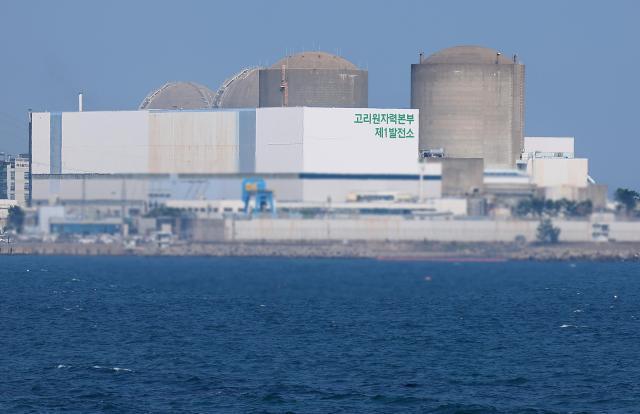
SEOUL, June 18 (AJP) - South Korea has designated two coastal counties to host its first new nuclear reactors in 15 years, a decisive step to secure the massive power supplies required for the country's expanding artificial intelligence and semiconductor sectors.
The selection clears a major bottleneck for the country's long-term energy strategy. It formally revives projects scrapped by the previous administration's nuclear phase-out policy, addressing government warnings that peak domestic power demand will reach 138.2 gigawatts by 2040.
A government evaluation committee announced Wednesday that Yeongdeok County in North Gyeongsang Province will host two large-scale reactors. Meanwhile, Gijang County in Busan will house the nation's first commercial small modular reactor.
Both locations scored highest in evaluations that weighed resident public opinion, environmental feasibility and site conditions. Yeongdeok scored 91.01 points to beat Ulju County for the large reactors, while Gijang edged out Gyeongju with 87.11 points for the smaller facility.
The two large reactors will generate a combined 2.8 gigawatts and are targeted to come online in 2037 and 2038. The 0.7-gigawatt small modular reactor is scheduled for completion between 2035 and 2036.
The selected sites were previously earmarked for development before the former government halted them. Yeongdeok's proposed site was originally meant for the Cheonji 1 and 2 reactors and covers an area more than three times the required minimum size. Gijang already houses the Kori nuclear power plant and offers ready-to-use transmission networks.
Adding the new facilities will increase South Korea's current nuclear capacity of 26.05 gigawatts by about 13.4 percent. The government confirmed in January it would push ahead with the expansion after public polling showed more than 60 percent support for using a mix of nuclear and renewable energy.
If the lifespan of currently operating reactors is extended as planned, the country could run up to 32 large reactors by 2038.
Even with the new reactors, long-term energy constraints remain a challenge. The country's combined nuclear capacity is expected to reach 29.55 gigawatts, which will cover just 21.4 percent of the projected maximum demand in 2040.
Officials acknowledge that stabilizing the power supply will require extensive expansions of the power grid, demand management and renewable energy networks. There is also growing concern over the regional burden of concentrating power generation in the southeastern part of the country to supply the capital area.
The timeline presents another hurdle. Large reactors require about 14 years for site selection, licensing and construction, meaning they offer limited help for short-term power shortages. Korea Hydro & Nuclear Power will now begin strategic environmental impact assessments to secure construction permits in the early 2030s.
"Stable power supply is an essential task for securing national competitiveness and for future generations," the evaluation committee said in a statement. "We sought to find the optimal locations with regional coexistence considered as the top priority."
Copyright ⓒ Aju Press All rights reserved.
