Seoul authorities assessed the Fed's decision as part of a broader shift among major central banks toward tighter monetary policy, following recent rate increases by the European Central Bank and the Bank of Japan.
Markets remained bullish despite the Fed’s hawkish signal. The KOSPI closed above the 9,000 mark for the first time, rising 2.25 percent to 9,063.84, as semiconductor and AI-related shares continued to lead the rally.
Japan’s Nikkei 225 also finished at a record high, rising 1.65 percent to 71,053.49 after briefly climbing as high as 71,398.58 during the session.
Authorities said the U.S.-Iran ceasefire agreement had helped calm volatility in Korean financial and foreign-exchange markets, but warned risks remained until there was concrete progress on reopening the Strait of Hormuz and sustained stability in oil prices.
The Ministry of Economy and Finance, the Bank of Korea and financial regulators held back-to-back meetings in the morning to assess the Fed decision and its implications for Korean financial and currency markets.
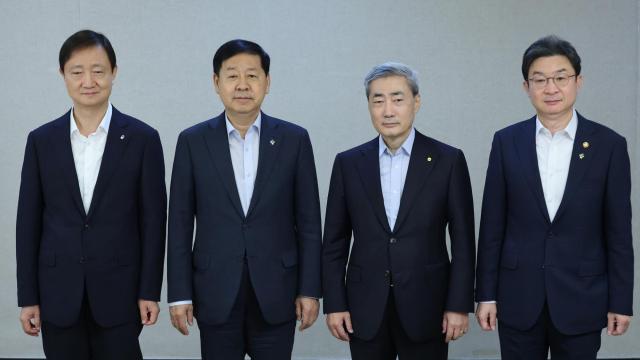
Deputy Prime Minister and Finance Minister Koo Yun-cheol chaired this year's fourth expanded macroeconomic and financial policy meeting at the Government Complex Seoul, joined by Bank of Korea Governor Shin Hyun-song, Financial Services Commission Chairman Lee Eog-weon and Financial Supervisory Service Governor Lee Chan-jin.
The Bank of Korea separately held a market-monitoring meeting at 8 a.m., chaired by Senior Deputy Governor Ryoo Sang-dai, to review global market developments following the Federal Open Market Committee meeting and their implications for local markets.
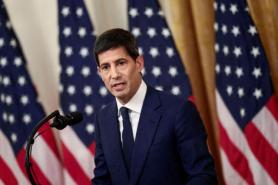
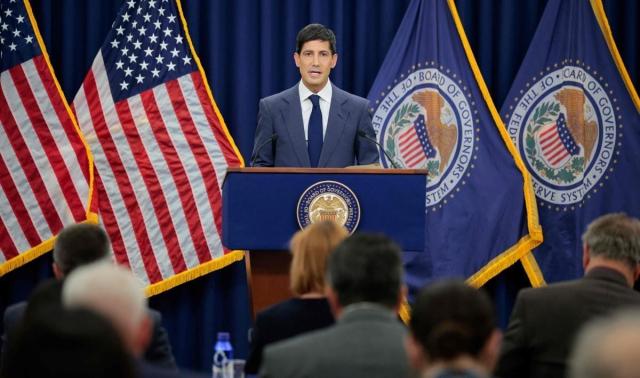
The hold itself was widely expected. What drew attention was the combination of higher inflation projections, a more hawkish dot plot and Chair Kevin Warsh's firm message on price stability during his first post-meeting press conference.
The Fed shortened its statement and removed forward-guidance language on the timing and extent of future policy adjustments.
It said the U.S. economy was expanding at a solid pace despite elevated uncertainty linked partly to the Middle East conflict, while productivity growth and capital investment remained strong.
Its assessment of the labor market also improved, with the Fed saying job gains had kept pace with labor-force growth, replacing earlier language that employment growth had remained subdued on average.
The inflation message turned firmer. The Fed said price growth remained above its 2 percent target and added that the committee "will deliver price stability," making clear that the policy hold should not be interpreted as a dovish pivot.
Updated projections reinforced that message.
The Fed lowered its 2026 real gross domestic product growth forecast to 2.2 percent from 2.4 percent in March, while trimming its unemployment-rate forecast to 4.3 percent from 4.4 percent.
Inflation projections, however, moved sharply higher. The Fed raised its 2026 personal consumption expenditures inflation forecast to 3.6 percent from 2.7 percent and lifted its core PCE forecast to 3.3 percent from 2.7 percent.
The dot plot delivered the clearest hawkish signal, with the median estimate for the federal funds rate at the end of this year rising to 3.8 percent from 3.4 percent in March. Projections for 2027 and 2028 were also revised higher, while the longer-run estimate remained unchanged at 3.1 percent.
Warsh did not submit his own dot, leaving 18 projections in the latest chart.
For markets, however, the higher median projection was enough to shift expectations toward tighter policy rather than rate cuts.
Warsh said at the press conference that no rate cut had been discussed during the meeting. He stressed that U.S. inflation had remained above target for more than five years and reaffirmed the Fed's commitment to restoring price stability.
He also ruled out a near-term review of the 2 percent inflation target and said the current policy stance remained broadly restrictive, although its impact varied across sectors.
Warsh confirmed he was reviewing the Fed's broader communications framework, including the future role of the dot plot and other tools used to guide market expectations.
The won ended the daytime session at 1,527.1 per dollar in Seoul, down 13.7 won from the previous session, as the Fed’s hawkish signal revived dollar pressure despite easing oil prices.
Bond yields also moved higher, with the three-year government bond yield rising 4.0 basis points to 3.750 percent and the 10-year yield climbing 4.7 basis points to 4.118 percent.

Copyright ⓒ Aju Press All rights reserved.