
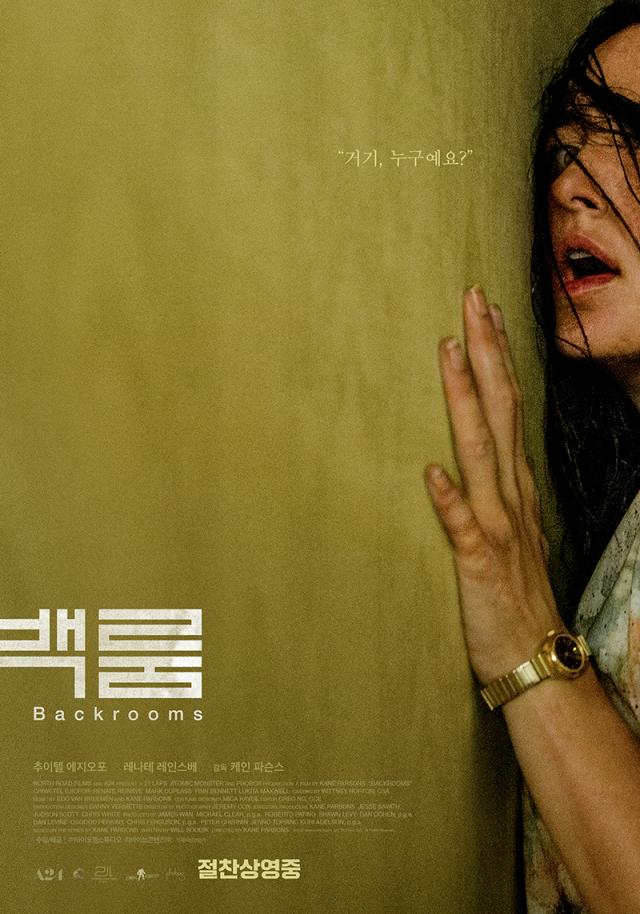
The film 'Backroom' reached over 1 million viewers as of June 16, according to the integrated ticketing system. This marks the first foreign horror-thriller to achieve this milestone in about seven years since 'Get Out' and 'Us.' In a time when foreign horror films have struggled to achieve significant box office success post-pandemic, 'Backroom' has continued to draw audiences even in its third week of release.
The core of this success lies with young viewers. According to CGV ticket sales data, 38% of 'Backroom' viewers are in their 20s, followed by 19% in both their teens and 30s. The gender distribution is relatively balanced, with 53% male and 47% female. Audiences familiar with internet culture and urban legends flocked to theaters, and their online reactions have attracted new viewers.
The buzz surrounding 'Backroom' has extended beyond the film itself. Due to its basis in internet urban legends, social media and online communities have been flooded with content interpreting the ending, searching for Easter eggs, and explaining the film's universe. Posts sharing yellow fluorescent-lit corridors of late-night subway stations as the 'real Backroom' have also gained traction. Viewers are reminded of the film in everyday spaces, and their online sharing continues to generate interest.
In South Korea, 'Salmon' first showcased the potential for horror in theaters. Released on April 8, it attracted 3.24 million viewers, significantly surpassing its break-even point. The film's success is particularly notable given that it achieved this during April, typically considered a slow month for horror films.
Audience reactions to 'Salmon' were immediate and succinct. Online, viewers shared experiences like “I spilled my popcorn” along with screenshots of their heart rates immediately after viewing. Rather than detailed reviews, images of popcorn and heart rate numbers spread quickly, turning the horror experience into a form of entertainment. The surprise felt in theaters translated into online validation, enhancing the film's popularity.
Following this, discussions about the film's ending and character relationships prolonged its box office success. Online, varying interpretations of the open ending emerged, and responses delved into the psychology and relationships of the characters. Initial reactions of “It was scary” encouraged viewings, while interpretations and analyses kept audiences engaged longer. What began as a horror experience led to online interactions and repeat viewings.
This trend aligns with how Generation Z consumes horror films. They do not simply watch films; they document and share their reactions. Moments of shock become brief reviews and memes, while endings inspire interpretive content, and the film's settings are rediscovered in daily life. The experiential nature of horror films has intertwined with online sharing, rekindling the reasons for theater attendance.
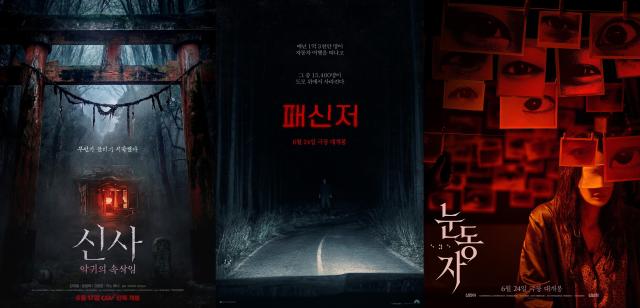
The theater industry is preparing to continue this trend. Following 'Backroom', new horror and thriller releases are set to meet audiences in June. André Øvredal's latest film, 'Passenger', is a supernatural road horror set against the backdrop of a remote road and a camper. It features a concept of highway ghosts, continuing the theme of 'Salmon's' 'Road View Ghosts,' bringing fear to familiar spaces.
Shin Min-a stars in 'Eyeball', which also joins the June lineup. The suspense thriller follows Seojin, who is losing her sight due to a genetic disease, as she investigates the mysterious death of her twin sister. Shin Min-a plays both the photographer Seojin and her twin sister Seoin, hinting at her return as a thriller queen. The film emphasizes tension through visuals and sound based on the premise of losing sight.
'Shinsa: Whisper of Evil Spirits' combines K-shamanism with J-horror. It follows college students who disappear while exploring an abandoned shrine in Kobe, Japan, as shaman Myung-jin investigates the case and confronts evil spirits. Kim Jaejoong takes on the role of a shaman with special abilities, marking his first venture into the horror genre, while Gong Seung-yeon leads the tension as Yumi, central to the plot.
Notably, all these films specifically highlight spaces of horror. 'Passenger' features the moving spaces of highways and campers, 'Eyeball' emphasizes the narrowing sense of vision, and 'Shinsa: Whisper of Evil Spirits' showcases the abandoned shrine and Kobe locations. Just as 'Salmon's' reservoir and 'Backroom's' yellow corridors have become memorable spaces for audiences, the spatial elements of horror are emerging as crucial factors for box office success.
The success of 'Salmon' and 'Backroom' illustrates a shift in how horror films are consumed. The fear experienced in theaters has led to online validation, interpretations, and parodies, which in turn have drawn audiences back to theaters. In June, the theater market will see the release of 'Passenger', 'Eyeball', and 'Shinsa: Whisper of Evil Spirits', continuing the trend of horror and thriller films. It remains to be seen whether the momentum created by Gen Z audiences will carry through the summer box office.
* This article has been translated by AI.
Copyright ⓒ Aju Press All rights reserved.