
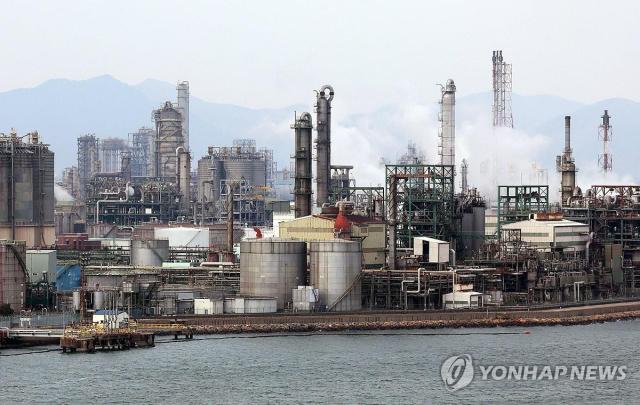
The Korean petrochemical industry is expected to return to losses in the second half of the year after a brief rebound in performance through the second quarter. This downturn is attributed to the impending end of government support for naphtha imports and the lagging effects from falling international oil prices following the conclusion of the Middle Eastern conflict.
According to data from the Ministry of Trade, Industry and Energy, the ethylene spread, which had exceeded $500 per ton after the outbreak of the war, was recorded at $169 as of June 16. This figure is significantly below the $250 level that the industry considers the breakeven point.
The ethylene spread is a key profitability indicator for the petrochemical sector, calculated by subtracting the price of naphtha from the price of ethylene. A larger spread indicates better profitability.
In the first quarter, domestic petrochemical companies reported strong performances due to soaring naphtha and ethylene prices caused by the war, benefiting from a lagging effect in raw material costs. Additionally, the government’s 50% subsidy on rising naphtha import prices contributed to improved profitability.
Lotte Chemical posted an operating profit of 73.5 billion won in the first quarter, marking its first profit in ten quarters. LG Chem's petrochemical division also recorded an operating profit of 164.8 billion won. Hanwha Solutions’ chemical division and SKC’s chemical business reported profits of 34.1 billion won and 9.6 billion won, respectively.
Industry analysts anticipated continued profitability improvements through the second quarter due to the lagging effect of rising costs. However, concerns are mounting for the second half of the year, as the stabilization of oil and raw material prices following the war will exacerbate the lagging effects. This phenomenon occurs when companies purchase raw materials at high prices but face declining product prices at the time of sale, leading to reduced profitability.
Structural oversupply issues also pose challenges. With the normalization of shipping through the Strait of Hormuz, imports of Middle Eastern crude oil and naphtha are expected to resume, increasing the likelihood of China flooding the market with low-cost petrochemical products. As a result, there are growing calls within the industry for the government to accelerate discussions on restructuring the petrochemical sector that were delayed due to the war.
The ongoing restructuring of the NCC projects centered around the Daesan and Yeosu industrial complexes is reportedly taking shape. In particular, the Yeosu 1 project (Lotte Chemical and Yeocheon NCC) is expected to finalize detailed plans for restructuring by July, while LG Chem and GS Caltex, involved in the Yeosu 2 project, are also said to be actively working behind the scenes.
However, the Ulsan industrial complex has yet to reach a clear conclusion. There are still differing opinions on whether to include S-Oil's Shahin project in the reduction targets, and both SK Geo Centric and Daehan Chemical have not taken proactive steps.
The final variable in reaching an agreement is the Shahin project, which is set for mechanical completion this month. There is significant disagreement among companies about whether to include the new ethylene facility, which has an annual capacity of 1.8 million tons, in the reduction targets.
Nevertheless, industry insiders believe that the government's commitment to restructuring the petrochemical sector remains strong, and discussions are expected to gain momentum in the second half of the year. An industry official stated, "Given the government's strong will for restructuring, Ulsan is likely to develop a response plan at some level within the year. The overarching premise of reducing NCC capacity will remain unchanged unless the oversupply issue is resolved."
* This article has been translated by AI.
Copyright ⓒ Aju Press All rights reserved.