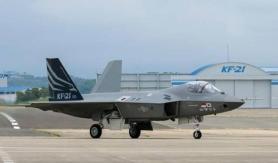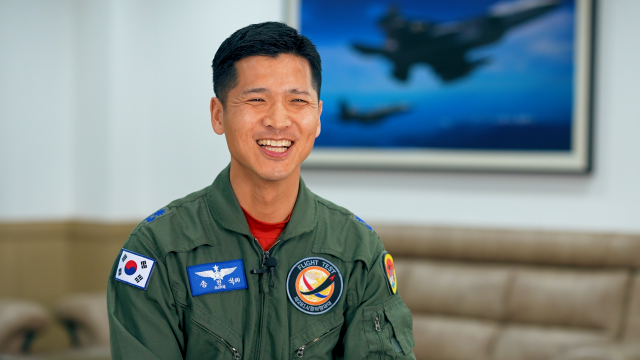
For Maj. Song Min-seok, a test pilot for South Korea's KF-21 Boramae fighter jet, one of the most demanding parts of the job is not flying fast. It is holding the aircraft at the edge of its limits long enough to finish the test — even as his body tells him to stop.
"When you keep turning under G-force, blood moves down toward your legs and starts leaving your brain," Song said in an interview with AJP. "There is a breathing technique to overcome it, but it is still difficult to maintain."
At high altitude, pilots have room to recover. At low altitude, they do not.
"You have to keep it just before the point of passing out," he said. "If you want to avoid blacking out, you ease off. But if you want to complete the test, you keep pulling. At low altitude, if you drop even briefly, it can lead to an accident. That is when it feels tense."
Song is not a combat pilot in the usual sense. He belongs to the 281st Test Flight Squadron under the Republic of Korea Air Force's test and evaluation command, where pilots do not simply fly proven aircraft — they fly aircraft still being verified.
His current mission is tied to one of South Korea's most ambitious defense projects: the KF-21, the country's first domestically developed supersonic fighter. The aircraft has been described as a symbol of South Korea's effort to move beyond operating foreign-designed platforms and build a fighter that can be upgraded, modified and sustained on its own terms.
For Song, that national ambition becomes something more immediate inside the cockpit.
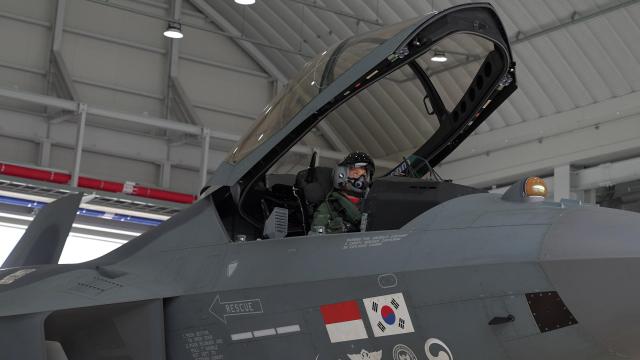
But pride, in his line of work, comes with pressure.
"What we confirm will determine the completeness of an aircraft that Air Force pilots will operate for decades," he said.
A test pilot's work begins long before takeoff. Song said test pilots are involved in nearly every stage of flight testing: reviewing plans, identifying hazards, carrying out the mission, analyzing data and writing evaluation reports. After each flight, they sit down with engineers to examine what happened in the air and whether the aircraft behaved as expected.
That makes the job different from that of an ordinary fighter pilot.
A combat pilot uses a verified aircraft to carry out missions. A test pilot takes an aircraft whose limits are still being defined and helps decide whether it is ready for others to fly.
"The goal of a fighter pilot is to carry out missions and generate combat power with a given aircraft," Song said. "The goal of a test pilot is to evaluate and verify an aircraft that has not yet been fully proven."
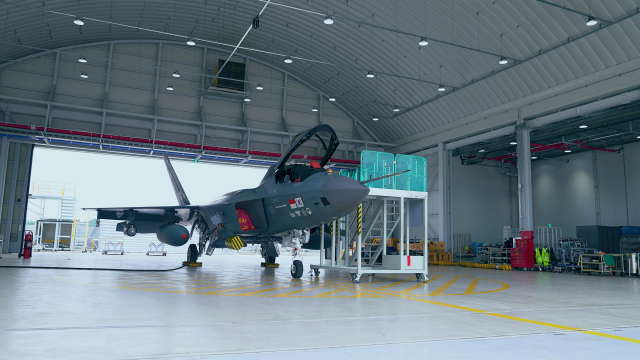
"It has very strong thrust," he said. "It takes off easily and accelerates well."
Then there was the cockpit.
Compared with older jets filled with analog gauges and switches, the KF-21's cockpit gave him the impression of stepping into a more digital future.
"If older aircraft had analog instruments attached all over the cockpit, the KF-21 feels like having three or four large iPads in front of you," Song said. "They are all touchscreens, so the display and operation are intuitive."
Song described the cockpit as futuristic, saying it reminded him of using a smartphone for the first time. He also pointed to the aircraft's fly-by-wire flight control system, which converts a pilot's inputs into electronic signals and allows the aircraft to respond with precision.
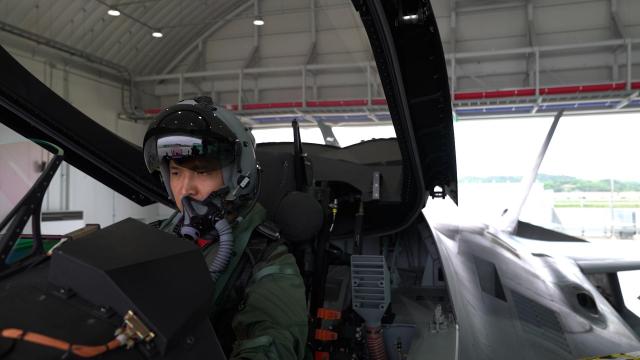
Song said one of the most important areas he watches is handling quality — how naturally and safely the aircraft responds to the pilot.
The KF-21, he said, does not merely obey. It corrects.
"The software is loaded into the aircraft, and the control surfaces move differently depending on speed or the degree of turn," he said. "It provides correction."
That correction is especially important in delicate situations such as aerial refueling, where small movements matter. Song said the KF-21 has shown strong stability, allowing pilots to focus on the mission rather than fighting the aircraft.
That stability speaks to the KF-21's broader significance for South Korea. A foreign aircraft can be purchased. A domestic one can be changed.
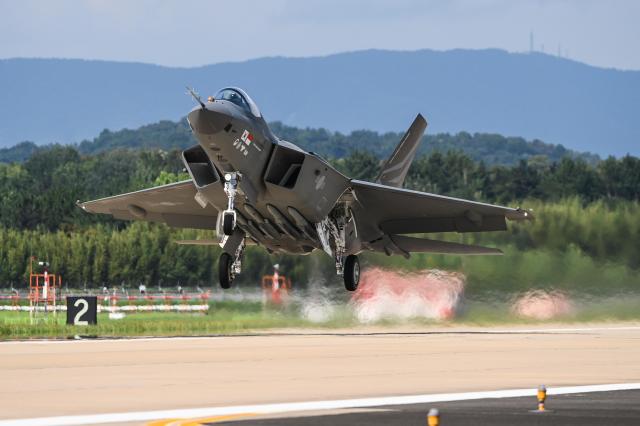
And Song's flights help shape that platform.
When test data reveals a gap between design goals and actual performance, engineers can modify flight control software, improve avionics or adjust the pilot interface. The process repeats, each flight adding another layer of proof.
That is why Song sees his job not simply as flying, but as translating the language of the aircraft.
He flies it, feels it, tests it, returns to the ground and explains what the machine said.
Becoming a test pilot took nearly two years. Song began the process in 2021, going through roughly a year of domestic training that required repeated flights, data analysis and presentations. After completing about 13 presentations, trainees undergo additional overseas training to evaluate different aircraft and avionics systems.
Song said the hardest part was not the physical training that fighter pilots already know. It was the relentless cycle of flying, analyzing and explaining.
"You fly, take the data and give presentations," he said. "You write reports and keep presenting."
His path began with a mentor. When he first learned to fly, one of his instructors had been a test pilot. That instructor spoke often about the field and later encouraged Song when he considered applying.
"He told me it was good and interesting," Song recalled. "He also said that if you love flying, this is a job that lets you keep flying for a long time."
Song still loves flying. Asked about his goal, he gave a simple answer.
"I like flying," he said. "My goal is to continue test flying for a long time until the KF-21 succeeds."
He does not romanticize the job, however.
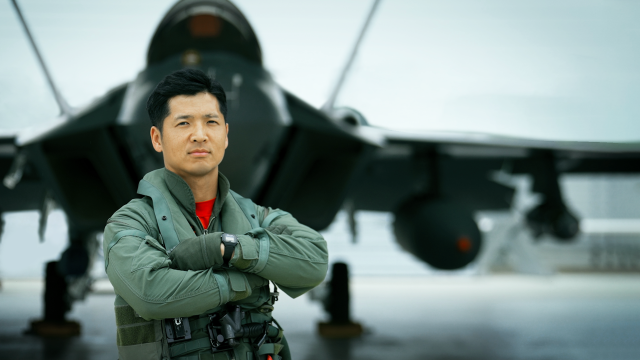
"Being a pilot looks cool, but it is extremely difficult, and there are dangerous parts," he said. "Without a sense of mission, it is hard to do."
That sense of mission, he said, should come not only from wanting to fly, but from understanding the role of a military pilot in national defense.
"You need a sense of mission as a soldier and as a pilot," he said.
Before test flights, Song said he keeps no strict personal ritual. Some senior pilots, he joked, used to swear by small routines — wearing clean or new underwear before a risky flight, for instance. Over time, he found it more comfortable without one.
These days, he sometimes listens to music. Recently, he said, it has been a new song by AKMU.
Then he climbs into one of South Korea's most advanced aircraft and helps decide what it can safely become.
There are moments of danger, data and discipline. But there are also moments above the clouds, when the aircraft skims over white layers of sky and the job feels briefly like something closer to joy.
Pilots call it "cloud skiing."
For the test pilot helping write the KF-21's future, it is still one of the best parts of flying.

Copyright ⓒ Aju Press All rights reserved.