
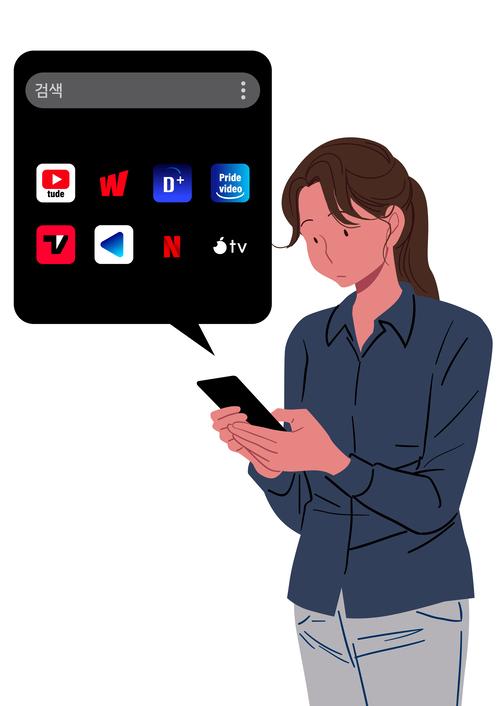
The government is set to improve subscription services and address inconveniences in the leisure and cultural sectors. A new system will be established to allow consumers to easily view and manage subscription services they may have forgotten about. Additionally, airlines with frequent flight cancellations will face penalties in the allocation of transportation rights.
On June 19, Deputy Prime Minister and Minister of Economy and Finance Koo Yun-cheol announced these plans during an emergency economic meeting. The "Consumer-Centric Service Improvement Plan" includes 15 initiatives focused on subscription services, leisure and cultural activities, transportation, and other daily services.
To enhance consumer convenience in the expanding subscription economy, the government plans to launch a service in September that allows users to easily access and manage their subscription history while protecting personal information through a secure system developed by the Financial Security Agency. According to the Fair Trade Commission, as of last year, subscribers averaged 5.5 services each, spending about 40,000 won per month.
The government will also strengthen regulations against so-called "dark patterns" that make it difficult to cancel subscriptions. Measures will be taken to increase penalties for businesses violating e-commerce laws, raising the maximum fine from 5 million won to 10 million won. Detailed guidelines for businesses will be established, and a new regulation prohibiting dark patterns will be added to the Telecommunications Business Act to protect consumer rights. Any significant changes to contract terms, such as fee increases or modifications, will require prior notice and consumer consent.
In the appliance subscription sector, the government will mandate the display of total subscription costs for major household appliances like refrigerators and air conditioners, expanding the current requirement that applies only to seven products, including water purifiers and air purifiers. If a service cannot continue due to a business's fault, consumers will be entitled to refunds for the remaining period and exchanges for the same product. Additionally, the government is working on amending the Automobile Management Act to introduce a subscription service for electric vehicle batteries, which account for about 40% of vehicle costs.
In the leisure and cultural services sector, prior notice for obstructed view seats at performances and sports events will be mandatory, allowing consumers to check for visibility issues during the ticket booking process.
In response to increased flight cancellations attributed to rising fuel prices, airlines with high cancellation rates will face penalties in transportation rights allocation starting next year.
To accommodate the growing number of pet-owning households, mobile pet funeral services will also be formalized. This service will involve a funeral vehicle visiting homes to collect remains and provide cremation, returning the ashes to the owners.
Additionally, the government will allow rural community businesses and social cooperatives to operate guesthouses in vacant homes and introduce demand-responsive autonomous buses in rural areas and regions with limited late-night transportation options. A comprehensive information system for regional demand-responsive transport will be developed in newly established cities.
Transparency in rental housing management fees will also be enhanced. New obligations will be introduced for real estate agents to explain shared management fees, and the system for disclosing private rental housing management fees will be revised to expand tenants' right to know. Guidelines for the return of empty containers will be established to promote the reuse of containers, and retail handling fees will be adjusted to reflect current realities.
Joo Hwan-wook, policy coordination officer at the Ministry of Economy and Finance, stated, "We will continue to identify consumer-centric tasks that enhance convenience in daily life. We will closely collaborate with the National Assembly to enact the Basic Law on the Development of the Service Industry as soon as the second half of the National Assembly is organized."
* This article has been translated by AI.
Copyright ⓒ Aju Press All rights reserved.