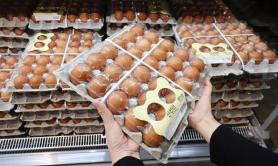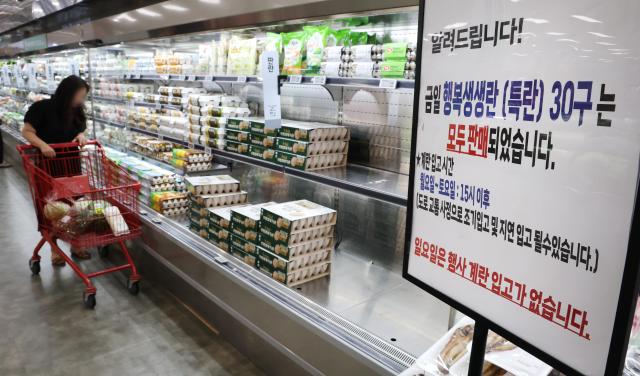
Starting Friday, 1.12 million U.S. eggs will reach shelves at major retailers including E-Mart and Lotte Mart. E-Mart will stock them at all outlets except those on Jeju Island, while Lotte Mart will sell them at 40 stores nationwide.
The Ministry of Agriculture, Food and Rural Affairs said it would funnel at least 4.48 million U.S. and Thai eggs each week to large retailers first, before routing supplies through smaller distributors to neighborhood bakeries, corner shops and other small businesses.
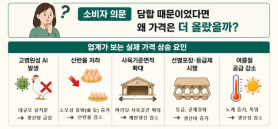
The push follows a slide in domestic output triggered by last winter's outbreak of highly pathogenic avian influenza, which forced the culling of laying hens, and by tighter rules on flock density.
Daily production this month stood at 47.05 million eggs, up 1.2 percent from the seasonal norm but down 3.3 percent from a year earlier.
Since January, the ministry has imported about 10.11 million fresh eggs through the Korea Agro-Fisheries & Food Trade Corporation, comprising 6.74 million from the United States and 3.37 million from Thailand. It plans to diversify supply lines by bringing in Brazilian eggs for the first time.
The ministry will also extend a tariff-rate quota on processed egg products to the end of the year from this month and double the eligible volume to 8,000 tons. The scheme cuts duties on selected goods by up to 40 percentage points, giving importers room to offer cheaper products.
"As the number of laying hens recovers, egg output is expected to climb from next month," the ministry said, "but it will take some time for the recovery to translate into actual market supply and price stability." Daily output is projected to rebound to last year's level of about 49 million eggs in July.

Copyright ⓒ Aju Press All rights reserved.