
Robots capable of autonomously harvesting cucumbers and strawberries, along with an artificial intelligence (AI) rescue system that detects accidents in the Han River and directs the deployment of rescue equipment and drones, are expected to hit the market within the next one to two years. The South Korean government has selected 229 projects and allocated 754 billion won (approximately $754 million) to expedite the commercialization of AI applications that citizens can readily experience.
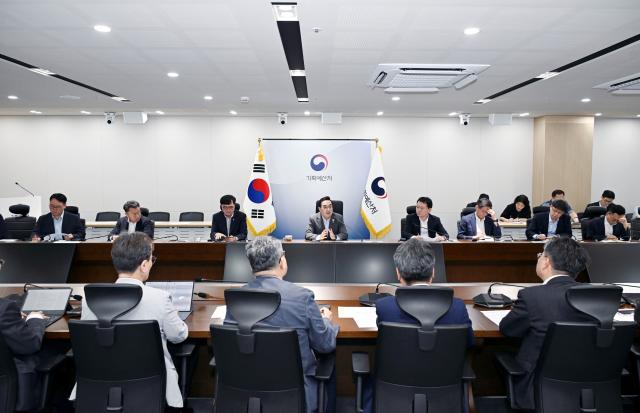
On June 19, the Ministry of Strategy and Finance announced the results of the "AI Application Product Rapid Commercialization Support Project (AX Sprint)."
AX Sprint aims to accelerate the transition to AI across all sectors of life and industry by supporting the commercialization of complete AI products and services within one to two years. The initiative is overseen by the Ministry of Strategy and Finance, with collaboration from 11 other ministries, including the Ministry of Trade, Industry and Energy, the Ministry of Science and ICT, the Ministry of National Defense, the Ministry of Agriculture, Food and Rural Affairs, the Ministry of Health and Welfare, the Ministry of Environment, the Ministry of Land, Infrastructure and Transport, the Ministry of Oceans and Fisheries, the Ministry of SMEs and Startups, and the Ministry of Food and Drug Safety.
A total of 1,604 applications were submitted for the 246 projects, resulting in an average competition ratio of 6.5 to 1. The government selected 229 products and services to receive funding of 754 billion won. Some projects are still undergoing selection and re-announcement processes.
The selected projects focus on areas with high public impact, such as labor shortages in agriculture, livestock, and fisheries, safety in high-risk industrial sites, and elderly care.
In agriculture and fisheries, a notable example is a robot that can autonomously harvest cucumbers and strawberries and transport them to sorting facilities. Unlike existing harvesting robots that primarily operate on single crops, this new robot can accurately identify fruit locations while avoiding obstacles like leaves and stems, automating the process of changing and transporting harvest boxes.
An automated robot for slaughtering processes has also been selected. This AI system analyzes the size and shape of livestock in real-time, allowing the robot to automatically adjust cutting positions and working conditions. In aquaculture, an AI feeding system is expected to be introduced, which will analyze the condition of fish, water temperature, and oxygen levels to autonomously determine feeding times and amounts.
In high-risk industrial environments, AI products will be deployed to ensure worker safety. A safety management system using drones will autonomously fly to detect anomalies related to facilities, workers, and fire hazards. Semi-humanoid robots that autonomously navigate industrial sites to detect risks and respond to emergencies, as well as construction robots that perform dangerous tasks like demolishing old buildings, are also included.
Customized mobility and care services for the elderly are also part of the support program. Selected projects include walking aids that detect changes in walking patterns and balance to reduce fall risks, a 24-hour care system linking AI smart home devices with in-home care services, and a demand-responsive transportation model in rural areas where buses respond to real-time requests.
In the area of public safety, a proactive detection and autonomous rescue system for accidents in the Han River has been selected. This system uses sound sensors installed on bridges and AI to analyze sounds of splashes and screams to identify accident locations and direct the deployment of rescue equipment and autonomous drones. The focus is on reducing the initial response gap that previously relied on witness reports or CCTV verification.
Other projects include a manufacturing intelligence solution that designs the taste and flavor of K-sources and sauces while detecting fermentation anomalies, a marine environmental cleanup robot that autonomously identifies and cleans up pollution in the sea and underwater, and an urban mining system where AI analyzes valuable metals in electronic waste for sorting and recovery by robots.
To enhance the market viability of the selected projects, the government is strengthening participation from actual demand companies. Of the 229 selected projects, 209, or 91.3%, have formed consortia with companies that can implement and use the products. With demand companies involved from the development stage, the government expects smoother initial market entry and field application after commercialization.
The selected companies include a balanced mix of small, startup, and regional enterprises. Small businesses account for 188, or 82.1%, of the total. There are 59 companies that have been established within the last seven years, making up 25.8%, and 98 companies located outside the capital region, representing 42.8%.
The government aims to revitalize the domestic AI ecosystem through this initiative. Among the selected projects, 41.3% adopted domestic AI models, while 30.6% utilized domestic AI semiconductors known as neural processing units (NPUs). The government believes that the application of domestic AI models and semiconductors in actual products and services will contribute to the expansion of the domestic AI ecosystem.
Additionally, the government plans to provide follow-up support for the rapid market entry of the selected products. During the agreement process, it will investigate regulatory challenges faced by companies and provide support in conjunction with regulatory sandboxes if necessary. Outstanding products will receive assistance in securing market access through participation in international exhibitions and innovative procurement initiatives.
Park Hong-geun, Minister of the Ministry of Strategy and Finance, stated, "AX Sprint is a field-oriented financial project aimed at accelerating the commercialization of AI products and services that can be used directly in the market and field. We will ensure that the selected companies achieve results that the public can feel within one to two years, with support from relevant ministries in terms of regulations, procurement, and market access."
* This article has been translated by AI.
Copyright ⓒ Aju Press All rights reserved.