
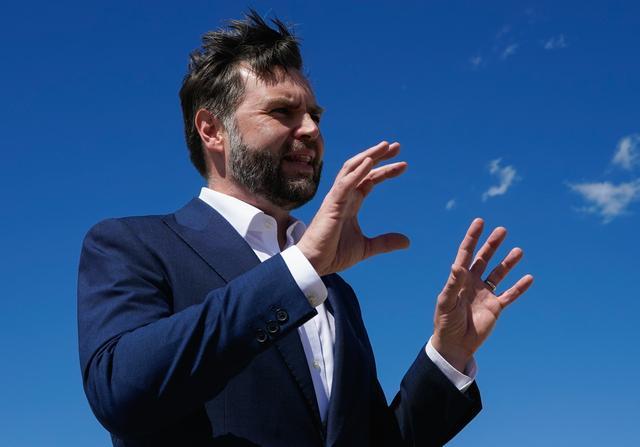
According to reports from the Associated Press and Axios, Vice President Vance made his remarks on June 21, prior to negotiations held at the Bürgenstock Resort near Lucerne, Switzerland. He said, "If the Iranian leadership is willing to abandon its role in destabilizing the Middle East and is open to the long-term abandonment of nuclear weapons, the U.S. is prepared to fundamentally change its relationship with Iran."
The negotiations were mediated by Pakistan and Qatar. The U.S. delegation included Vice President Vance, Special Envoy for the Middle East Steve Witkoff, and Jared Kushner, President Donald Trump's son-in-law. The Iranian side was represented by Mohammad Bagher Ghalibaf, the Speaker of Parliament, and Foreign Minister Abbas Araghchi.
Vance noted, "President Trump has asked us to open a new chapter in our relationship with the Iranian people. We have already made significant progress in the past few hours and expect further achievements in the coming hours."
He explained the goal of the negotiations as transforming a Middle East that has been characterized by war and hostility between Iran and Gulf nations into one of diplomacy and cooperation. He added, "The key question is whether we can open a new chapter or revert to past methods."
Key agenda items for the discussions included limiting Iran's nuclear program, resuming international inspections of nuclear facilities, ensuring safe passage through the Strait of Hormuz, unfreezing assets, and maintaining a ceasefire in Lebanon. The U.S. maintains that it will only discuss sanctions relief and the release of funds if Iran takes verifiable steps to abandon its nuclear weapons development.
Regarding the situation in Lebanon, Vance remarked, "There has been significant progress in maintaining the ceasefire in Lebanon over the past few days." He acknowledged, however, that "these matters are always somewhat complex" and stated, "There are still challenges to resolve, but we will continue to work on it."
However, the atmosphere of the negotiations is reportedly tense. Iran has expressed discontent over President Trump's hardline rhetoric toward the country and ongoing Israeli airstrikes in Lebanon. Iran insists that the maintenance of the ceasefire and the issue of frozen assets should be prioritized in the discussions.
Before the negotiations began, opening remarks were made by Vice President Vance, Pakistani Prime Minister Shehbaz Sharif, and Qatari Prime Minister and Foreign Minister Sheikh Mohammed bin Abdulrahman Al Thani. The Iranian delegation did not make any statements in front of the press.
According to a White House pool report, Foreign Minister Araghchi briefly entered the meeting room to greet Prime Minister Sharif before leaving. After the opening remarks concluded and the press exited, it was confirmed that Araghchi and Ghalibaf entered the meeting room.
* This article has been translated by AI.
Copyright ⓒ Aju Press All rights reserved.