
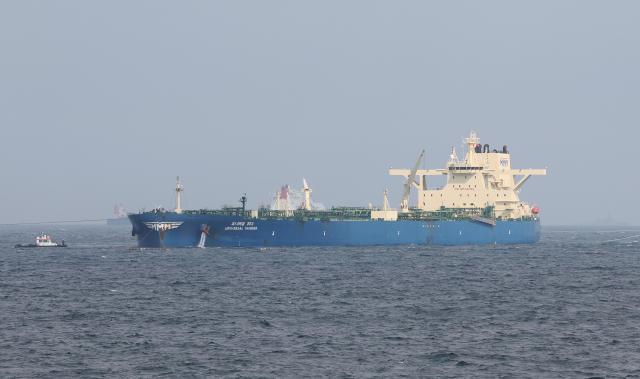
No South Korean crew members were aboard the vessels, and neither ship was bound for South Korea, according to Seoul’s Ministry of Oceans and Fisheries.
“The vessels have not yet fully cleared the danger zone,” the ministry said. “Considering the safety of the crew and the positions of the shipping companies, we ask for understanding that we cannot disclose specific information, including transit details, the operators or the names of the vessels.”
The passage was made possible under a U.S.-Iran memorandum of understanding signed on June 17.
Article 5 of the memorandum of understanding states that Iran will take measures to allow vessels to pass through the Strait of Hormuz without transit charges for 60 days from the signing of the agreement.
Iran’s Persian Gulf Strait Authority subsequently began accepting applications for passage, and shipping companies operating South Korean vessels stranded in the area also submitted requests.
The latest departures reduced the number of Korea-related vessels remaining inside the strait to 22.
There were 26 such vessels in the area when the strait was closed in late February. An oil tanker and a liquefied natural gas carrier were later allowed to leave following consultations with Iranian authorities, leaving 24 vessels at the time the war-ending agreement was reached.
A total of 135 South Korean seafarers remain in the area, including 102 aboard South Korean vessels and 33 serving on foreign vessels.
More Korea-related ships are expected to leave the strait in stages following the two latest departures.
The ministry said it is providing information on transit conditions and conducting real-time monitoring to support the safe passage of South Korean vessels.
Uncertainty remains, however, as tensions in the Middle East continue.
Iran’s military threatened on June 20 to close the Strait of Hormuz again in response to Israeli airstrikes in southern Lebanon.

Copyright ⓒ Aju Press All rights reserved.
