
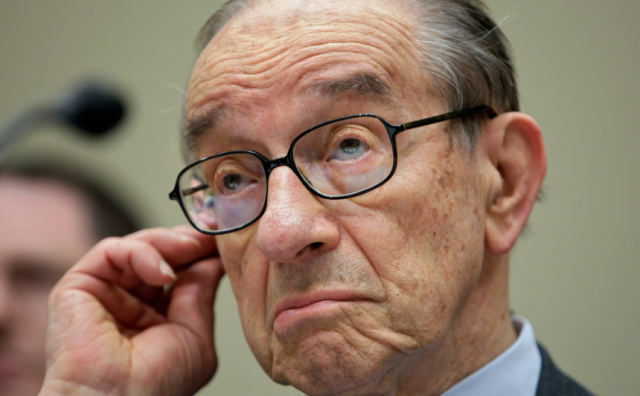
According to reports from the Associated Press and other outlets, Greenspan passed away at his home in Washington, D.C., on June 22 due to complications from Parkinson's disease. The Federal Reserve issued a statement honoring his contributions to monetary policy and economic theory.
Greenspan was appointed Fed Chair by President Ronald Reagan in 1987 and served until 2006, making him a key figure in U.S. economic policy across four administrations: Reagan, George H.W. Bush, Bill Clinton, and George W. Bush.
His tenure coincided with a long period of economic expansion in the United States. The AP noted that “the decade-long economic expansion and stock market rise that began in March 1991 are considered hallmark achievements of Greenspan's time in office.” Inflation, which plagued the U.S. economy in the 1970s, stabilized during his leadership, and unemployment fell below 4% at times.
His crisis management skills were also a significant aspect of his legacy. Just two months into his term, he faced the stock market crash known as 'Black Monday' in October 1987, but he was credited with calming market fears by expressing a willingness to provide liquidity. During the 1997 Asian financial crisis, he reportedly persuaded U.S. banks to extend short-term loans to South Korea, which was facing economic turmoil.
Greenspan wielded considerable influence during his tenure, earning the nickname 'Maestro.' His statements were viewed as key indicators in global financial markets, with investors closely analyzing his words for clues about interest rate directions.
However, his reputation shifted following the 2008 global financial crisis. Critics argued that his low-interest-rate policies and deregulation during his tenure contributed to the housing bubble and excessive risk-taking in the financial sector.
Greenspan later acknowledged that he had a flawed belief in the ability of financial institutions to regulate themselves. As a result, he is viewed as both a leader who fostered a long economic boom and a figure who left behind the seeds of the financial crisis.
Born in Manhattan, Greenspan studied at the Juilliard School before earning a degree in economics from New York University. He ran an economic consulting firm before being appointed Fed Chair during the Reagan administration. He is survived by his wife, NBC News journalist Andrea Mitchell.
* This article has been translated by AI.
Copyright ⓒ Aju Press All rights reserved.