
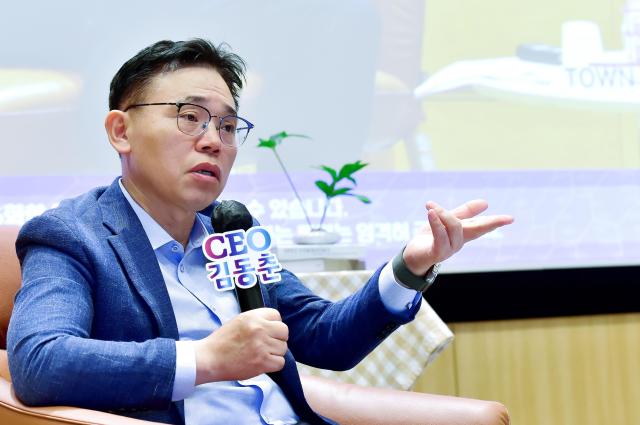
During a town hall meeting on June 22, CEO Kim Dong-choon outlined plans to develop semiconductor, mobility, and robotics materials, as well as cancer treatment drugs, as core future businesses to enhance the company’s portfolio.
This strategy comes as traditional chemical businesses face declining profitability due to global oversupply and intensified competition. LG Chem aims to strengthen its existing business competitiveness while expanding its share of high-value operations based on technological prowess and customer relationships.
The company plans to achieve a double-digit operating profit margin by 2030. It will allocate 70% of its R&D resources to the growth sectors of semiconductor, mobility, and robotics materials, focusing on new AI-based applications and leading technologies. To facilitate this, LG Chem has established a new business development organization directly under the CEO since June to accelerate strategic execution.
Additionally, LG Chem intends to pursue external growth strategies, including mergers and acquisitions (M&A), within the scope of available funding to enhance its business expansion speed and global competitiveness.
In the semiconductor and infrastructure sectors, the company will focus on securing competitiveness in advanced packaging materials. It plans to expand the development of high-value products such as adhesives for packaging, low-dielectric materials, thermal management materials, and glass substrates, aiming to grow its electronic materials business to 2 trillion won by 2030 based on core materials like PID, DAF, and CCL.
In the mobility and robotics sectors, LG Chem will expand its business beyond electric vehicle and future mobility materials to include structural materials for robots and precision drive and bonding materials. The company plans to establish a sustainable and stable revenue base by leveraging technology barriers formed through joint development with customers.
In the cancer treatment drug sector, LG Chem aims to strengthen its pipeline competitiveness through global clinical trials and partnerships. The company plans to enhance commercialization potential through technology transfers and M&A, fostering long-term growth drivers.
Moreover, LG Chem will transform its business model from simply supplying materials to designing integrated solutions that enhance customer product performance and manufacturing processes. This strategy aims to move away from price competition and establish a stable and sustainable high-profit structure.
CEO Kim Dong-choon emphasized, "LG Chem will strengthen the competitiveness of its existing businesses while focusing its capabilities on future growth pillars centered around semiconductor, mobility, and robotics materials, as well as cancer treatment drugs, to become a technology-driven converting company."
* This article has been translated by AI.
Copyright ⓒ Aju Press All rights reserved.