
On June 22, Gideon Sa'ar, Israel's Foreign Minister, announced on social media platform X (formerly Twitter) that he had spoken with New Zealand's Foreign Minister Winston Peters. Sa'ar stated, "We will not withdraw from the security zone and expose Israeli citizens to the possibility of Hezbollah attacks and invasions."
Sa'ar emphasized that Israel would respect the ceasefire as long as Hezbollah does not violate it. However, he claimed that Lebanon's sovereignty has been compromised for decades due to Iran's indirect occupation through Hezbollah. He added, "The dismantling of Hezbollah's terrorist state is in the interest of both Lebanon and Israel."
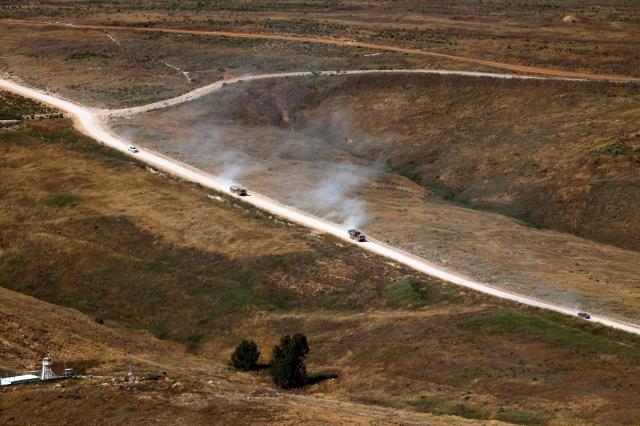
Israel has established a security zone extending about 10 kilometers north of its border with Lebanon, deploying tank units to conduct operations against Hezbollah.
Sa'ar's remarks come as the United States and Iran discuss management strategies for the ceasefire in Lebanon, with Israel clearly stating its refusal to withdraw from the security zone.
The U.S. and Iran have agreed to establish a "conflict de-escalation mechanism" to manage the ceasefire situation in Lebanon under a memorandum of understanding (MOU). This mechanism will reportedly include representatives from the U.S., Iran, Lebanon, Qatar, and Pakistan to monitor ceasefire violations.
However, Israeli Prime Minister Benjamin Netanyahu has expressed concerns that the activities of this mechanism could restrict the operational scope of Israeli forces stationed in Lebanon. In a video statement, Netanyahu emphasized, "Israeli forces in southern Lebanon have complete operational freedom to eliminate direct threats to themselves and northern residents."
The recent escalation began on June 19 when an Israeli tank explosion resulted in the deaths of four soldiers, including a battalion commander. This incident triggered intense clashes, prompting the Israeli military to launch large-scale airstrikes and deploy ground troops to encircle a Hezbollah underground stronghold serving as a command center in the south.
However, following the receipt of new engagement rules on June 20, the Israeli military halted preemptive strikes. According to the new rules, field commanders are prohibited from conducting offensive operations without prior approval, except in cases of immediate threat.
Warning shots against Lebanese civilians are also prohibited unless troops approach too closely. Additionally, demolishing homes and infrastructure within the security zone requires prior approval from senior commanders.
Within Israel, conservative factions have voiced concerns that limiting preemptive responses under these engagement rules could lead to increased casualties among soldiers.
* This article has been translated by AI.
Copyright ⓒ Aju Press All rights reserved.