
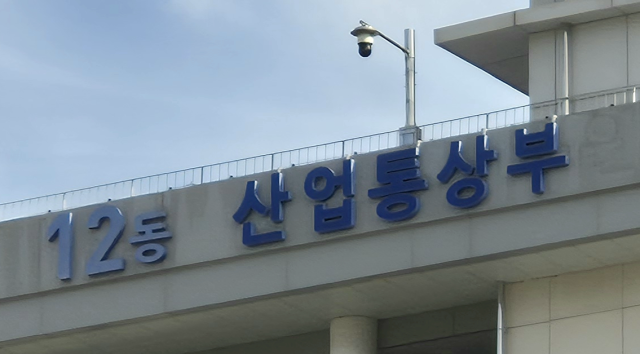
The Trade Commission of the Ministry of Trade, Industry and Energy hosted the 2026 Trade Remedy International Forum (Seoul Forum) on June 23 at the COEX ASEM Ballroom. Now in its 24th year, the Seoul Forum is the only international forum on trade remedies, continuing since 2001, with representatives from 11 trade remedy agencies, including the World Trade Organization (WTO), the United States, China, the European Union (EU), Japan, Canada, Australia, the United Kingdom, Vietnam, Thailand, and the Gulf Cooperation Council (GCC).
This year's forum theme is 'Changes in the Global Trade Environment and New Challenges for Trade Remedies.' Participants shared insights on their countries' trade remedy policies and recent investigative experiences, discussing strategies to address circumvention and enhance investigative techniques and international cooperation.
The demand for trade remedies has been rapidly expanding. According to the WTO, the number of anti-dumping investigations initiated worldwide surged from 89 in 2022 to 191 in 2023, and is projected to reach 375 in 2024. Last year, there were 323 investigations, a slight decrease from the previous year. The combination of supply chain instability, global overcapacity, and intensified industrial competition among nations has led countries to actively utilize trade remedies to protect their domestic industries.
Trade remedies are crucial as they serve as institutional mechanisms distinct from protectionism. They involve objective investigations to determine whether domestic industries have suffered due to unfair practices such as dumping or subsidies, and, if necessary, implementing measures like tariffs to restore fair competition conditions.
The forum also addressed issues related to circumvention and avoidance that arise after trade remedy measures are implemented. There has been an increase in cases where companies circumvent anti-dumping duties by routing products through third countries for assembly or processing, or by utilizing multinational production networks to evade tariffs. The Trade Commission introduced plans to expand the scope of investigations into circumvention from 'minor changes within the supplying country' to include 'assembly and processing through third countries.'
This shift is necessary as companies increasingly distribute their production and export structures across multiple countries, making it more challenging to trace the origin, actual production processes, and export routes. Trade remedy agencies now require capabilities that go beyond simple price comparisons to include supply chain tracking, data analysis, and local verification.
Lee Jae-hyung, chairman of the Trade Commission, stated, "As the trade environment changes rapidly, we must operate a trade remedy system that industries and markets can trust through objective and fair investigations."
Lee Han-goo, head of the Trade Negotiation Headquarters at the Ministry, emphasized, "Trade remedies are not for protectionism but are systems that maintain fair and open doors. Countries should share investigative experiences and policy directions and strengthen cooperation on new challenges such as circumvention."
* This article has been translated by AI.
Copyright ⓒ Aju Press All rights reserved.