SEOUL, June 24 (AJP) - The cart has come before the horse.
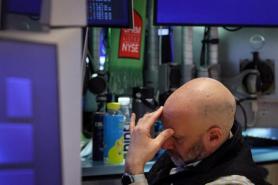
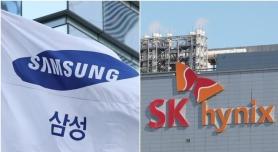
Tuesday's 12 percent crash in Korean chip bellwethers Samsung Electronics and SK hynix reverberated across the Pacific, dragging the Philadelphia Semiconductor Index (SOX) down more than 7 percent and pushing the Nasdaq more than 2 percent lower. It was a reversal of the traditional order in which Wall Street dictated sentiment in Seoul.
This time, Seoul exported volatility to New York.
The shift reflects how deeply South Korea has become embedded in the global artificial intelligence supply chain. With SK hynix preparing a U.S. ADR listing in the second half of the year, Korea's influence on global semiconductor benchmarks could become even more pronounced.
The SOX, once a niche gauge for chip investors, has evolved into one of the world's most important economic barometers.
Launched in 1993, the index tracks the 30 largest U.S.-listed semiconductor companies. While it was historically anchored by industrial giants such as Intel and Texas Instruments, the AI era has reshaped its composition. Today, Nvidia, Advanced Micro Devices, Broadcom, Taiwan Semiconductor Manufacturing Co. and ASML dominate the benchmark.
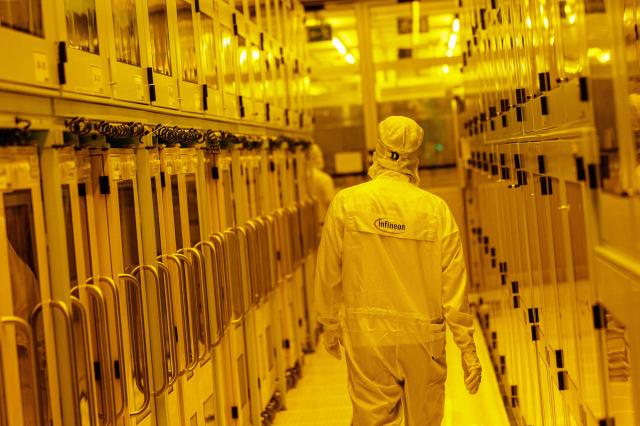
Its structure also reveals how the semiconductor ecosystem has changed. The index captures nearly every layer of modern AI infrastructure — chip designers such as Nvidia and AMD, software providers like Synopsys and Cadence, equipment makers including ASML and Applied Materials, and foundational manufacturers such as TSMC. Every dollar spent building AI data centers eventually flows through this supply chain and is reflected in SOX performance.
Analysts increasingly view the SOX as a leading indicator for the broader technology sector, often moving ahead of the Nasdaq itself.
Its influence extends well beyond the United States.
Samsung Electronics and SK hynix are absent from the index because they are not listed in the U.S., yet their fortunes are tightly intertwined with it. As dominant suppliers of High Bandwidth Memory, or HBM, essential for AI accelerators and hyperscale data centers, Korean memory makers have become indispensable players in the same ecosystem that SOX measures.
That dependence also amplifies risk. Wall Street is growing uneasy that AI infrastructure spending may be running ahead of eventual profits. Higher interest rates, concerns over monetizing AI models and questions about hyperscalers' capital spending have all resurfaced. The Federal Reserve's renewed hawkishness has added another layer of pressure by increasing the cost of financing the enormous data-center buildout.
Yet others argue the market is witnessing something larger than a typical boom-and-bust cycle.
Ned Davis Research recently proposed that semiconductors should increasingly be discussed like commodities rather than technology products. Their argument is that computing power is becoming foundational infrastructure akin to railroads, electricity or the internet itself. Demand is no longer driven primarily by smartphones and PCs but by AI models, robotics, humanoids, autonomous vehicles, smart grids and defense systems.
Still, warning signs are flashing.
The SOX has recorded an extraordinary cluster of single-day gains exceeding 5 percent over the past two months — a level of volatility last seen during the aftermath of the dot-com bubble and the 2008 financial crisis. Historically, such swings have either occurred near major market peaks or deep inside bear markets. The difference today is that semiconductor stocks remain at record highs.
That paradox leaves investors confronting an uncomfortable possibility: this may be both a bubble and a supercycle at the same time.
The immediate danger may not be excessive optimism itself, but the concentration of risk. Global equity markets have become extraordinarily dependent on a handful of semiconductor names, while South Korea has become unusually dependent on a handful of AI beneficiaries.
The lesson from Tuesday's selloff is therefore larger than a single bad trading day.
For decades, investors watched SOX to understand where technology was heading. They may now have to watch Seoul first.
The bigger insight is that semiconductors are no longer merely another sector of the economy. They are becoming the economy's operating system.
When oil prices rise, nations worry about inflation. When chips stumble, nations now worry about growth itself.
The question is no longer whether semiconductors are cyclical. It is whether they have become too systemically important to fail — and whether countries such as South Korea, sitting at the center of the AI supply chain, have unknowingly become global macro variables rather than local stock markets.

Copyright ⓒ Aju Press All rights reserved.