
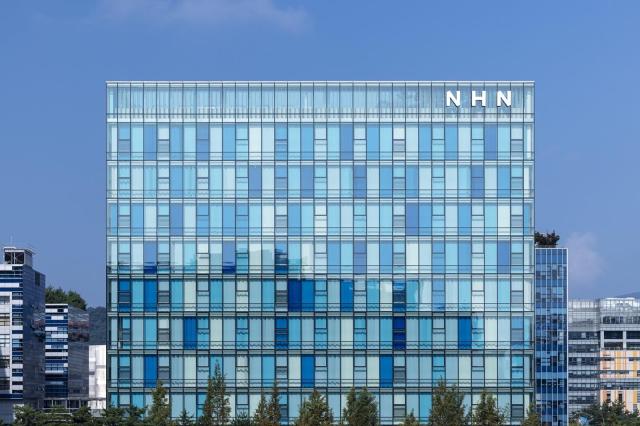
Domestic companies are making significant strides in the global artificial intelligence (AI) supercomputer competition, which has been dominated by the United States and China. With advanced graphics processing units (GPUs) secured by the government, companies like NHN, Samsung Electronics, and Kakao are establishing world-class AI supercomputers, marking South Korea's serious entry into the AI infrastructure race.
According to the AI industry on June 24, NHN Cloud's 'NIPA-CL1' ranked 20th in the latest global supercomputer rankings, 'TOP500,' announced at the International Supercomputing Conference (ISC). Samsung's 'SSC-24' secured the 25th position, while Kakao Cloud's 'NIPA' came in at 39th.
Additionally, NHN Cloud (40th), Naver's 'Sejong' (72nd), Kakao Cloud (74th), and Samsung's 'SSC-21' (84th) also made it into the top 100. A total of seven domestic systems entered the TOP 100, indicating a significant enhancement in South Korea's AI infrastructure competitiveness.
The Ministry of Science and ICT invested approximately 1.46 trillion won last year in the 'AI Computing Resource Utilization Enhancement Project,' securing over 13,000 advanced GPUs, including NVIDIA's B200 and H200.
Both NIPA-CL1 and NIPA-CL2, which are listed in the TOP500, were built through the government's 'GPU Acquisition, Construction, and Operation Support Project.' NHN Cloud utilized 4,080 B200 GPUs to construct NIPA-CL1, while Kakao employed 2,040 B200 GPUs for NIPA-CL2.
Industry experts view this achievement not merely as a result of GPU acquisition but as a demonstration of the technical capabilities to operate them effectively. As the number of GPUs increases, communication between nodes can become congested, leading to bottlenecks. The ability to connect and operate thousands of GPUs reliably is considered a core competitive advantage in the AI era.
NHN Cloud has established a massive cluster connecting 4,080 B200 GPUs, leveraging its extensive infrastructure operation experience gained from national data centers and public cloud projects. Experts explain that efficient operation of thousands of GPUs requires essential capabilities in network design, power management, cooling, and software optimization.
Kakao Cloud has also enhanced GPU communication efficiency by applying NVIDIA InfiniBand network-based communication optimization technology. The company reported a measured performance of 69.1 petaflops (PFLOPS) based on the High-Performance Linpack (HPL) benchmark, with GPU communication efficiency reaching approximately 95% of the theoretical maximum.
An industry insider noted, "In the past, the quantity of GPUs acquired was crucial, but now the ability to connect and operate thousands of GPUs efficiently has become the competitive edge. The latest TOP500 results demonstrate that domestic companies possess the capability to build world-class AI infrastructure."
Meanwhile, the top spot is held by China's 'Line Shine,' which recorded 2,198 PFLOPS. The U.S. supercomputers 'El Capitan' and 'Frontier' follow closely behind. While the U.S. and China continue to lead the top tier, South Korea is also making significant strides in the AI infrastructure competition, particularly through its private sector.
* This article has been translated by AI.
Copyright ⓒ Aju Press All rights reserved.