From the teachings of Confucius to the culture of East Asian civilization
In the history of humanity, there are not many instances where the ideas of a single person transcended a nation to alter the politics, education, culture, and lifestyles of several countries over thousands of years. The Confucianism of Confucius is a prime example. Beginning amidst the chaos of the Spring and Autumn and Warring States periods in the 5th century BCE, the teachings of Confucius became the governing ideology of the state in the Han Dynasty, were systematized into Neo-Confucianism in the Song Dynasty, and firmly established themselves as the foundation of social ethics, education, administration, and culture through the Goryeo and Joseon periods. Reaching across China and Korea, as well as Japan and Vietnam, Confucianism became the common language of East Asian civilization, and its profound influence remains to this day.
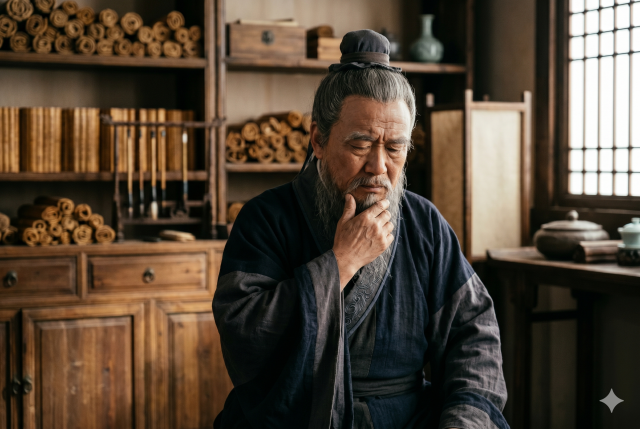
However, Confucianism was not the ideology of the state from the very beginning. Confucius spent his life trying to realize his ideal politics but ultimately failed to achieve his ambitions. He traveled to various states preaching kingly rule governed by virtue, but the monarchs of his time were more interested in the competition for hegemony. Even after Confucius passed away, for hundreds of years, Confucianism was merely passed down as the scholarship of his disciples.
The decisive turning point was the Han Dynasty of China. In particular, Emperor Wu of Han determined that a unified ideology was necessary to govern the empire stably. At this time, Confucian scholars developed the ideas of Confucius into principles of state operation, and finally, Confucianism was adopted as the official ideology of the nation. The era commonly known as the exclusive veneration of Confucianism had opened. Thereafter, as the civil service examination system for selecting officials was also operated centering on Confucian classics, Confucianism became both a scholarly pursuit and a path to worldly success, growing into an ideology that bound politics and education as one.
In this process, Confucianism went beyond simple philosophy to become a complete system of civilization. It demanded benevolence and righteousness in politics, required propriety in administration, and emphasized self-cultivation for the individual, filial piety in the family, and trust in society. It connected the morality of the individual and the order of the state into a single system. Thus, Confucianism is evaluated as a civilizational philosophy practiced in daily life, distinct from Western political philosophy and different from religion.
Reaching the Song Dynasty, Confucianism met another massive transformation. Absorbing the influences of Buddhism and Taoism, Neo-Confucianism emerged, equipped with a deeper metaphysics. Explaining principle as the order of the universe and material force as the physical world, Neo-Confucianism attempted to connect the human mind with the order of the cosmos. Scholarship was no longer merely the act of learning knowledge but became an ascetic practice to restore human nature. This current was later transmitted to Korea during the late Goryeo and early Joseon periods.
Joseon was a nation that placed Confucianism at the center of state operation, a rare case even in world history. Not only the political system but also education, law, rituals, family life, ancestral rites culture, village codes, academies, and the civil service examination system were operated centering on Confucianism. The king had to rule the people with virtue, officials were required to have integrity and moderation, and the common people took filial piety and propriety as the norms of life.
Of course, the Neo-Confucianism of Joseon left behind both light and shadow. On the positive side, it created a world-class zeal for education, civilian rule, a culture of upright officials, the ethics of family communities, and a tradition of respecting scholarship. On the other hand, a climate of excessive adherence to justification, factional strife, the rigidity of the class system, restrictions on women, and an emphasis on formality over reality also appeared. The limitations that can manifest when a single ideology dominates an entire nation were firmly left in history.
Nevertheless, Confucianism played a decisive role in forming the spiritual world of East Asians. The traces of Confucianism are still alive in the family culture of the Chinese, the educational zeal of the Koreans, the community consciousness of the Japanese, and the Confucian administrative culture of Vietnam. Even after industrialization, not a few scholars point to Confucian culture as one of the backgrounds that enabled East Asian countries to maintain high educational levels and organizational power.
The core of Confucianism, ultimately, is a scholarship that makes a person. The philosophy of Confucius was that to change a country, one must first change the people, and to change the people, one must cultivate the mind. Therefore, the Great Learning spoke of cultivating oneself, regulating the family, governing the state, and bringing peace to the world; the Analects taught the life of a noble person; and Mencius spoke of the innate goodness of human nature.
And at the pinnacle of all this Confucianism stands the Doctrine of the Mean.
The Doctrine of the Mean is often understood merely as a life that does not lean to one side, but its depth is far greater. The Mean does not speak of compromise. Nor does it mean the middle ground between good and evil. The Mean speaks of the most upright center where the principle of heaven and the human mind become one. A state where emotions are neither excessive nor lacking, a state where desires do not overwhelm reason, a state where self and others, individual and community, reality and ideals achieve balance; that is exactly the Mean.
Therefore, the Doctrine of the Mean is also a book of spirituality. It is the process of restoring the original mind within humans, speaking of a life where conscience precedes desire. Confucius emphasized the Mean as the highest virtue that a noble person must practice throughout their life, and later Neo-Confucian scholars also viewed this as the completion of human cultivation.
The Korean thinker Daseok Ryu Young-mo also held a special love for the Doctrine of the Mean. Daseok saw that the essence of religion lies not in fighting one another, but in restoring the true center within humans. The Mean as he understood it was not eclecticism but a sense of balance toward truth. It was the path of emptying the mind that rushes to extremes and practicing the will of heaven within one's own life. Thus, Daseok understood the Mean of Confucianism, the Middle Way of Buddhism, the love of Christianity, and the Tao of Laozi as a single truth connecting with one another. His thought that truth is one, but the paths to look upon it are many, also stemmed from this integrative spirituality.
Today, even in the age of artificial intelligence, the Mean holds an even greater significance. Technology develops dazzlingly, but human desires are growing alongside it. Information overflows, but wisdom is lacking; connections have multiplied, but trust is weakening. The more we live in an era where extreme politics, fake information, hatred, and division shake the world, the Mean can serve not simply as a classic but as the ethical compass of future society.
The reason Confucianism has survived to this day lies here as well. Confucianism was not a philosophy for power, but a philosophy for humans; it was not a scholarship for systems, but a scholarship for people. Though systems may change with the times, that spirit of cultivating the human mind and building communities never grows old.
As I conclude this Confucianism trilogy, I bring Confucius to mind once again. He was not an emperor who built an empire, nor was he a patriarch who founded a massive religion. However, as a single teacher, he nurtured the spirit of East Asian civilization over thousands of years. Emphasizing virtue over martial force, character over knowledge, and an upright life over success, his teachings still ask us today.
"A civilization that fails to nurture people cannot last long."
The true legacy of Confucianism lies not in ancient etiquette or formalities, but in the spirit that builds the person first, cultivates the mind first, and looks back at oneself before changing the world. And in the deepest part of that spirit, the balance of the Mean, the warmth of benevolence, the dignity of propriety, and the practice of self-cultivation are always flowing together.
That is the greatest legacy left by Confucius, and the deepest root of spirituality through which East Asian civilization has continued to this day.
Copyright ⓒ Aju Press All rights reserved.