
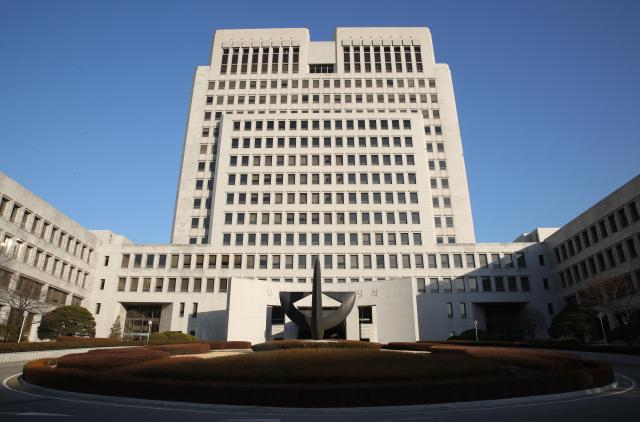
The Supreme Court has ruled that if a court issues a verdict on a previously scheduled date despite having postponed it, that ruling is invalid. The court emphasized that the effect of a legally changed ruling date cannot be reversed due to a clerical error or subsequent actions.
According to legal sources on June 28, the Supreme Court's first division, led by Justice Shin Suk-hee, recently overturned a lower court's ruling that had dismissed a claim for a contractual payment and sent the case back to the Daejeon District Court.
Previously, the Daejeon District Court's appellate division concluded the hearings on October 28 of last year and set the ruling date for December 9. The presiding judge later changed the ruling date to December 16 in the afternoon but then issued another order on the morning of that day to postpone it to January 13 of the following year. The updated date was subsequently communicated to both parties on the morning of December 16.
The issue arose when the appellate judge, unaware of the postponement, issued the ruling on the originally scheduled date of December 16 in the afternoon. After realizing the mistake, a court clerk contacted both parties the next day to explain that the ruling had already been issued despite the erroneous communication regarding the date change and subsequently discarded the original order. However, the losing plaintiff appealed against this decision.
The Supreme Court firmly stated that the actions of the lower court constituted a clear violation of the law. Once the order to change the ruling date was communicated to both parties, the ruling date was legally changed to January of the following year, rendering the original December 16 date invalid.
The court noted, "The effect of the date change does not disappear simply due to a court's error or subsequent disposal of the order," and emphasized that issuing a ruling on a date that was not legally designated without proper notification constitutes a significant procedural violation, leading to the overturning of the lower court's decision.
* This article has been translated by AI.
Copyright ⓒ Aju Press All rights reserved.