
The competition among pharmaceutical companies in South Korea's brivaracetam market is intensifying as the original product exits. Starting next month, seven generic versions of the brivaracetam-based epilepsy treatment will be covered by health insurance, leading to expectations that sales power and early market capture will determine success.
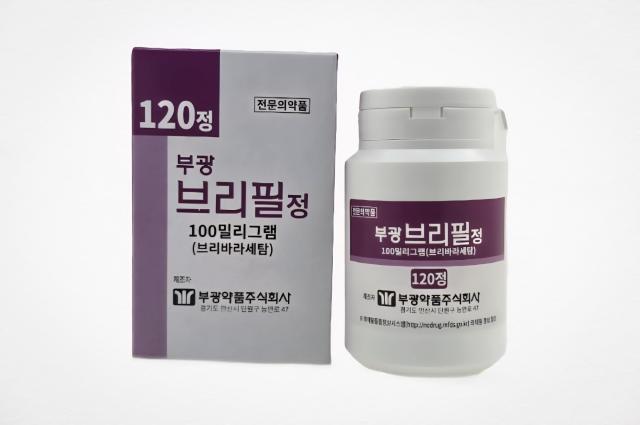
According to a partial amendment to the Ministry of Health and Welfare's guidelines on health insurance coverage, seven generic products containing brivaracetam will be eligible for coverage starting July 1. The products include DaeWoong Pharmaceutical's 'Brivatop', Hanin Pharmaceutical's 'Briva', Myungin Pharmaceutical's 'Buripham', Bukhoo Pharmaceutical's 'Bukhoo Brifil', Samjin Pharmaceutical's 'Brisetam', Chong Kun Dang's 'Briveta', and HyunDai Pharmaceutical's 'Brilect'. Since all products will have the same insurance price cap, competition is likely to hinge more on sales capabilities than pricing.
The original brivaracetam product is UCB's 'Briviact', which received domestic approval in 2019 but was never launched due to unsuccessful price negotiations with health insurance. With the expiration of its substance patent earlier this year, domestic companies are now obtaining approvals for generics.
Bukhoo Pharmaceutical has expanded its CNS portfolio by adding brivaracetam as a combination option to its existing first-line epilepsy treatment, the Orphill family (extended-release tablets, syrup, and injections). A company representative stated, "With the launch of Bukhoo Brifil, we aim to strengthen our CNS competitiveness and continue investing in the development of treatments for neurological disorders, including epilepsy."
Samjin Pharmaceutical is also expanding its CNS business by launching 'Brisetam', following its market-leading generic epilepsy treatment 'Epiletam'. DaeWoong Pharmaceutical and Chong Kun Dang are expected to accelerate their market strategies, leveraging their comprehensive hospital sales networks.
This competition is noteworthy because it is occurring before the original product has established a market presence. The market potential is significant, as epilepsy treatments are often prescribed for long durations, and once initiated, switching medications is uncommon. Thus, early adoption by hospitals can greatly influence market share. A stable supply chain and prescription reliability are likely to lead to prolonged prescriptions.
Jung Yoon-taek, director of the Pharmaceutical Industry Strategy Research Institute, remarked, "Brivaracetam presents an attractive market as a potential substitute for the second-generation epilepsy treatment levetiracetam. Epilepsy treatments tend to remain unchanged once prescribed. He added, "The entry of Chong Kun Dang and DaeWoong Pharmaceutical may provide competitive advantages in hospital sales."
Industry observers note that the current situation may mirror the past case of UCB's epilepsy treatment 'Bimpet' (active ingredient lacosamide), which lost market share to SK Chemicals' generic 'Bimsukjeong' while lacking health insurance coverage.
Director Jung stated, "Although several generic companies are entering the market, the outcome will likely be determined within the first 3 to 6 months. The key variable will be which company first passes the large general hospital's drug committee (DC)."
* This article has been translated by AI.
Copyright ⓒ Aju Press All rights reserved.