
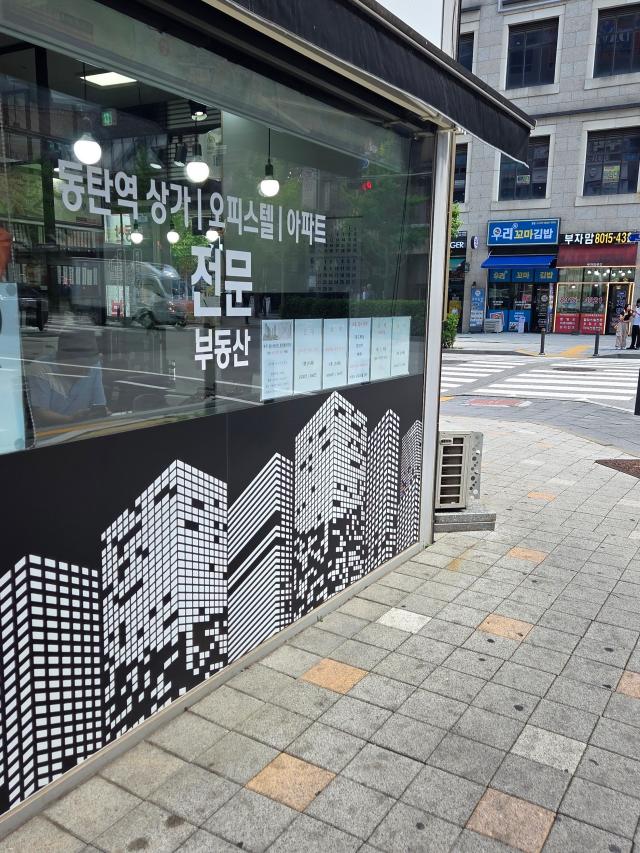
The 'Yongpyeonghwa' semiconductor belt, emerging as a new growth axis in the metropolitan real estate market, is showing mixed trends amid regulatory uncertainties. The southern Gyeonggi region, connecting Yongin, Pyeongtaek, Hwaseong, and Suwon, has experienced strong demand driven by semiconductor investments, proximity to workplaces, and improvements in transportation networks. However, recent discussions about potential land transaction permit zones and fatigue from short-term price surges have led to a more cautious market stance.
According to the Korea Real Estate Agency's weekly apartment price trends for the fourth week of June, apartment prices in Hwaseong's Dongtan District have risen 11.38% this year, the highest cumulative increase in the Yongpyeonghwa area. The weekly increase was 1.65%, significantly above the overall Gyeonggi increase of 0.19%. However, this marks a decrease from the previous week's rise of 2.22%. While the cumulative increase remains substantial, the momentum has somewhat slowed following the rapid price surge.
Dongtan is noted as a prime area benefiting from a balloon effect after being excluded from direct regulatory zones during the government's real estate measures in October 2022. At that time, the government designated various areas in Seoul and parts of Gyeonggi as adjustment zones and speculative overheating zones, applying land transaction permit systems to apartment transactions in those areas. Regions such as Gwacheon, Gwangmyeong, Seongnam's Bundang, Sujeong, and Jungwon districts, Suwon's Yeongtong, Jangan, and Paldal districts, Anyang's Dongan district, Yongin's Suji district, Uiwang, and Hanam fell under regulatory influence.
In contrast, Dongtan and Yongin's Giheung district were removed from direct regulatory areas. This shift, combined with the semiconductor industry's growth, has attracted buyers to these regions, which have relatively fewer burdens from loans, taxes, and transaction requirements. Areas still under regulation, like Suwon's Yeongtong and Yongin's Suji, have seen a reorientation towards actual demand, while non-regulated areas like Dongtan and Giheung have also attracted some investment demand.
Nam Hyuk-woo, a real estate researcher at Woori Bank, noted, "The commuting demand from semiconductor industry workers and the concentration of buyers in areas with apartments priced below 1 billion won are driving price increases in related areas like Giheung and Byeongjeom."
However, there is a discrepancy between statistical price increases and the market's actual sentiment. The weekly price index reflects a lag in reporting existing contracts and reported prices, making it difficult to immediately capture the cautious sentiment observed in the market. Real estate agents report that buyers in major Dongtan complexes, which have seen rapid price increases, are now more inclined to weigh prices against potential regulatory impacts rather than immediately following reported high prices.
The premium of non-regulated areas is now being cited as a justification for further regulations. Dongtan's rapid price growth has led to discussions about the possibility of designating it as an adjustment zone or speculative overheating zone, as well as the potential for land transaction permit zones. However, the decision on actual regulations will likely consider not only price increases but also transaction volumes, speculative demand, and the potential for spillover into surrounding areas.
Yongin also shows significant regional disparities. Suji district is already under regulatory influence but maintains a high cumulative increase of 9.45% this year. Giheung district has risen 6.21% this year, supported by demand from the Samsung Electronics Giheung campus. In contrast, Cheoin district, despite being part of the semiconductor cluster, has seen only a 1.65% increase this year due to underdeveloped living infrastructure and transportation conditions.
Suwon's Yeongtong district is considered a key residential area within the semiconductor belt but is already facing regulatory burdens. While proximity to Samsung Electronics' headquarters and R&D functions continues to drive demand, the stricter transaction requirements following its designation as a speculative overheating zone and land transaction permit zone are limiting buyer interest. Yeongtong's cumulative increase this year stands at 6.15%.
Pyeongtaek has a solid industrial base with the Samsung Electronics Pyeongtaek campus, but factors like the development of the Godeok International New Town and Brain City are also influencing the market. While there is effective demand from the semiconductor sector, the pace of recovery in the sales market is relatively slow due to the large-scale development and supply volumes. This year, cumulative sales prices have dropped by 2.49%, showing a different trend compared to Dongtan, Giheung, and Suji.
Experts believe that while the strength in the southern Gyeonggi region is driven by expectations of a booming semiconductor market and residential demand, increasing regulatory concerns could lead to simultaneous shifts in demand and a contraction in transactions. Park Won-gap, a senior real estate expert at KB Kookmin Bank, explained, "If regulatory zones are designated, leading to stricter loan and tax regulations and a reduction in gap investment demand, we may see some cooling in demand and a stabilizing effect on prices."
* This article has been translated by AI.
Copyright ⓒ Aju Press All rights reserved.