
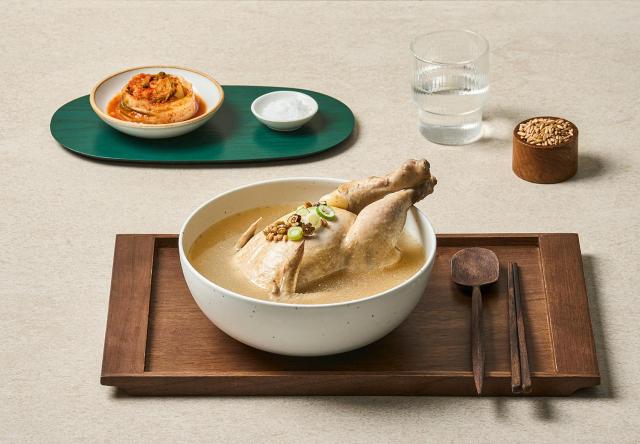
Recently, an office worker named Kwon stopped in front of a samgyetang restaurant in Seoul after seeing the menu outside. The price for his favorite bowl of samgyetang had exceeded 20,000 won. Kwon remarked, "It used to be a tradition to eat samgyetang with colleagues on Chobok, but now the price has become burdensome. This year, I plan to buy ready-to-eat samgyetang and cook it at home."
As the price of samgyetang, a popular summer health food, continues to rise, the landscape of Chobok celebrations is changing. Instead of dining out, more people are opting for home-cooked meals using convenient ready-to-eat options, leading to a surge in demand for what is being termed 'home health food.' The food industry is responding by launching new products that offer restaurant-quality taste and competitive pricing.
According to the Korea Consumer Agency's price information portal, 'Chamgaguk,' the average price for a serving of samgyetang in Seoul last month was 18,154 won, a 2.8% increase from 17,654 won during the same period last year. In some well-known restaurants, the price has already surpassed 20,000 won per bowl.
The rising costs of raw materials are also contributing to this trend. The Korea Institute of Animal Products Quality Evaluation reported that the average price of broiler chickens as of June 28 was 6,605 won per kilogram, an 18.6% increase from last year's average of 5,668 won.
This inflation has led to a growing demand for ready-to-eat health foods. From March to May this year, sales of samgyetang HMR (home meal replacement) products from Shinsegae Food rose by 38% compared to the same period last year. Notably, sales in May, when the heat began to rise, increased by 55% year-on-year. Online shopping platforms are offering ready-to-eat samgyetang for under 10,000 won per pack, about half the price of restaurant offerings, enhancing their appeal.
Food companies are introducing new products that incorporate innovative ingredients and technologies to cater to increasingly discerning consumer tastes. Shinsegae Food has expanded its product line with the addition of 'Properly Prepared Farro Samgyetang,' utilizing ancient grain farro alongside its existing 'Olban Nutritional Samgyetang' and 'Olban Samgyetang Jeong.'
Ottogi has launched 'Neungi Samgyetang,' featuring domestic chilled chicken with matsutake mushrooms, garlic, and ginkgo nuts, targeting consumers in their 40s and 50s. CJ CheilJedang introduced 'Bibigo Perilla Nurungji Samgyetang,' which improves the cooking process to reduce bone fragments, a common drawback of ready-to-eat samgyetang.
The variety of health food options is also expanding. Dongwon F&B has introduced 'Yangban Health Black Goat Soup' using naturally raised black goats and 'Yangban Beef Bone Soup' utilizing Hanwoo beef bone broth, broadening its offerings beyond samgyetang. Hotel Shilla has launched nine premium health food gift sets, including 'Premium Shilla Samgyetang' and 'Premium Hanwoo Galbitang,' targeting the high-end market.
An industry insider noted, "In the past, it was common to visit samgyetang restaurants on Chobok, but recently, more consumers are enjoying ready-to-eat products that replicate restaurant-quality flavors at home. The improvement in the quality of ready-to-eat meals, the rise of single-person households, and ongoing inflation are all contributing to the notable growth of the ready-to-eat health food market."
* This article has been translated by AI.
Copyright ⓒ Aju Press All rights reserved.