
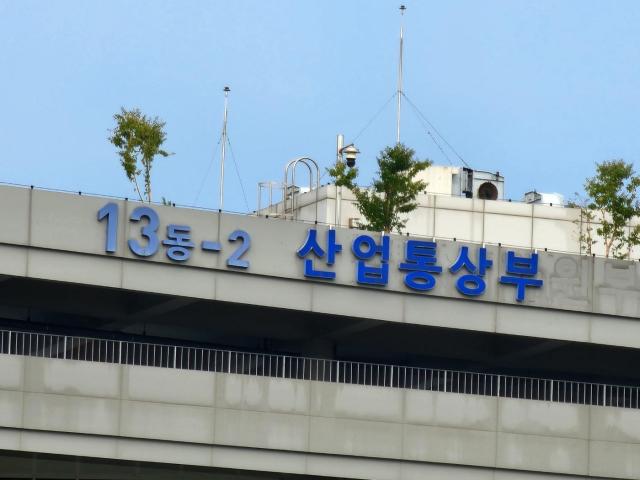
On June 29, the Ministry of Trade, Industry and Energy announced the "Manufacturing AI 2030 Strategy" during the "Korea's Great Leap: Three Mega Projects National Report Meeting" held at the Blue House.
In response to a declining working-age population and intensified global manufacturing competition, the government aims to advance the AI transformation of manufacturing (M.AX) to boost productivity and competitiveness.
The strategy focuses on three key areas: establishing a national manufacturing data management system, developing specialized AI models for manufacturing, and expanding AI across industrial complexes. The government plans to manage manufacturing data at a national level and create a framework for disseminating AI models throughout the manufacturing sector.
To support this, the government will establish a "National Manufacturing Data Library" to manage foundational data for manufacturing AI. This initiative will connect fragmented manufacturing data from various ministries and agencies while ensuring a secure system for data sharing among companies. Measures will also be implemented to standardize, encrypt, and anonymize data to prevent the leakage of core technologies.
Based on the data secured by the government, specialized AI models for manufacturing will be developed in phases, ranging from lightweight models for specific processes to comprehensive AI foundation models covering the entire manufacturing sector. The initiative will also integrate physics-based AI and manufacturing robotics technologies to create a "full-stack AI factory" capable of self-operating from design to production and logistics.
The government will also expand the AI utilization framework for regional manufacturing. An "M.AX Cluster" will be established around industrial complexes to create shared infrastructure, including testing grounds and edge computing centers. The government plans to expand collaborative AI smart factory projects involving both large and small enterprises to support the adoption of AI by small manufacturers.
In addition, workforce training and investment support will be implemented. The government will initiate a project to accumulate the skilled techniques of retiring manufacturing experts as AI training data and will introduce a certification system for specialized manufacturing AI companies along with training programs for master's and doctoral-level professionals. Plans are also in place to leverage policy financing, such as the National Growth Fund, to support private investment in the manufacturing AI sector.
The government will begin laying the legal groundwork for the expansion of manufacturing AI. Revisions to the "Act on the Promotion of Industrial Digital Transformation and AI Utilization" and the "Small and Medium Enterprises Smart Manufacturing Innovation Act" are planned.
Minister of Trade, Industry and Energy Kim Jeong-kwan stated, "M.AX is a task that will determine the future competitiveness of our manufacturing industry," adding, "We will enhance execution capabilities in collaboration with relevant ministries to ensure this strategy translates into tangible results on the manufacturing floor."
* This article has been translated by AI.
Copyright ⓒ Aju Press All rights reserved.