
SEOUL, July 01 (AJP) — Tech-savvy and risk-taking South Koreans are learning fast on exotic bets, turning from sluggish cryptocurrency trading to highly leveraged equity investments.
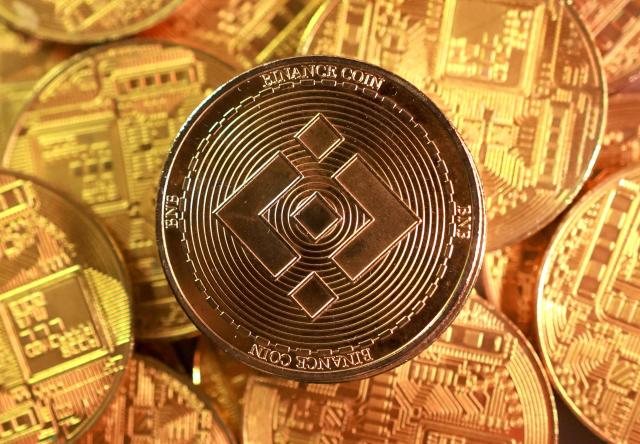
An expanding army of mom-and-pop investors is pouring billions of dollars into high-risk leveraged products on offshore cryptocurrency exchange Binance, where they can place bets of up to 150 times on the KOSPI through products banned at home.
According to crypto industry sources, Binance began offering KORUUSDT on June 22, a futures contract linked to the U.S.-listed Direxion Daily South Korea Bull 3X Shares ETF (KORU), which tracks three times the KOSPI's daily performance. The exchange later raised the contract's maximum leverage to 50 times, allowing traders to take positions equivalent to as much as 150 times the index's daily movement.
The announcement also generated buzz among Korean retail investors on X.
In replies to a post about Binance's Korea-linked leveraged products, one user wrote, "The FOMO is insane," while another joked, "Casinos and horse racing might as well shut down now," as investors reacted to the growing appetite for highly leveraged bets.
Earlier this month, the exchange also launched perpetual futures tied to Samsung Electronics, SK hynix and Hyundai Motor, initially offering leverage of up to 20 times. Strong investor demand prompted Binance to introduce a KOSPI-linked contract and raise leverage on its Samsung Electronics and SK hynix futures to 50 times.
The trend has since spread rapidly across the offshore crypto industry. KuCoin, one of several overseas cryptocurrency exchanges flagged by South Korea's Financial Services Commission for operating without registering with local authorities, listed 20-times leveraged perpetual futures tied to KORU on June 24. OKX and Bybit introduced similar products the same day, while Bitget, MEXC, XT and BitMart have also launched Korea-linked leveraged contracts.
Such trades are not allowed in South Korea's regulated financial markets, where retail investors face strict leverage limits and must complete mandatory education before trading leveraged products. By contrast, anyone with an account at a local cryptocurrency exchange can purchase the U.S. dollar-pegged stablecoin USDT, transfer it to Binance and begin trading without comparable restrictions.
Trading has picked up quickly.
According to TradingView, a global financial market data and charting platform, cumulative trading volume in KORUUSDT, a perpetual futures contract linked to a triple-leveraged ETF tracking the KOSPI, reached $754.4 million between June 22 and June 26.
SKHYNIXUSDT, a futures contract tied to SK hynix shares, attracted much heavier trading, with cumulative volume reaching $6.42 billion over the same period. HYUNDAIUSDT and SAMSUNGUSDT, linked to Hyundai Motor and Samsung Electronics shares, recorded trading volumes of $473.6 million and $52.8 million, respectively.
Industry officials estimate that Korean investors account for a significant share of the activity. That has raised concerns that trading demand and fee income are flowing offshore, while investors may have little recourse if disputes arise or platforms fail.
Market participants have also warned of a potential "wag the dog" effect, in which trading on offshore derivatives markets begins influencing the underlying Korean stocks rather than the other way around.
Because Binance operates around the clock, sharp price swings in Korea-linked derivatives during overnight or holiday trading could shape investor sentiment before the Seoul market opens the following day.
The risks became evident during last week's market turmoil. KORU surged to an intraday high of $1,111 on June 22 before plunging to around $700 the following day after the KOSPI suffered its steepest one-day decline in years, tumbling 9.99 percent. The nearly 40 percent drop likely triggered widespread liquidations among highly leveraged traders.
Analysts say such products can amplify losses during periods of sharp market volatility.
"If liquidity dries up on Binance and these Korea-linked derivatives suddenly plunge, it could unsettle the Korean market when it opens the next day," said Kim Min-seung, head of research at Korbit.
Asked whether it is monitoring the trend or considering regulatory action, the Financial Supervisory Service declined to comment.
The episode has exposed a growing regulatory blind spot: while South Korea has tightened safeguards in its domestic financial markets, it has little control over increasingly risky Korea-linked products traded offshore.

Copyright ⓒ Aju Press All rights reserved.
