
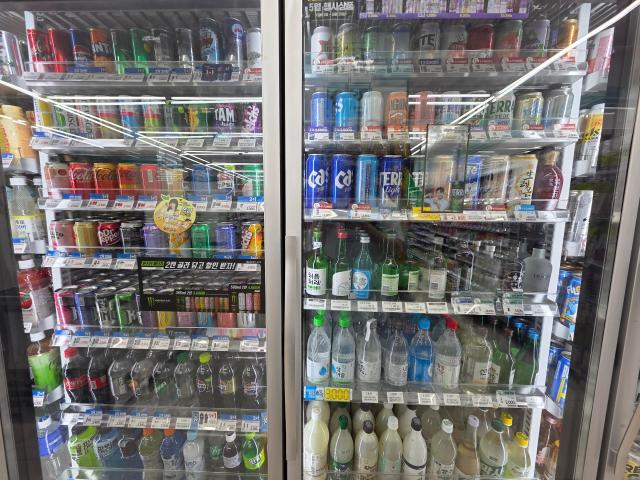
As the second half of the year begins, prices for cup ice, beverages, and processed foods at convenience stores are rising. Food companies, which have been grappling with high exchange rates and increased costs for raw materials and packaging, are weighing the timing for further price adjustments, raising concerns about additional inflation in consumer prices.
According to the retail industry on July 1, convenience stores CU and Emart24 have increased the prices of major cup ice products by 100 to 200 won. The price of 180g cup ice has risen from 700 won to 800 won, while the 230g big cup ice has gone from 900 won to 1,000 won. Following price hikes by GS25 and Seven-Eleven, all four major convenience store chains have joined the trend.
Additionally, due to rising livestock prices, the costs of processed eggs and chicken breast have also surged. The price of semi-boiled eggs and smoked eggs (two pieces) has increased from 2,600 won to 2,700 won, while the price of roasted eggs (three pieces) has gone from 3,400 won to 3,600 won. Harim chicken breast has also risen from 4,700 won to 5,000 won. According to the Korea Institute of Animal Products Quality Evaluation, as of June 30, the average consumer price for 30 large eggs was 7,583 won, an 8.2% increase from 7,011 won the previous year. The price of domestic broiler chicken has risen by 13.7% to 6,339 won per kilogram, up from 5,574 won last year.
The alcoholic beverage industry is also implementing price increases. Diageo Korea has raised the supply prices of Guinness Draft beer (20 liters) and Guinness Draft Micro Draft (558ml) by 5% and 7.3%, respectively. Windsor Global, a whiskey company, will increase the release prices of three Windsor products and three W products by an average of 4.9% starting June 6.
Earlier, Lotte Chilsung Beverage raised the release prices of 44 items across 12 brands, including Chilsung Cider and Pepsi Cola, by an average of 5.3% starting June 26. The company explained that aluminum cans and PET bottles account for about half of total raw material costs, and rising exchange rates have increased the burden of importing concentrates and logistics.
The food industry is closely monitoring competitors and government actions following Lotte Chilsung's price adjustments. After recently lowering prices on some ramen and cooking oil products in April, companies are hesitant to publicly raise prices again. Given government pressure for price stability and potential consumer backlash, many believe it will be challenging to raise prices across all products in the short term.
However, as cost pressures persist, there is speculation that companies may first reduce discount rates, cut promotions, and phase out low-margin products as indirect measures to defend profitability. Different pricing strategies and promotional conditions may also be expected across various distribution channels.
An industry insider stated, "In a situation where raw materials, packaging, and logistics costs are rising simultaneously, it is difficult to keep prices unchanged. Considering the government's price stability policy and consumer backlash, companies will likely deliberate deeply on the timing and methods of price increases."
* This article has been translated by AI.
Copyright ⓒ Aju Press All rights reserved.