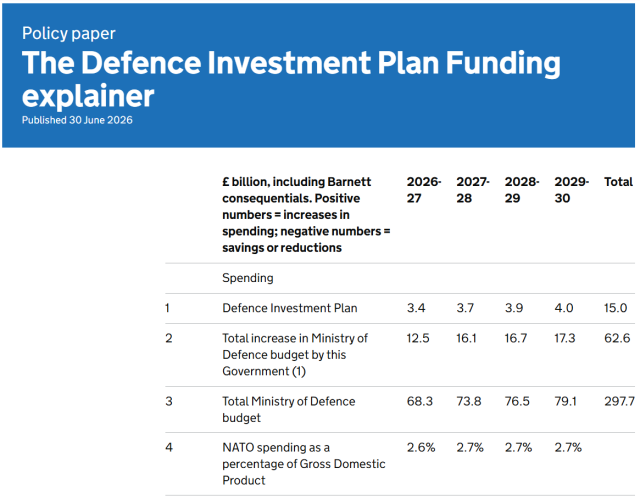
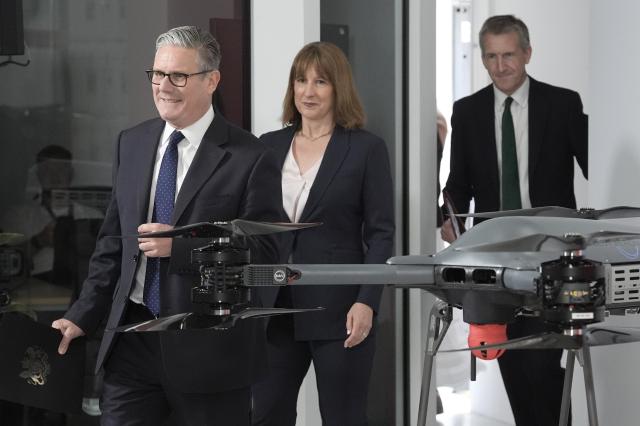
The British government on Tuesday unveiled an additional 15 billion pounds ($20 billion) in military spending, focusing on drones, autonomous systems, next-generation fighter aircraft and other technologies expected to define future warfare.
Under the plan, Britain's defense spending will rise to 2.7 percent of gross domestic product by 2029, still short of the government's longer-term NATO commitments. London has pledged to increase the figure to 3 percent during the next parliamentary term and to NATO's 3.5 percent target by 2035, although it has yet to present a detailed funding roadmap.
"This demands a decisive strengthening of European capabilities," British Prime Minister Keir Starmer said, adding that the effort was intended not to replace the United States but to reinforce the transatlantic alliance.
The renewed emphasis on defense cooperation comes as Europe prepares for a future in which Washington expects allies to shoulder a greater share of the continent's security burden. During the recent U.S.-Iran conflict, President Donald Trump criticized NATO members for staying out of the U.S. military campaign and again threatened to reduce America's commitment to the alliance.
Although Washington has since reaffirmed its support for NATO, the episode has intensified pressure on European governments to strengthen domestic defense industries while expanding partnerships with trusted allies.
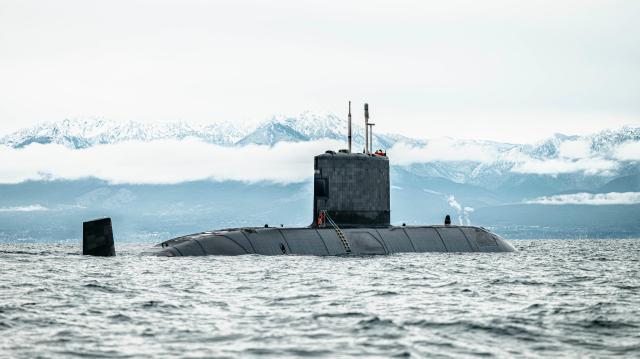
That changing strategic environment is becoming increasingly relevant to the Canadian Patrol Submarine Project (CPSP), under which Ottawa plans to procure up to 12 conventionally powered submarines.
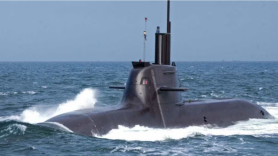
The competition has narrowed to South Korea's Hanwha Ocean, offering the KSS-III Batch-II submarine, and Germany's Thyssenkrupp Marine Systems (TKMS), which is proposing its Type 212CD design.
"CPSP is not just about delivering a submarine platform. It is about building long-term industrial capability and skilled jobs in Canada," said Charlie S.C. Eoh, head of Hanwha Ocean's naval ship business.
Hanwha has partnered with British defense company Babcock for the Canadian bid. Under the proposed arrangement, Hanwha would build the submarines, while Babcock Canada would provide in-country maintenance, repair and long-term lifecycle support.
Babcock has also participated in South Korea's KSS-III submarine program since 2011. Under a seven-year contract awarded by Hanwha Ocean, key components of the submarine's weapons handling and launch system are designed and manufactured in Britain, with other components produced under license in South Korea.
The British government has likewise expressed support for the partnership, giving Hanwha additional diplomatic backing as it seeks to challenge Germany's long-established position as a NATO submarine supplier.
"The U.K. government would like to work with Hanwha on the Canadian submarine project," British Ambassador to South Korea Colin Crooks said during a recent reception attended by President Lee Jae Myung.
TKMS, meanwhile, is emphasizing the Type 212CD's interoperability with NATO forces and the industrial ecosystem built around its joint submarine program with Norway. Its proposal offers Canada access to an established European defense partnership involving two NATO members.
The Hanwha-Babcock partnership seeks to narrow that advantage by combining South Korea's shipbuilding capability with Britain's defense industrial network, reinforcing its credentials in NATO interoperability, long-term sustainment and allied industrial cooperation.
Britain's latest defense investment should not, however, be interpreted as a direct endorsement of Hanwha's Canadian bid.
The Canadian submarine project is not mentioned in the government's defense strategy, and London has not publicly linked the spending package to the competition. But the plan does reinforce Britain's broader commitment to expanding international defense industrial partnerships, a trend that could strengthen the strategic rationale behind the Hanwha-Babcock alliance as Ottawa weighs not only submarine performance, but also long-term industrial and geopolitical partnerships.

Copyright ⓒ Aju Press All rights reserved.