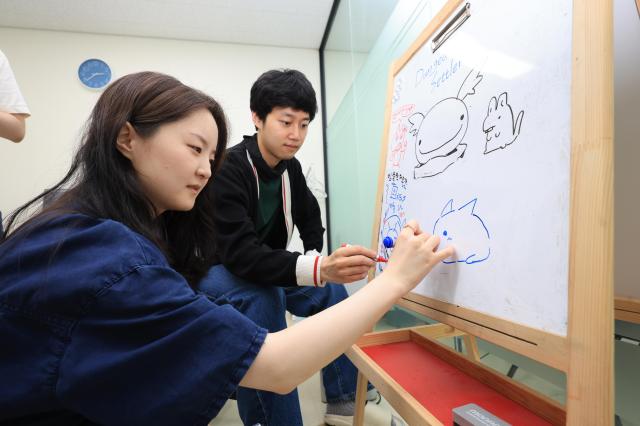
But blend dungeon crawling, settlement management and punishing survival together, and perhaps there is still room for something new. That is the wager of a six-person studio in Seoul.
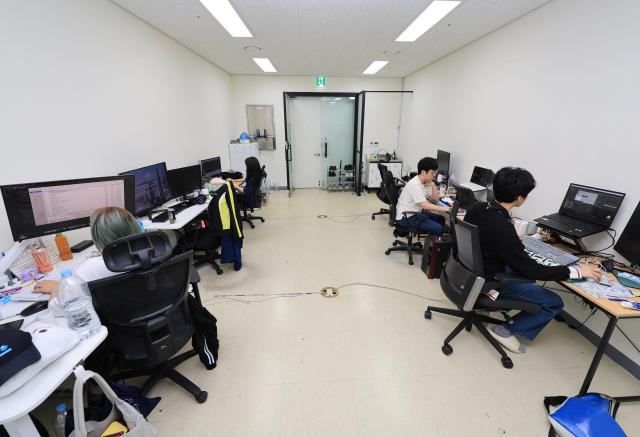
In a compact office tucked inside Seoul's Gasan Digital Complex, six desks sit shoulder to shoulder, three on each side of a narrow room.
At one, a developer patiently places pixels one dot at a time. At another, an art director sorts through sprites. A third fine-tunes just how severely the game should punish its players.
A corner of the office is set aside as a resting nook, complete with a yoga mat, cushions and a small sofa for stolen moments of stretching between builds. Figures from the anime Frieren: Beyond Journey's End stand guard over desks littered with empty energy drink cans and densely scribbled notes.
This is Can Opener, a six-person independent studio — five were in when AJP visited on Wednesday — developing Dungeon Settlers, a simulation strategy game that has attracted about 170,000 wishlists on Steam ahead of its early-access launch on Sept. 10.
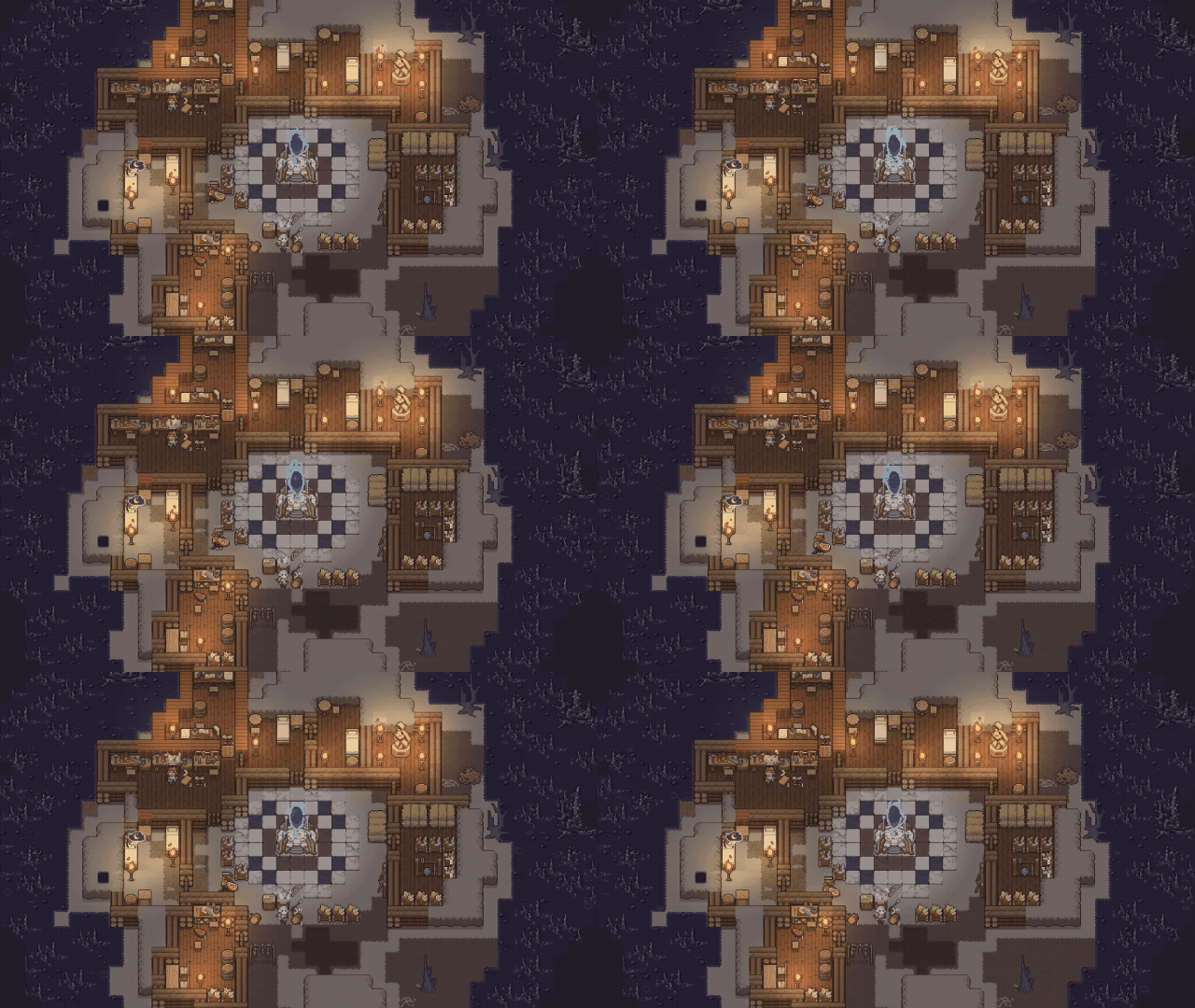
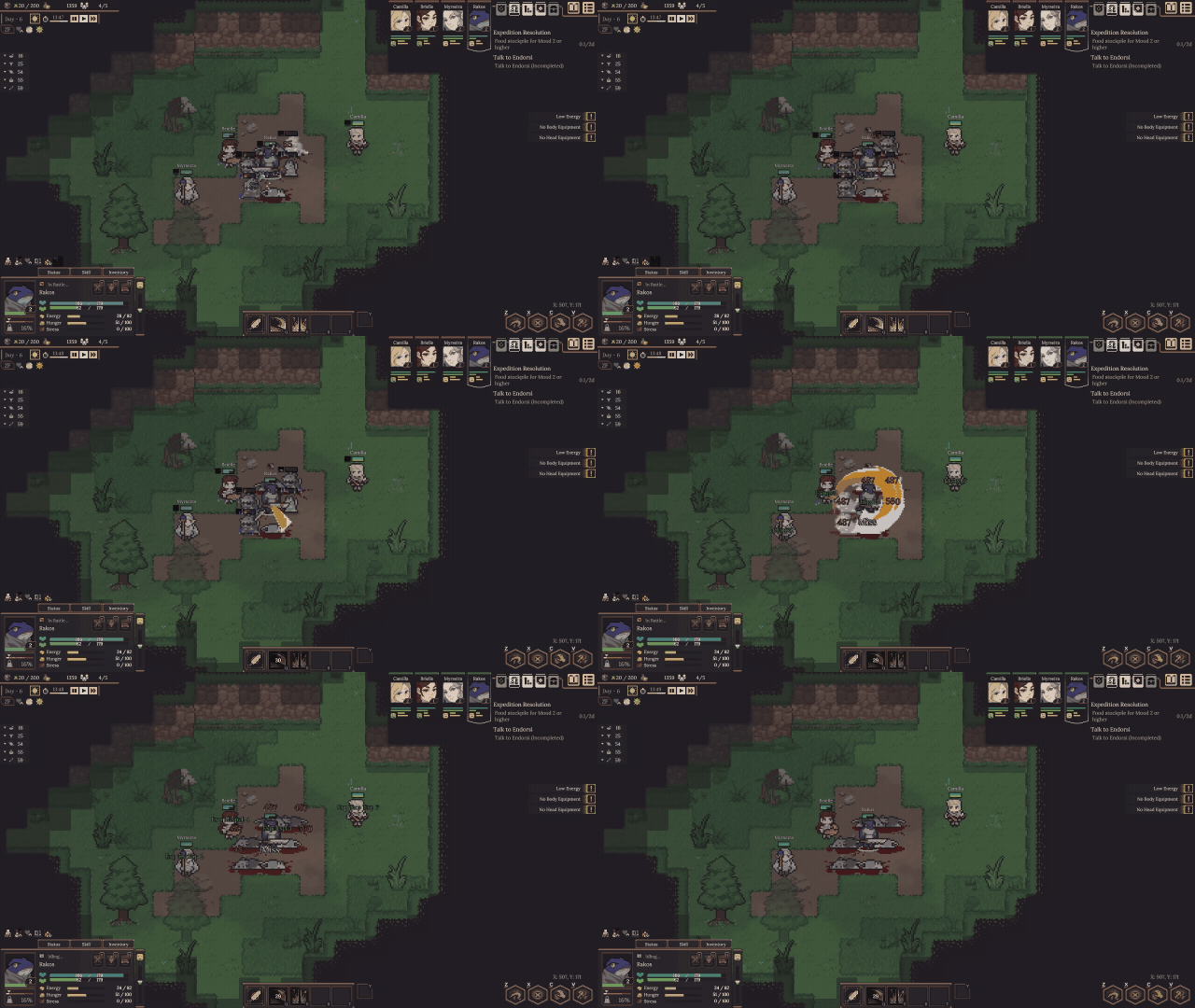
In Dungeon Settlers, players manage a settlement of up to 10 characters while sending parties of four into a sprawling dungeon. There they gather food and materials, battle monsters and face a recurring dilemma: descend one floor deeper through a portal in search of greater rewards, or retreat safely to the surface with what they have collected.
Every settler constantly balances health, mental health, energy, hunger and mood. Neglect any one of them, and even a carefully trained party can collapse within seconds.
There are no fixed character classes. Each settler begins with different weapon proficiencies, innate traits and a flexible skill tree, allowing players to shape their own specialists as they venture ever deeper underground.
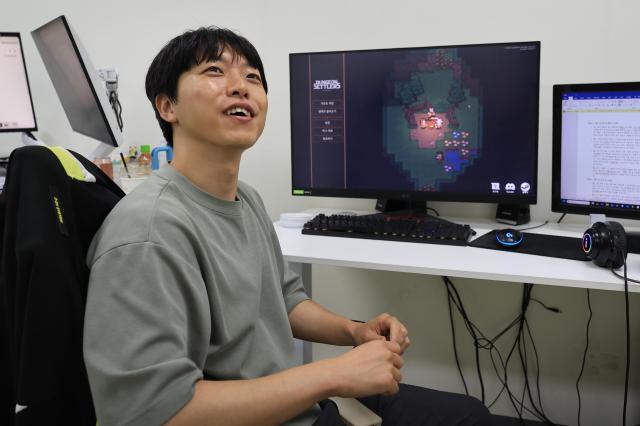
Studio head Logan Moon began the project alone in July 2023, drawing on years spent in CIEN, a game development club at Chung-Ang University in Seoul. A younger club member soon joined him, and the pair initially treated the project as little more than a learning exercise.
"At first, it was closer to wanting to make something fun than to founding a company," Moon said.
But the prototype possessed what he called a strangely addictive quality, convincing the pair to register a business in 2024.
The university club soon became an unexpected talent pipeline. Members playtested early builds, some stayed on, and the team gradually expanded to its current six members: three from the club, one of Moon's longtime friends and another outside recruit.
An anime, a webtoon and a "bible"
Long before writing a single line of code, Moon immersed himself in the games that would ultimately shape Dungeon Settlers. He cites RimWorld, Kenshi and Mount & Blade as lasting influences, admiring how they combine combat with managing an entire settlement or faction.
Then came an admission delivered with a laugh.
"It's a little embarrassing," Moon said, revealing that one of his biggest inspirations was the Japanese anime Is It Wrong to Try to Pick Up Girls in a Dungeon?, better known as 'DanMachi.'

"Dungeon crawlers are everywhere," he said. "But very few games focus on what happens after people come back to town. That's the part I found most interesting."
The Korean web novel and webtoon Surviving the Game as a Barbarian supplied the game's brutality.
"That webtoon is truly desperate. People drop dead, and the survivors claw their way through," Moon said. "I wanted to recreate that feeling as a game."
The result is a world where mistakes are punished harshly. A single misstep can cost a settler's life. Archers become nearly helpless when they run out of arrows. Parties that ignore their energy levels simply collapse from exhaustion — sometimes in the middle of combat.
Mood above all
Among all the game's mechanics, Moon devoted the most attention to mood, borrowing ideas from Darkest Dungeon's stress system to capture what he calls the emotional misery of dungeon life.
"Mood runs through the entire game," he said. "You have to develop the settlement to keep everyone's mood up, and you have to keep their mood up to run a proper expedition."
Allow morale to collapse, and settlers suffer mental breakdowns, abandoning battles or dying for reasons no spreadsheet can predict.
"The weight limit is an intended constraint. I wanted players to make strategic choices," Moon said.
He admitted the original version proved too unforgiving, however, and the current test build roughly doubles carrying capacity.
Fights, funding and a famous comment
Money proved to be the studio's greatest challenge.
Rather than pursue outside investment, the team agreed to split future revenue after launch — an arrangement Moon credits with keeping the company together.
Development also produced memories the team now treasures.
About a year into the project, they organized a seaside workshop intended purely for relaxation.
"I'm the CEO, but I was exhausted and wanted to rest," Moon recalled. "Then someone brought up work at a café, and we ended up spending the whole trip arguing about the game."
The biggest debate centered on the skill system — an unusual design with few precedents. Moon, who describes himself as the conservative voice in the room, initially opposed the idea before eventually giving in.
Another heated discussion ended with the team abandoning an ambitious tag-based crafting system in favor of something simpler.
Tynan Sylvester, creator of RimWorld — a colony simulation so influential that fans jokingly call it the genre's bible — left an admiring comment beneath a YouTube video featuring Dungeon Settlers.
The developers initially assumed the account was fake before confirming through an acquaintance that it really was Sylvester.
"Everyone here has played RimWorld," Moon said. "In this genre, if you haven't, people joke that you must be a spy."
Dwarves, beast-folk and deeper floors
Early access will launch with two dungeon regions, each containing multiple floors. The full release, planned roughly two years later, is expected to expand that to six regions.
Animal taming is also on the roadmap, allowing players to build ranches within their settlements.
Dwarves, a fantasy staple Moon regrets leaving out of the first version, are already planned, along with beast-folk.
"Don't build on borrowed money"
Asked what advice he would offer aspiring developers, Moon did not hesitate.
"Never start a project that only works if investment arrives."
"Making a good game is something you can control — you can work at it and improve," he said. "Investment is a decision that isn't yours to make. However good the game is, bad timing or bad luck can sink it."
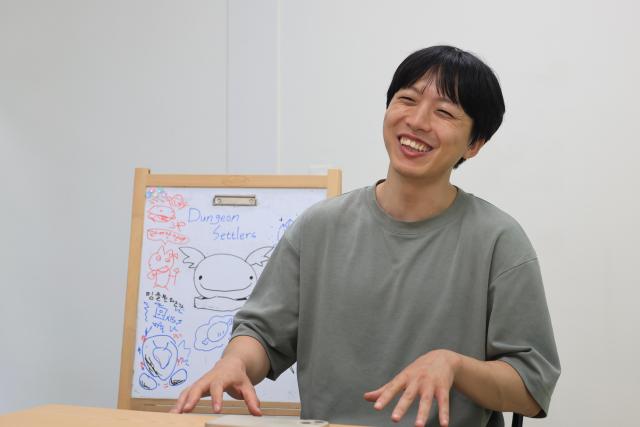
Can Opener targets players who enjoy strategy fused with settlement management, drawing lessons from games such as Darkest Dungeon and Battle Brothers. Moon encourages developers to trust their instincts, support them with data and play as many games as possible.
"I like building depth out of mechanisms," he said. "That is reflected in Dungeon Settlers, and it will be reflected in whatever we make next."
"For people who enjoy that kind of game, Can Opener will do its best. So please keep watching us."
What comes after the dungeon
Moon is already thinking beyond Dungeon Settlers.
One question appears beneath nearly every trailer: "Does it have multiplayer?"
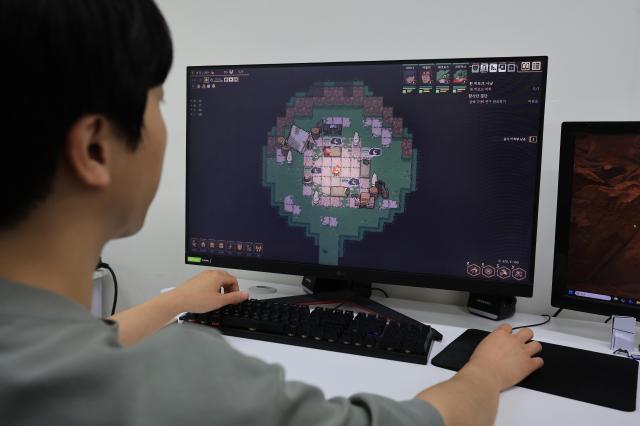
He is also sketching ideas for an isekai project, inspired by the hugely popular Japanese and Korean genre in which ordinary people are transported or reborn into fantasy worlds.
"The sheer number of those stories tells you people still want them," he said with a grin.
"Doesn't everyone love isekai?"

Copyright ⓒ Aju Press All rights reserved.