
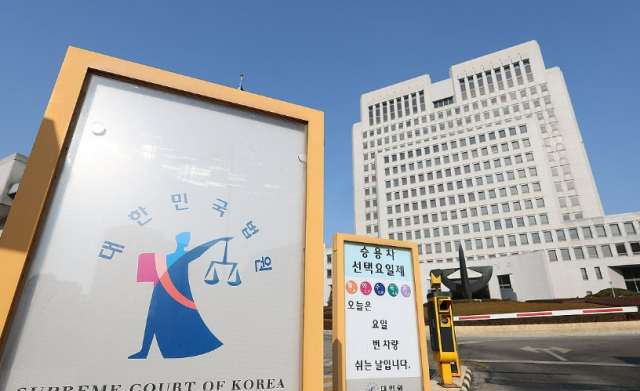
The Supreme Court of South Korea has overturned a lower court's ruling in a real estate fraud case involving a defendant accused of defrauding over 1.7 billion won. The court sent the case back to the Seoul High Court, stating that the lower court's decision was flawed as it did not consider the outcome of a separate fraud case against the defendant.
On July 3, legal sources reported that the Supreme Court's second division, led by Justice Eom Sang-pil, annulled the original sentence of two years and six months in prison for the defendant, identified as A, who was charged under the Special Economic Crimes Act for breach of trust.
A is accused of committing real estate fraud between 2018 and 2020 by failing to transfer ownership after receiving payments for real estate contracts, resulting in illicit gains exceeding 1.7 billion won.
Both the first and second trials found A guilty and imposed a sentence of two years and six months. The court had considered the defendant's prior conviction for breach of trust, which was finalized in 2024, as a basis for determining a fair sentence in relation to the concurrent offenses.
However, the Supreme Court disagreed with this approach. It emphasized that the separate fraud case against A should also be factored into the sentencing. The court noted, "The defendant was already charged with a separate fraud case before this incident. If a sentence of imprisonment exceeding a year was confirmed in that case, it would be considered a concurrent offense with this case."
The Supreme Court further stated, "The lower court should have examined whether a sentence of imprisonment exceeding a year was confirmed in the separate case. If such a ruling exists, it should have considered the fairness of sentencing in relation to concurrent judgments." It criticized the lower court for dismissing the appeal without taking these factors into account.
* This article has been translated by AI.
Copyright ⓒ Aju Press All rights reserved.