
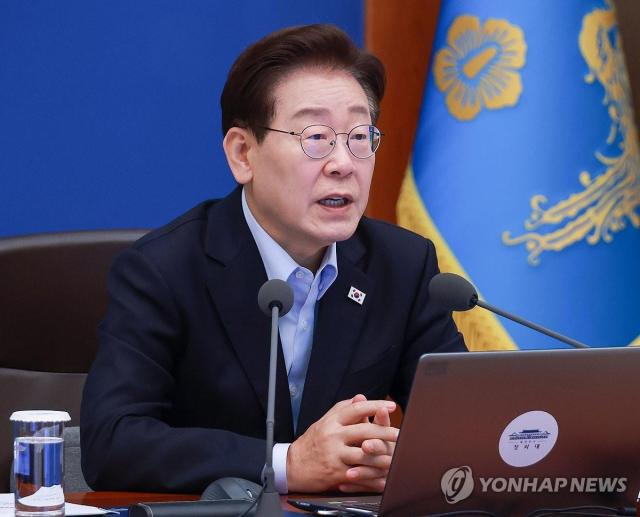
President Lee Jae-myung will attend the NATO summit starting July 7 and visit Mongolia. This follows his participation in last month's G7 summit, marking another significant appearance on the international stage. The focus of this trip will be defense industry discussions at NATO and resource and supply chain matters in Mongolia, emphasizing practical diplomacy aimed at economic, industrial, and security interests rather than mere diplomatic gestures.
Attending the NATO summit presents a pivotal opportunity for South Korea's defense industry. NATO member countries account for 55% of global defense spending, making it the largest defense market. In the wake of the Russia-Ukraine war, European nations are rapidly increasing their defense budgets, and military enhancement has become a top priority across Europe amid rising tensions in the Middle East.
South Korea has already established itself as a formidable player in the global defense market. Its K2 tanks, K9 self-propelled howitzers, FA-50 light attack aircraft, and Chunmoo multiple rocket launchers are gaining traction due to their competitive pricing, performance, and rapid delivery capabilities. Poland serves as a prime example of this success. However, true advancement will come when South Korea is integrated into NATO's supply chain beyond individual contracts with member nations.
The government's push for enhanced information sharing and defense cooperation under NATO standards is crucial in this context. NATO standards are not merely technical specifications; they serve as a gateway to the world's largest defense market. If South Korean companies can integrate into the NATO framework, it will not only facilitate entry into the European market but also expand opportunities for future joint development and production.
Another significant aspect of this trip is the visit to Mongolia. The global landscape is increasingly characterized by a reorganization of supply chains and competition for resources. China's export restrictions on rare earth elements have highlighted the risks of over-reliance on specific countries. Securing essential materials for batteries, semiconductors, electric vehicles, and artificial intelligence has become a matter of national survival.
Mongolia is rich in critical minerals, including rare earth elements, copper, and lithium. Its geographical proximity to South Korea and stable political relations make it an ideal partner. If the summit can solidify cooperation on critical minerals and supply chain development, it will significantly bolster South Korea's industrial competitiveness.
From a geopolitical perspective, Mongolia holds importance as it maintains a traditional friendship with North Korea while also fostering close ties with South Korea. In a context where inter-Korean dialogue has been stagnant for an extended period, Mongolia could serve as a valuable diplomatic asset. While immediate tangible results may be elusive, maintaining dialogue channels and securing diplomatic space is essential.
Diplomatic efforts are evaluated based on outcomes. Citizens will assess the success of this trip based on the increase in defense contracts, progress in integrating into NATO's supply chain, and the results of securing critical minerals.
The world has entered an era where security, industry, diplomacy, and economy are interconnected. Defense industries have become a future economic driver, minerals are now a matter of national competitiveness, and diplomacy has become part of industrial strategy. This trip, discussing defense at NATO and securing resources in Mongolia, reflects these changing dynamics.
South Korea is a nation that has grown through exports. The path to future growth lies in the global market. Diplomacy that prioritizes national interests, expands markets, secures supply chains, and lays the groundwork for future industries is the practical diplomacy that South Korea needs at this time.
* This article has been translated by AI.
Copyright ⓒ Aju Press All rights reserved.