
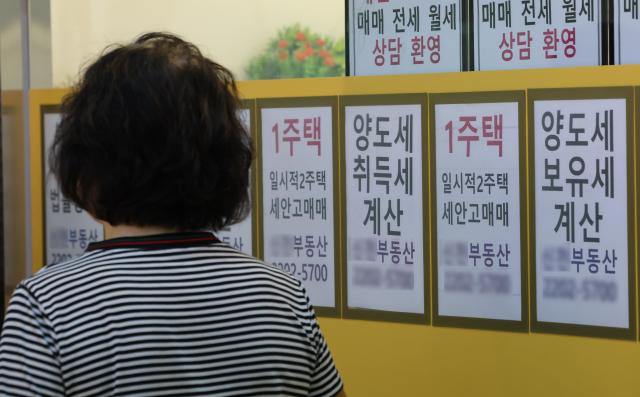
Seoul's housing prices continue to rise, showing no signs of slowing down. In the fifth week of June, the average sale price of apartments in Seoul increased by 0.27% compared to the previous week. Although the rate of increase has slowed, it still exceeds the national and metropolitan averages. Other surveys indicate that apartment prices in Seoul rose by 1.07% over the past month, with the upward trend spreading beyond just certain areas in Gangnam.
More concerning is the jeonse market. The price of jeonse, or long-term lease deposits, for apartments in Seoul surged by 1.43% from the previous month, marking the highest increase this year. As jeonse prices rise, genuine buyers are pushed into the sales market, further driving up sale prices and exacerbating jeonse instability. The current instability in Seoul's housing market is not limited to the sales sector.
The pressing question for the market is whether there will be enough homes available in the future. From January to May of this year, the number of completed apartments in Seoul dropped by 48.4% compared to the same period last year. The number of new constructions also fell by 25.3%. Even if permits and sales show some recovery, it takes time for construction and actual occupancy to occur. Supply is proven through occupancy, not announcements.
However, waiting solely for new apartment supply is not a viable solution. Redevelopment projects and public land require a lengthy process of permitting, relocation, compensation, and construction negotiations. Even if the government aims to increase supply now, it will take years before new homes are ready for occupancy. This is why the government must focus on recovering non-apartment supply, rental purchases, and jeonse rentals. The challenge is that supply driven solely by speed may create housing that the market ultimately rejects.
Non-apartment housing has served as a buffer for residents in Seoul. Young people, newlyweds, and low-income families who cannot afford to buy apartments or find jeonse have often settled in villas, multi-family homes, and officetels. However, issues such as jeonse fraud, poor management, parking shortages, and low liquidity have increased distrust in non-apartment housing. Simply relaxing regulations to increase numbers will lead to repeated failures. What is needed is a swift supply of safe, sustainable, and affordable housing.
It is necessary for the government to curb speculative demand. Measures such as designating overheated areas as regulated zones or land transaction permission areas and tightening loan regulations have had some effect in cooling short-term overheating. However, regulation is merely a means to buy time. Without adequate supply, suppressed demand will shift to the jeonse market or nearby areas. The key to stabilizing housing prices lies not in the intensity of regulation but in restoring trust in supply.
In this context, the recent appointment of a new president at LH (Korea Land and Housing Corporation) is not just a routine personnel change. LH has experienced a leadership vacuum for about eight months. During this time, the government proposed various supply plans, including direct implementation of public land, expansion of rental purchases, and urban supply. However, LH plays a crucial role in translating these plans into actual construction and occupancy. The organization is also responsible for key housing welfare projects, including happy housing for young people and newlyweds, as well as rental and jeonse programs.
The government's prolonged vacancy in the key supply role aimed at stabilizing Seoul's housing prices is a significant oversight. With the leadership gap now filled, there is little room for excuses. The government's supply measures are now subject to practical evaluation. What the market awaits is not additional promises but concrete timelines for construction, occupancy numbers, and resolution of project delays.
Seoul's housing prices respond more to actions than words. The government and LH must reduce bottlenecks in redevelopment projects, accelerate public land initiatives, and establish quality standards for non-apartment and rental housing supply. They need to instill confidence that homes will be provided where and when they are needed, at prices that are manageable. Relying solely on regulation will not keep the market engaged for long. Restoring trust in supply is the most reliable measure the government can take to stabilize housing prices.
* This article has been translated by AI.
Copyright ⓒ Aju Press All rights reserved.