
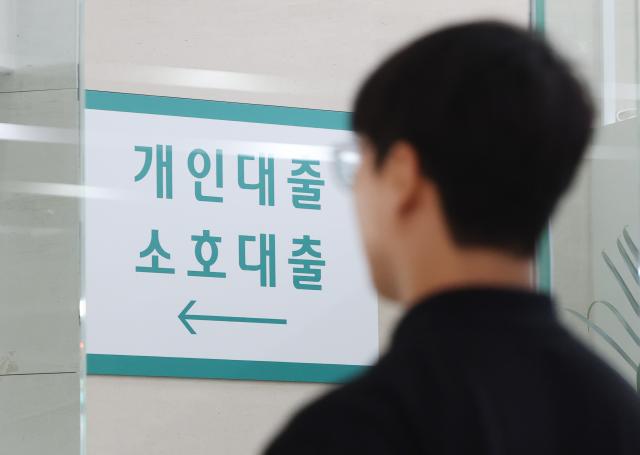
Following the financial authorities' tightening of household loan management, inquiries and executions on loan comparison platforms have reached record highs. This surge is interpreted as a reflection of 'last-minute' demand from borrowers eager to confirm their loan eligibility or secure loans before new regulations take effect amid concerns over rising interest rates in the second half of the year.
According to loan comparison platform Finda, the number of loan limit inquiries on June 22 reached 22,702, marking the highest figure for June. Despite the suspension of exposure for certain credit loan products by Woori Bank and KB Kookmin Card on June 11, loan demand remained robust.
The amount of loans executed also hit a June high of 9.6654 billion won on the first business day following the product exposure halt on June 15. The number of inquiries reached 22,227, the second highest. This represents an 81% increase in inquiries and a 64% increase in loan execution compared to the previous business day on June 12, when inquiries totaled 12,259 and loan execution was 5.89565 billion won.
Previously, banks had begun halting the exposure of credit loan products on loan comparison platforms in response to the financial authorities' stricter household loan management policies. Starting June 18, three internet banks also reduced their overdraft limits or ceased new sales. Consequently, voices of concern emerged within the loan comparison platform industry regarding potential revenue declines due to reduced intermediary volumes, yet actual loan demand has proven to be more resilient than expected.
Not only Finda but also other loan comparison platforms like Bank Salad and Toss have reported that the scale of inquiries and loan executions did not decline as significantly as anticipated following the suspension of product exposure by some financial institutions.
In fact, the outstanding household loan balance at the five major banks in South Korea (KB Kookmin, Shinhan, Hana, Woori, and NH Nonghyup) has continued to rise. As of the end of last month, the outstanding household loan balance stood at 774.9608 trillion won, an increase of 4.1309 trillion won from the previous month, marking the largest increase since July of last year. Personal credit loans also rose by 2.155 trillion won, maintaining a growth rate similar to May's increase of 2.1741 trillion won.
Industry insiders believe that the stringent household loan management by financial authorities has inadvertently stimulated short-term 'last-minute' demand. As banks reduce credit loan limits or restrict product exposure on platforms, there has been a temporary influx of demand from borrowers eager to confirm their eligibility or secure loans before regulations tighten. Additionally, concerns over worsening loan conditions due to potential interest rate hikes by the Bank of Korea in the second half of the year have further fueled this demand.
An industry representative stated, "In the two weeks following the suspension of product exposure, the scale of inquiries and loan executions remained stable without significant fluctuations. With the recent launch of living stability loans by savings banks, there is a possibility that mid- to low-credit borrowers, who had previously faced funding difficulties, will enter the market, suggesting that loan demand will continue steadily."
* This article has been translated by AI.
Copyright ⓒ Aju Press All rights reserved.