
The waters of the Middle East are ablaze once again. However, this conflict extends beyond military clashes between Iran and the United States or Israel. It ignites a fire that threatens the lifeblood of the global economy, shaking the very heart of industrial civilization. The Strait of Hormuz, through which one-fifth of the world's oil supply passes, is not just a maritime route; it is the main artery of modern capitalist civilization. When gunfire erupts here, it sends tremors through the New York Stock Exchange, causes fluctuations in Seoul's exchange rates, and impacts factory operations in Europe and manufacturing costs in China.
While the world has entered an era interconnected by AI, semiconductors, and financial algorithms, the most fundamental energy flows of civilization still rely on the sea and oil tankers.
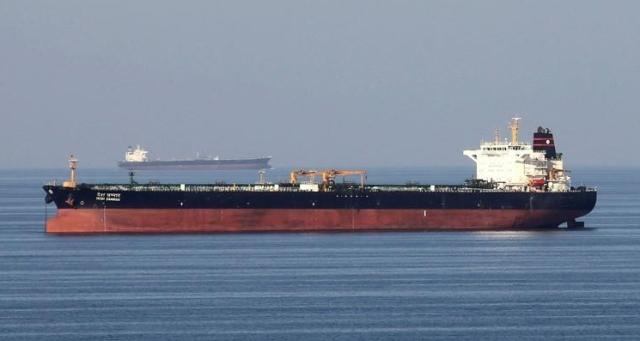
Recently, two contrasting scenes unfolded in the Strait of Hormuz, marking a pivotal moment for the Korean shipping industry. One involved the supertanker 'Basra Energy' from Jangkum Shipping, which safely transported 2 million barrels of oil while navigating the perilous strait with its tracking device turned off. The other was the Namuh, belonging to HMM, which was struck by an unidentified flying object, resulting in a breach and fire on the vessel.
Both incidents occurred in the same waters and amidst the same conflict, yet the outcomes were starkly different. This disparity is not merely a matter of chance or luck; it reflects a philosophical difference in how the shipping industry is perceived and an ability to assess risk. At a deeper level, it signifies a difference in understanding the essence of humanity, organization, and management.
The Strait of Hormuz has long been a battleground for human desires. Since the days of the ancient Persian Empire, it has served as a crucial gateway connecting the Silk Road and Indian Ocean trade. The Persians understood thousands of years ago that “whoever controls the passage controls the world.” This gatekeeping strategy is deeply embedded in their DNA. While the U.S. boasts overwhelming military power and aircraft carrier groups, Iran utilizes the narrow strait and asymmetric capabilities. It exhausts its adversaries through drones, mines, fast boats, missiles, electronic warfare, and psychological tactics, relying on tension and fear rather than direct confrontation.
Sun Tzu stated, “War is of vital importance to the state.” However, he also noted that “war is the way of deception.” Iran employs this deceptive strategy, avoiding direct confrontation with the massive U.S. fleet. Instead, it attacks a single vessel, deploys a drone, inflates insurance costs, and spreads fear in the market, causing the global financial markets to tremble. This encapsulates the essence of the Hormuz conflict.
The attack on the Namuh was not merely a maritime accident. The breach, measuring 5 meters wide and 7 meters deep, was effectively a military-level assault. Government investigations concluded that it was caused by an external strike from an unidentified flying object. Currently, 26 Korean vessels and 158 Korean crew members are on high alert in the waters of Hormuz, effectively trapped at sea for over two months. Crew members check radar daily, tense at the sound of drones at night, uncertain of when another attack might occur. The sea is inherently a lonely space, but a war-torn sea gnaws at the human spirit.
Amidst this turmoil, Jangkum Shipping took a markedly different path. The 'Basra Energy' loaded oil at the UAE ADNOC terminal, turned off its tracking device, and successfully navigated through Hormuz, ultimately arriving safely at the Fujairah terminal. This act left a strong impression on the global shipping industry, as traversing Hormuz has become a life-threatening endeavor.
Importantly, Jangkum Shipping's CEO, Jeong Tae-soon, is a former navigator. A person who has physically experienced the sea perceives risks differently than a manager who only sees numbers. They understand the flow of waves, currents, the center of gravity of the vessel, and the fears of the crew. They are attuned to the atmosphere of dangerous waters, know what decisions a captain makes at night, and how a ship sways in a storm. This is a sense that cannot be learned from data on a desk.
In recent years, Jeong has aggressively secured VLCCs, with some in the industry labeling it as “excessive betting.” However, he understood what would be the most critical asset if the war prolonged: not just oil tankers, but “movable storage space.” If Hormuz is blocked, oil-producing countries cannot export their oil. Onshore storage facilities have limitations. Ultimately, VLCCs themselves become floating storage units. In fact, some VLCCs have recently generated significant profits by serving as maritime storage rather than transporting oil.
This is the essence of the shipping industry. Shipping is not merely a logistics business; it is finance and geopolitics. A single oil tanker intertwines oil prices, exchange rates, insurance costs, military risks, futures markets, and global financial flows. Thus, the world's leading shipping companies are not just transporters; they are major financial players.
Prominent companies include Maersk Line and MSC. Denmark's Maersk started from a small Nordic nation but has grown to dominate the global logistics system. It does not merely operate ships; it integrates ports, warehouses, supply chain data, finance, and insurance. Switzerland's MSC has also become the world's largest container shipping company through an aggressive fleet expansion strategy. Both companies share a commonality: they have grown larger in times of crisis.
During the oil shocks of the 1970s, the recessions of the 1980s, the 2008 financial crisis, and the COVID-19 pandemic, the shipping industry has faced near collapse. However, the companies that survived gained even greater dominance because shipping ultimately hinges on scale, capital strength, and risk management capabilities.
The Tao Te Ching states, “The great country stays low.” The sea is also the lowest point. Yet, it is this lowest point that ultimately connects the world. Shipping is the industry that moves the world from the lowest point of civilization.
Today, the world is captivated by the AI revolution. Semiconductors, generative AI, quantum computers, and robotics are at the center of future industries. However, no matter how advanced AI becomes, oil, LNG, iron ore, and grains still move by ship. AI may serve as the brain of civilization, but shipping is its bloodstream. If the bloodstream is blocked, the brain stops functioning.
The current situation in Hormuz offers several important lessons for the global economy. First, diversifying energy supply chains is no longer a choice but a matter of survival. South Korea, Japan, and China have high dependence on Middle Eastern oil. Therefore, U.S. shale oil, Australian LNG, and resource development in Africa and South America are likely to become increasingly important.
Second, the shipping industry will become an even more strategic sector. National security, energy security, and supply chain maintenance all hinge on the sea.
Third, there is the potential for the militarization of shipping. The lines between civilian shipping and military security may increasingly blur. The U.S. and China already view maritime dominance as a core element of their national strategies. The South China Sea, Taiwan Strait, Hormuz, and the Red Sea are all interconnected.
Fourth, we may enter an era of AI-based maritime risk management. A future may come where satellite information, drone surveillance, insurance data, and military intelligence are integrated and analyzed by AI to calculate optimal routes. However, the final decisions will ultimately be made by humans, as intuition and courage become more critical than numbers in extreme crisis situations.
The Cheonbu Gyeong states, “Within a person lies heaven and earth.” Reading the sea ultimately comes down to humanity. It is humans who endure fear, and it is humans who make the final decisions.
Jeong Tae-soon's successful navigation through Hormuz is not just a shipping story; it illustrates what true competitiveness looks like in modern industrial civilization. Technology is important. Finance is important. But ultimately, the most crucial factors are human insight, responsibility, and the courage to bear risks.
In contrast, the Namuh attack reveals the harsh realities of globalization. The global supply chain cannot be maintained by efficiency alone. When peace and order collapse, the sea is the first to tremble.
The Bible states, “Deep waters are like the heart of a man.” Today, over the black waters of the Strait of Hormuz, the world confronts an age-old question once more.
Who will read this danger? Who will protect the arteries of the world? And who will survive until the end?
※ This article was generated using generative AI and has been reviewed by an editor.
* This article has been translated by AI.
Copyright ⓒ Aju Press All rights reserved.