
The media is not merely a conduit for facts. Global financial news agencies can influence market sentiment and sometimes even sway national economic trends. The vast capital flows from New York, London, Hong Kong, and Singapore now react more sensitively to a single line of news than to the smoke from factory chimneys.
In this context, the recent controversy between Bloomberg and the South Korean Blue House regarding the 'universal dividend' transcends a mere dispute over reporting. It reflects the responsibilities of global financial journalism, the precision of policy messaging, and the clash of differing economic grammars between East and West.
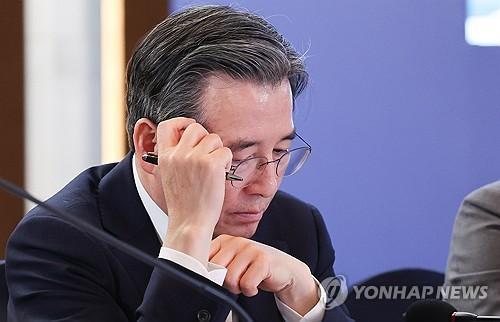
At the center of the controversy was a Facebook post by Kim Yong-beom, the Chief Policy Officer of the Blue House. He mentioned the flow of national wealth generated by the growth of the AI and semiconductor industries, using the term 'universal dividend' and referencing Norway's sovereign wealth fund model.
He expressed the need to consider how to share the fruits of national growth with the public amid the productivity revolution of the AI era.
However, Bloomberg interpreted this as a proposal to distribute corporate 'excess profits' to the public. This led to concerns in the market that the South Korean government might be pursuing a 'windfall tax' or a policy to reclaim corporate excess profits. Foreign investors grew wary, with some reports suggesting that the KOSPI index plummeted following Kim's remarks.
In response, the Blue House quickly refuted these claims. They clarified that Kim's comments were not about directly reclaiming corporate profits but rather about discussing how to share the 'excess tax revenue' generated by the booming AI and semiconductor sectors with the public. The Blue House even sent an official letter of protest to Bloomberg, emphasizing that they had never advocated for the reclamation of corporate excess profits or the transfer of private earnings.
So, who is correct in this situation?
Objectively, it is difficult to label this issue as a 'complete error' or 'total distortion.' At the same time, it cannot be dismissed as a mere incident, given its significant impact on the market.
In fact, Kim's original post included terms like 'excess profits,' 'universal dividend,' and 'Norwegian sovereign fund,' which are sensitive words for global investors. Particularly in American financial discourse, when the government mentions 'universal dividend' and 'excess profits' together, it is often interpreted as a signal for redistribution policies or market intervention.
Conversely, when considering Kim's specific explanations and the Blue House's clarifications, the core of the policy seems to focus on how to share the increased tax revenue resulting from the growth of the AI industry with the public, rather than directly reclaiming corporate profits. Thus, it can be argued that the emphasis was more on 'utilizing excess tax revenue' than on 'reclaiming excess profits.'
Ultimately, this controversy is better characterized as a clash between the ambiguity of policy language and the over-interpretation by global financial media.
Bloomberg's Reporting and Market Response, Blue House's Rebuttal
Bloomberg is a communications agency that drives the heart of the global financial market. Major investment banks, hedge funds, and global asset management firms operate through Bloomberg terminals. Therefore, a single line from a Bloomberg article is read not just as news but as a market signal.
The issue lies in the interpretative structure used in this article. Bloomberg read Kim Yong-beom's concept of 'universal dividend' as a distribution of corporate excess profits, which in turn triggered market anxiety.
At the time, the domestic stock market was already shaken by various factors, including concerns over prolonged high interest rates in the U.S., increased volatility in global tech stocks, and profit-taking pressures in the semiconductor sector. In such a context, a policy signal that could be interpreted as 'reclaiming excess profits' was bound to be received sensitively by foreign investors.
However, attributing the decline of the KOSPI solely to Kim's remarks is also seen as an oversimplification. Multiple factors were simultaneously affecting the market. Therefore, the assertion that 'the market crashed because of Kim's remarks' may also be an excessive interpretation.
The Blue House's response was relatively strong. They sent an official letter of protest to Bloomberg, claiming that 'inaccurate framing caused market confusion.' They particularly emphasized that they had never advocated for a windfall tax on corporations or suggested a direct transfer of private earnings.
This response was also driven by practical reasons. In a market like South Korea, which is highly dependent on external factors and sensitive to foreign capital flows, a single policy message can simultaneously impact exchange rates, stock markets, and the bond market. From the government's perspective, it was essential to quickly address any misunderstandings in the international financial market.
However, policymakers must also learn from this incident. The global market operates in a manner that is entirely different from domestic political language. Expressions like 'universal dividend' and 'excess profits' may convey meanings of welfare and shared growth in Korean political discourse, but they are likely to be interpreted as signals of market intervention and anti-business policies in the international financial market.
The precision of policy messaging is crucial.
Kim Yong-beom's Concerns and Expert Assessments
Kim Yong-beom's concerns are not unfamiliar on a global scale. As the AI and platform economy rapidly grow, the concentration of wealth in specific companies and industries has become a significant policy issue in the U.S. and Europe as well.
In the U.S., discussions about big tech monopolies and digital taxes continue, while the European Union is strengthening platform regulations and fair taxation systems. The concern that the productivity revolution of the AI era should improve the lives of society as a whole is a common challenge worldwide.
Kim's logic is not significantly different. He argues that as the AI and semiconductor industries grow and the national economy enters a new phase, it is essential to consider how to share the increased tax revenue generated during this process with the entire public.
He cited Norway's sovereign wealth fund as an example. Norway has established a model for accumulating resource revenues from the North Sea oil fields in a sovereign wealth fund to share with future generations. This approach is not merely about welfare but is closer to a system for long-term management of national growth assets.
The issue lies in the political and market sensitivities of South Korean society.
South Korea has one of the fastest-moving financial markets in the world. The proportion of foreign investment is high, and the market is sensitive to global news flows. In such a structure, a single word can have a more significant impact than the essence of the policy itself.
Economic experts have differing evaluations.
Progressive scholars view the consideration of a social return structure amid the productivity revolution of the AI era as a natural challenge of the times. They argue that since the AI industry is likely to reinforce a winner-takes-all structure, a national-level social safety net and sharing mechanism are necessary.
Conversely, market-friendly experts point to the ambiguity of policy expressions as a problem. They argue that in a market like South Korea, which is highly dependent on global capital, policymakers must consider how their messages will be interpreted by international investors.
Ultimately, this controversy is more characterized by a 'clash of political language and financial market language' than by the policy philosophy itself.
Western Media's Lack of Understanding of Asia and the Need for AJP
This controversy also highlights another important issue: the lack of understanding of Asia by Western financial media.
Today, the global financial order still revolves around New York and London. The American free-market grammar and Wall Street's investment logic often serve as the benchmarks for interpreting international news. Consequently, the unique development models and social consensus structures of East Asia are frequently not fully understood.
Countries like South Korea, Japan, Singapore, and Taiwan have experiences where government, market, industry, and society have moved together in the process of national growth. Discussions about how to share the fruits of growth are also relatively stronger than in the West.
However, Western financial media often interpret these as 'market intervention' or 'strengthening redistribution.' The recent Bloomberg controversy can be seen as an example of such structural limitations.
Of course, this is not solely a critique of Western media. Asian countries also need to refine their policy communication capabilities to align with global market language. Both East and West need to deepen their understanding of each other's grammars.
The 21st-century world is no longer solely a Western era. As Asia rises as the center of global growth, there is a need for new media platforms that can accurately understand and explain Asia's history, culture, and economic structure.
At this juncture, ajupress.com, or AJP (Asia Joint Press: Asia First Press), plays a crucial role. It is necessary to go beyond simply translating Korean news into English and to provide a platform that explains Asia's civilization, economy, technology, and culture from an Asian perspective to the world.
Ultimately, the essence of journalism is understanding. If one fails to accurately understand the other, both markets and politics can become unstable. In an era where East and West misunderstand each other, there is an urgent need for a new journalism that seeks to read together, understand together, and pursue shared prosperity.
※ This article was generated using generative AI and has been reviewed by an editor.
* This article has been translated by AI.
Copyright ⓒ Aju Press All rights reserved.