
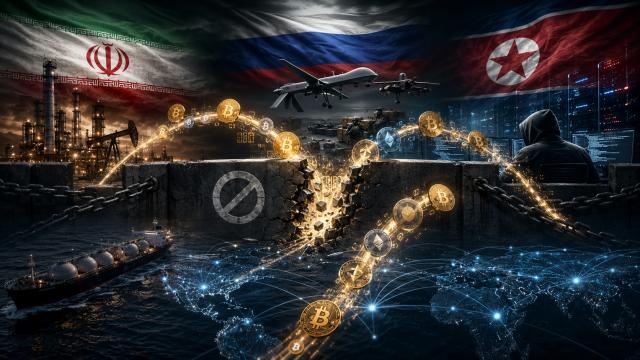
Iran, Russia, and North Korea, all facing sanctions from the U.S. and other Western nations, have significantly increased their use of cryptocurrency as a means to evade these restrictions.
According to a report by Chainalysis published on July 4, cryptocurrency addresses linked to sanctioned entities received over $100 billion (approximately 153 trillion won) last year, marking an eightfold increase from the previous year.
Cryptocurrency is appealing to these nations because it is difficult to trace the identities of transaction participants and can circumvent traditional banking systems, which are key channels for Western sanctions. Caitlin Martin, a senior information analyst at Chainalysis, stated, "Cryptocurrency has dramatically changed the landscape of sanctions evasion."
The Palestinian militant group Hamas, designated as a terrorist organization by the U.S., has also been reported to engage in cryptocurrency fundraising. Hamas has posted donation instructions on platforms like Telegram, and the FBI has confirmed through informants the specific methods they use to collect donations.
The Islamic Revolutionary Guard Corps (IRGC) of Iran is said to have received payments for oil sales from China, its largest oil buyer, through domestic and international cryptocurrency exchanges. In recent years, dozens of cryptocurrency exchanges have emerged in Iran, driven by the depreciation of the rial and the growing demand among citizens seeking alternatives for remittances and asset storage amid Western sanctions.
Following its exclusion from the international financial system due to the Ukraine war, Russia has also advanced its use of cryptocurrency for bypassing payments. The sanctioned Russian state bank Promsvyazbank and Moldovan billionaire Ilan Shor issued a ruble-pegged token, 'A7A5,' for overseas transactions last year.
The A7A5 token allows for the conversion of ruble payments within Russia into stablecoins and other cryptocurrencies for international payments. Its trading volume is estimated to have exceeded $90 billion last year, with some funds reportedly used for payments to drone manufacturers in China. Russia has also utilized cryptocurrency for paying the salaries of crew members transporting sanctioned oil.
North Korea has been reported to use cryptocurrency stolen through hacking and cybercrime to purchase fuel and military equipment, according to Western authorities.
In recent years, the U.S. has intensified its crackdown on cryptocurrency wallets used by sanctioned countries and terrorist organizations, seizing related exchanges. Last month, the U.S. sanctioned four Iranian exchanges, including the largest, Nobitex, and Treasury Secretary Scott Vessenet announced the seizure of $1 billion worth of cryptocurrency from Iran.
However, experts caution that the rapidly evolving cryptocurrency ecosystem and varying regulatory levels across countries make it challenging for authorities to completely block these activities. Ari Redbord, head of policy at TRM Labs, which tracks Iranian cryptocurrency exchanges, noted, "The Iranian cryptocurrency platforms recently sanctioned by the U.S. are just the most visible hubs. Destroying them does not dismantle the underlying structure."
* This article has been translated by AI.
Copyright ⓒ Aju Press All rights reserved.