
CTV News reported on July 5, citing multiple industry and government sources, that Carney will reveal the decision regarding the procurement of new submarines for the Royal Canadian Navy in Halifax.
Following the announcement, Carney is scheduled to depart for a NATO summit in Turkey.
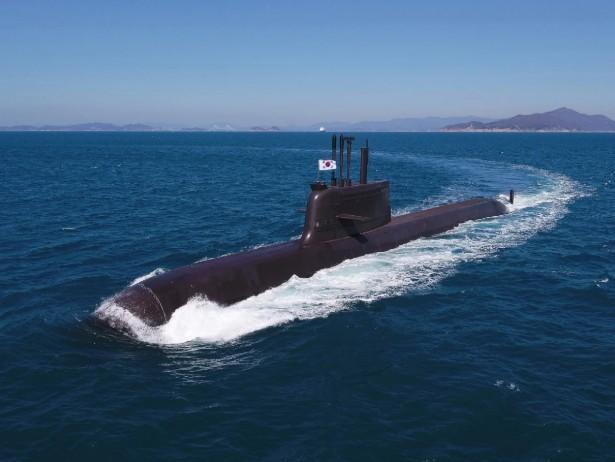
Competing for the contract are the German-Norwegian consortium TKMS and South Korea's Hanwha Ocean. Both companies have promised economic benefits, including investment and job creation in Canada, should they secure the contract.
The submarine program aims to introduce up to 12 vessels and includes maintenance and support over the next 30 to 50 years, representing a significant defense project. When factoring in the construction costs along with maintenance, repair, and operations (MRO) expenses over the next 30 years, the total project value is estimated to reach up to 60 trillion won.
Currently, only one of the four Victoria-class submarines in the Royal Canadian Navy is operational, while the other three are undergoing maintenance. The Canadian government has been pursuing the introduction of new submarines to replace its aging fleet and enhance surveillance and deterrence capabilities in the Arctic, Atlantic, and Pacific regions.
CTV News anticipates that this submarine project will serve as a prime example of Canada meeting NATO's new goal of spending 5% of its GDP on defense by 2035.
The federal government's evaluation criteria for the project are divided into four main categories: 20% for the technical aspects of the submarine platform, 50% for the lifecycle maintenance and support plan, 15% for financial factors including construction costs, and 15% for strategic and economic partnerships.
* This article has been translated by AI.
Copyright ⓒ Aju Press All rights reserved.