
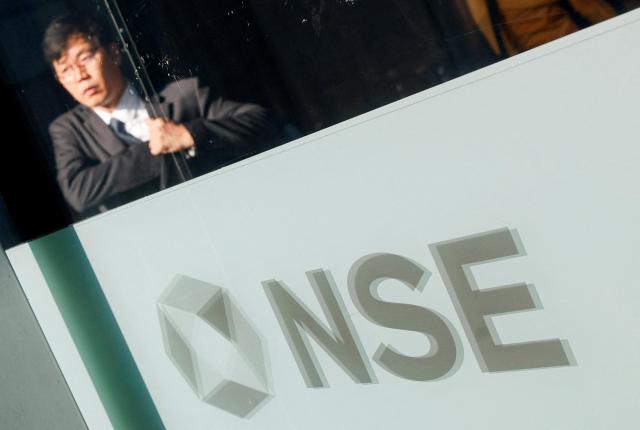
On July 5, Bloomberg reported that the Nifty 50 index is being discussed among global investors as a means to mitigate volatility within emerging markets. In the first half of this year, the Nifty 50 moved more than 1% on only about one-third of trading days, which is less than the MSCI Emerging Markets Index.
The Indian stock market has struggled for most of this year due to a lack of AI-related investment opportunities. As investors flocked to markets in South Korea and Taiwan, which benefit from AI semiconductor production, India's performance lagged. However, concerns about the sustainability of the AI rally have renewed interest in the Indian market.
Bloomberg noted that in June, the Nifty 50 outperformed the MSCI Emerging Markets Index by the largest margin since November of last year, and the outflow of foreign capital was the smallest in four months.
Maksim Biso, Chief Investment Officer at Dubai's Arkebium Capital, stated, "India's stability comes from one reason: it is outside the AI trade. India functions as a hedge against AI within emerging markets."
Despite being among the underperformers in major global stock markets this year, the Indian market has shown signs of recovery. The rupee has stabilized after hitting an all-time low, and easing tensions in the Middle East have led to a decline in oil prices. Lower oil prices are seen as a factor that reduces inflation concerns and improves growth prospects for the Indian economy.
In terms of volatility, the Indian stock market has demonstrated relatively stable trends. According to Bloomberg, the Nifty 50 experienced more than 1% fluctuations on 38 trading days in the first half of the year, fewer than the 59 days for the MSCI Emerging Markets Index and Asian indices. During the same period, South Korea's KOSPI index moved more than 1% on 79 days, accounting for two-thirds of the total trading days this year.
The Nifty 50 volatility index also fell for three consecutive months through June. This index remained below its one-year average and dropped to its lowest level since February last Friday. Compared to the market's low in April, this indicates a reduction in market anxiety.
Ben Powell, Senior Investment Strategist for the Middle East and Asia Pacific at BlackRock Investment Institute, remarked, "India was held back earlier this year due to high energy prices, elevated valuations, and limited exposure to AI trades. As these pressures ease, investors may look beyond markets heavily weighted in AI."
* This article has been translated by AI.
Copyright ⓒ Aju Press All rights reserved.