
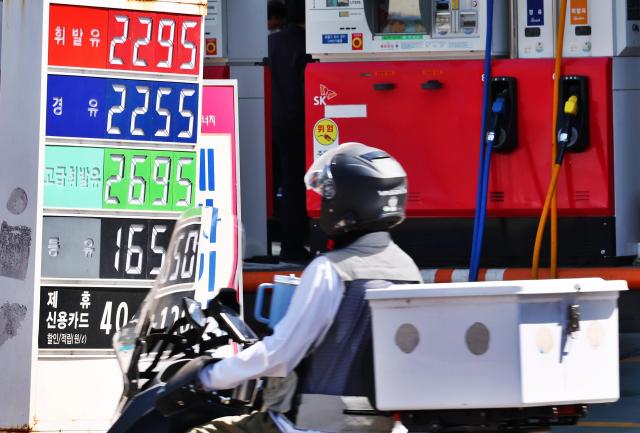
In response to the ongoing international crisis stemming from the U.S.-Iran conflict, prosecutors have charged employees of four domestic oil companies for colluding to manipulate fuel prices and abusing their dominant market position for excessive profits.
According to legal sources, the Seoul Central District Prosecutors' Office's Fair Trade Investigation Division, led by Chief Prosecutor Na Hee-seok, announced on July 6 that it has indicted HD Hyundai Oilbank, SK Energy, GS Caltex, and S-Oil for violating antitrust laws without detention. The indictment includes senior officials from the price-setting departments and legal teams of these companies.
The prosecutors allege that HD Hyundai Oilbank and SK Energy conspired on the timing and extent of price increases for oil products immediately after the outbreak of the U.S.-Iran war.
Investigations revealed that the collusion alone amounted to 14.2 trillion won (approximately $11.5 billion). GS Caltex and S-Oil followed suit, leading to a total competitive restriction effect of about 26 trillion won (around $21.5 billion) across the domestic oil market.
Despite having sufficient crude oil reserves, the oil companies raised supply prices to unprecedented levels without justification.
Notably, employees at HD Hyundai Oilbank had been exchanging pricing information with SK Energy even before the war, indicating that this incident was not an isolated occurrence but rather a chronic practice.
During this process, it was confirmed that oil company employees communicated in group chats on social media, sharing messages such as 'We thrive on war. Long live Trump' and 'We might earn 2 trillion won this year,' deceiving consumers.
The prosecutors also deemed the actions of GS Caltex and S-Oil as 'conscious parallel behavior' that disrupted market order. However, due to current laws, they were excluded from criminal charges, focusing instead on the direct participants in the collusion.
Additionally, the prosecutors uncovered that the oil companies exploited 'full purchase contracts' and 'post-settlement systems' to incite price increases, leading to charges against all four companies. They forced independent gas stations to purchase fuel exclusively at prices they unilaterally set, threatening hefty penalties if gas stations opted for cheaper distribution routes, effectively stifling market competition.
Attempts to evade legal scrutiny and conceal evidence were also revealed. HD Hyundai Oilbank and GS Caltex were found to have obtained information about the Fair Trade Commission's on-site investigations in advance, indicating obstruction of the investigation.
Moreover, three oil companies were caught falsely reporting lower price increases to the Ministry of Trade, Industry and Energy than what actually occurred.
* This article has been translated by AI.
Copyright ⓒ Aju Press All rights reserved.