
The iron and steel civilization that has persisted for 5,000 years stands at a significant turning point. Carbon neutrality is transforming the very methods of steel production, while artificial intelligence is reshaping the principles of manufacturing competition. In this era of simultaneous waves, what answers is POSCO, the cornerstone of South Korea's industry, preparing?
Recently, Jang In-hwa, chairman of POSCO Group, announced the "Triple Core" strategy during the CEO Investor Day, aiming to establish steel, strategic resources, and energy as the future's three pillars. This timely recognition of the need to diversify growth drivers beyond a steel-centric business structure is significant, pinpointing a crucial gateway that POSCO must navigate.
However, for this strategy to align fully with the future of South Korea's industry, one fundamental question must be addressed.
Why does POSCO exist?
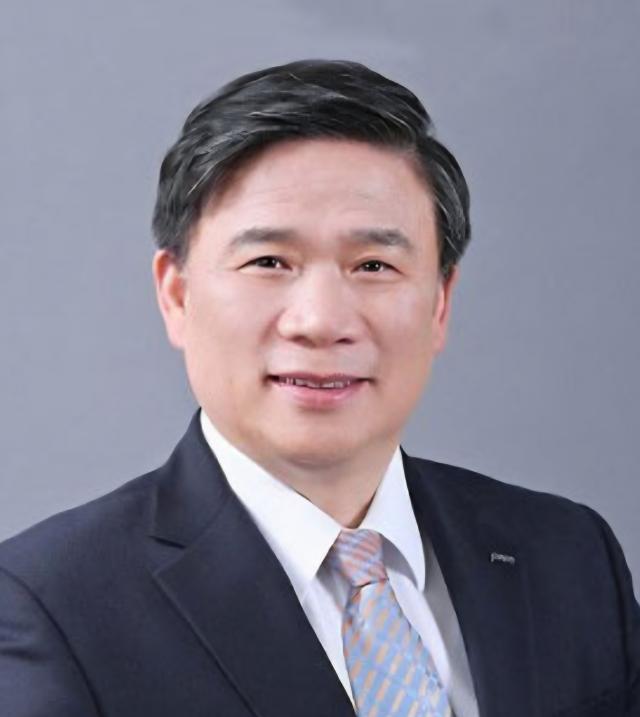
Having spent 36 years at POSCO overseeing strategic planning in steel, construction, and trade, and directly managing the restructuring of the business portfolio as the head of the group’s value management office, I have come to one conclusion: a company's strategy must begin with "Why do we exist?" rather than "What will we do?"
What stood out in the recent announcement of the Southwest Mega Project, presented by the government alongside business leaders like Lee Jae-yong of Samsung Electronics and Choi Tae-won of SK Group, was not the scale of individual corporate investments. Instead, it was the philosophy of how industries can transform the nation, revitalize regions, and open up futures for the youth. The strategy of companies leading South Korea's industry is only complete when it is naturally connected to the country's future.
In 1973, the Pohang Steelworks was not just a steel mill. It had the mission of "Steel for the Nation," enabling it to achieve what the world deemed impossible. What we need now is not to deny that mission but to expand it in line with the times.
Now, the question POSCO must answer goes beyond "How much steel will we produce?"
"How will we create a future for humanity with new steel?"
This is why I proposed a new mission, "New Steel for Humanity," in my recently completed manuscript, "New Steel, Humanity's Future." POSCO's reason for existence should extend beyond becoming a better steel company to innovating South Korea's manufacturing with carbon-free steel and setting new global industry standards.
When this philosophy is established, the Triple Core strategy will gain even greater momentum.
First, Pohang and Gwangyang should be transformed into the world's first HyREX Green Steel Mega Project. This involves integrating hydrogen reduction steelmaking, clean power from nuclear energy, AI smart factories, EPC technology, and global standardization into a national project. This could position POSCO's investment plans as a project that redesigns the future of South Korea's manufacturing.
Second, the perspective of growing together with the region must be reinforced. Pohang and Gwangyang should evolve from production bases into green steel innovation cities where research and development, startups, universities, and businesses grow together. When young people can dream of their futures in Pohang and Gwangyang rather than just in the metropolitan area, POSCO's growth becomes intertwined with the nation's growth.
Third, POSCO must evolve from a company that sells steel products to one that exports South Korea's technology and industrial standards. By combining HyREX, AI manufacturing innovation, and EPC platforms, POSCO can establish the standard for carbon-neutral steel mills worldwide; this will be the ultimate realization of the Triple Core strategy.
From this perspective, the Triple Core strategy has provided an excellent answer to "What will we do?" If it is complemented by the philosophical roots of "Why do we exist?" and "What kind of company will we become?" the strategy will gain much greater resonance and execution power. A strategy is completed when it starts with Why, moves through Who, and leads to What and How.
South Korea's steel industry stands once again at a historic crossroads. Just as the Pohang Steelworks led the industrialization of South Korea in 1973, it is now POSCO's turn to lead the industrial revolution in the era of carbon neutrality and AI.
Beyond Steel for the Nation, to New Steel for Humanity. From a company that produces steel to one that shapes the future of South Korea and humanity.
Author's Key Background
△ CEO of POSCO Plantec △ Former CEO of Jeonnam Dragons, Head of POSCO Value Management Office △ Head of POSCO Innovation Planning Office △ Head of POSCO Future Strategy Group △ Head of POSCO Management Planning Office △ Legal Advisor at Law Firm Lin
* This article has been translated by AI.
Copyright ⓒ Aju Press All rights reserved.