
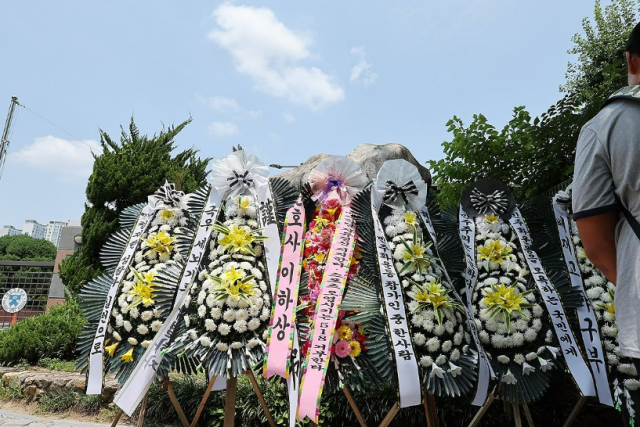
The fallout from this incident has fueled a wave of criticism, speculation, and political disputes, deepening the existing divides and animosities within South Korean society. This situation not only highlights a lack of historical awareness among citizens but also reveals the ideological fractures and sentiments of hatred that exist in our society, making its seriousness undeniable.
In this tense environment, the Baejae delegation's visit to Gwangju, scheduled for this afternoon, is expected to be a significant turning point in the unfolding situation. The delegation, consisting of over 80 members including the principal, coaches, and players, will pay their respects at the May 18 National Cemetery, receive historical education on-site, and engage in a reconciliation session with Gwangju Ilgo, the opposing school, where they will read an official apology. Their decision to confront the historical pain directly, rather than evade responsibility or wait for time to pass, is wholly appropriate. This act represents a necessary step toward addressing the grievances of Gwangju Ilgo students and the wounded citizens of Gwangju.
It is crucial that this visit to Gwangju does not become a mere one-time gesture. Attention must be paid to the social and educational message behind their actions. Rather than resorting to "political punishment" that exacerbates conflict or stigmatizing "disciplinary actions," the focus should be on correcting mistakes through "education" and fostering healing. The process of young athletes seeking forgiveness from those they have hurt and learning about the history of that pain is a vital form of civic education. When Gwangju embraces their sincere apologies, our society can finally move past animosities and evolve into a more mature community.
Moreover, this incident serves as a painful reminder of how the digital landscape created by previous generations and reckless algorithms have contaminated the consciousness of youth. Student athletes, pressured to focus solely on competition and skill without thorough character education or understanding of social contexts, find themselves vulnerable in this harmful online environment. The older generation, which has pushed children into the quagmire of hatred, paradoxically focuses only on blame and punishment when issues arise, showcasing a profound contradiction and irresponsibility. It is now time to swiftly resolve this situation, which has been exploited as a tool in political factionalism. Actions that amplify conflict through provocative language of blame and hatred do not contribute to resolving the issue.
What we urgently need now is not a fruitless debate but fundamental measures to prevent a second Baejae incident. We must establish a proper historical education framework across the sports sector and devise effective strategies to eradicate the "culture of hate games" that has spread among youth like a toxic mushroom. Rather than fixating solely on competition and skill under the guise of elite sports, we need a reboot of the holistic education system that helps student athletes grow into confident citizens who respect human rights and possess a correct historical perspective.
A divided society is healed not through finger-pointing that exacerbates wounds, but through acknowledgment of wrongs and the embrace of tolerance. It is hoped that the Baejae baseball team's visit to Gwangju will break the chains of long-standing hatred and conflict, serving as a precious catalyst for our society to embark on a path of coexistence and harmony. More frightening than the blade of harsh punishment is a society devoid of reflection. Now is the time to believe in the power of education and wait for these high school athletes to grow into healthy members of society, rather than simply condemning their mistakes.
* This article has been translated by AI.
Copyright ⓒ Aju Press All rights reserved.