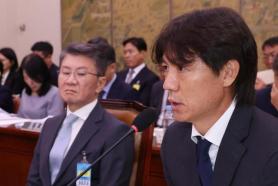
SEOUL, July 06 (AJP) - South Korean football lost its most powerful figure Monday, eight days after losing its World Cup.
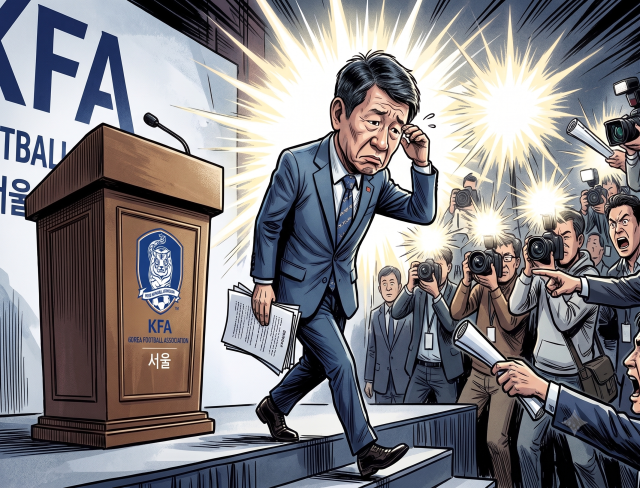
Chung Mong-gyu resigned as president of the Korea Football Association, ending 13 years and five months in charge and completing the collapse that had already consumed his hand-picked national team coach, Hong Myung-bo, whose group-stage failure turned him into a national pariah and has now claimed the man who put him there.
The scale of the failure explains the speed of the fall. South Korea entered the tournament with what local media called a golden generation, headlined by captain Son Heung-min, in an expanded 48-team format where even a third-place group finish could be enough to advance.
The team beat the Czech Republic 2-1, then lost 1-0 to Mexico and 1-0 to South Africa, finishing third in Group A, and its elimination was confirmed on June 28 Korean time when DR Congo beat Uzbekistan 3-1. Hong resigned the next day. Chung lasted one more week.
His departure was supposed to look different. Chung, who is also chairman of construction conglomerate HDC Group, submitted his resignation letter after presiding over a final meeting of executives at Korea Football Park in Cheonan, the association said.
First elected in January 2013 and re-elected three times, he announced on May 29, two weeks before the tournament began, that he would step down after the World Cup ended on July 19, calling support for the national team his final duty. The elimination pushed him out two weeks early.
"All glory and achievements belong to the players and the fans, and all shortcomings and faults are entirely my responsibility," Chung said in a farewell statement translated from Korean. "I now step down from the presidency and return to being a passionate football fan."
The fall did not stop with the two men. President Lee Jae Myung wrote on X after the elimination that he was baffled by the exit, blamed personnel decisions that put factionalism and loyalty over competence, and ordered the sports ministry to investigate the national team program. The ruling Democratic Party has been planning a parliamentary hearing into the failure and the management of the Korea Football Association (KFA), and the ministry plans a fresh audit of the federation.
A failure years in the making
The coach who oversaw the failure was Chung's most contested decision. The KFA appointed Hong in July 2024 after firing German coach Jurgen Klinsmann barely a year into his contract. Hong was not among the two final candidates originally under consideration, and the federation bypassed the final interview and presentation stage before confirming him.
The backlash was immediate and came from inside the game. Park Joo-ho, a former national team midfielder who sat on the KFA committee handling the search, said the federation had disregarded proper vetting procedures. Former captain Park Ji-sung and 2002 World Cup veterans Lee Young-pyo and Lee Dong-gook echoed him.
The criticism carried extra weight because Hong had failed in the job before. He coached South Korea at the 2014 World Cup in Brazil, where the team also went out in the group stage, and a petition posted on the government's Petition 24 site late last year argued he had already been proven a failure and predicted the tournament would go badly.
The state agreed the process was broken. In October 2024, the Ministry of Culture, Sports and Tourism concluded the KFA had breached its own rules in hiring both Hong and Klinsmann, finding that a meeting between Hong and the federation's technical director did not constitute a proper interview, and demanded disciplinary action against Chung and other senior officials. The KFA fought the demand in court, and in April a ruling against the federation found flaws in the appointment process and insufficient board deliberation. The KFA has appealed, and the legal battle was still running when Chung resigned.
Betrayed trust
Chung survived all of it politically, winning a fourth term in February last year with 85.6 percent of the vote from an electorate of football insiders, on a mandate that ran through 2029. What he could not survive was the public.
Many fans had been willing to give Hong a second chance despite 2014.
"Although he messed up the 2014 World Cup, I still had huge trust in Hong. People learn from mistakes, you know," Kim Ji-hoon, a 42-year-old office worker living in Seoul, told AJP. "But I was wrong. I took a day off from work to join the supporters at Gwanghwamun Square on June 25, and I disappointed my whole family, who came with me. It was just terrible."
Song, a 32-year-old freelancer, shared similar feelings of disappointment. "My hopes were high because this national team was the strongest dream team we have ever had, full of powerful players. I was devastated to see how poorly Hong managed them," Song said, adding: "I think I could have managed the team better than Hong."
Banned from entry
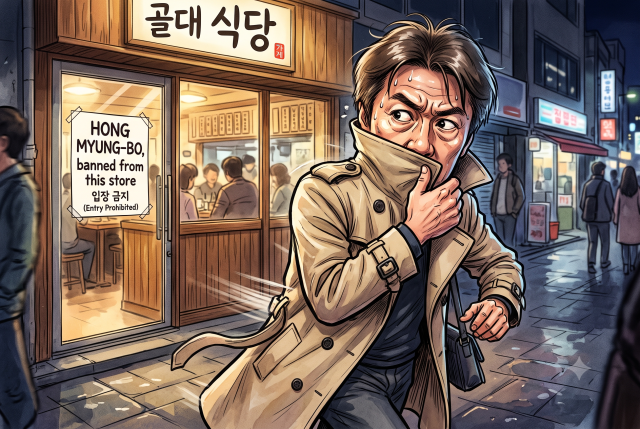
That disappointment turned into open mockery. On June 26, the day after the South Africa loss, a photo spread across Korean social media showing an A4 notice on a GS25 convenience store door reading "Hong Myung-bo is unacceptable."
Within days, near-identical signs were photographed on a donut shop in Daejeon, a pasta restaurant in Seoul's Hongdae district, a Korean beef restaurant in Gimje, a traditional medicine clinic, and the front gates of private homes, according to the Financial News and other Korean outlets.
The anger followed Hong across the Pacific. Two days after fans jeered the returning team at Incheon International Airport, where one banner read "Hong Myung-bo! Spit out the money and get out! Dismantle the KFA," Hong flew to Los Angeles to join his family.
On July 5, a video circulated on X showing the owner of a Korean restaurant in Los Angeles taping a bilingual version of the sign to his door, the English line reading "Hong Myung Bo (KOREAN HEAD COACH) IS BANNED FROM ENTRY."
"I do have something to say, but that story will come out someday," Hong told reporters at Incheon before departing, in remarks translated from Korean.
What comes next
Chung's exit does not end the reckoning, it opens the succession. Under the KFA's articles, one of the federation's four vice presidents will serve as acting president after confirmation by the Korean Sport and Olympic Committee, and federation bylaws require an election for a new president within two months of the vacancy.
Copyright ⓒ Aju Press All rights reserved.