
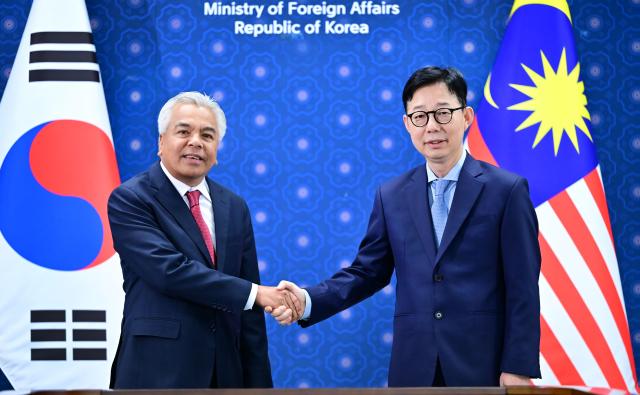
SEOUL, July 09 (AJP) - South Korea and Malaysia agreed to strengthen energy security cooperation, from stable liquefied natural gas supplies to potential nuclear power collaboration, as Seoul works to shore up supply lines battered by this year's war in Iran and the closure of the Strait of Hormuz.
The stakes for South Korea are hard to overstate. The country routes about 70 percent of its crude oil imports through the strait, and the effective blockade that began in late February left 26 South Korean-flagged vessels stranded in the Persian Gulf, sent the KOSPI to its worst single session on record and pushed the won to a 17-year low. Even after Iran and the United States announced a ceasefire on April 8, traffic through the strait has remained far below prewar levels. Malaysia, South Korea's second-largest LNG supplier, ships its gas across sea lanes that bypass the chokepoint entirely, which has turned a longstanding trade relationship into a strategic asset.
That backdrop framed the 10th South Korea-Malaysia Policy Consultation, held Wednesday in Seoul between First Vice Foreign Minister Park Yoon-joo and Amran Mohamed Zin, secretary general of Malaysia's Ministry of Foreign Affairs. Agreeing that disruptions to global energy supply chains have made reliable partners more important than ever, the two sides committed to keeping LNG and petroleum product trade stable and to pursuing strategic cooperation, including on nuclear power, according to South Korea's Ministry of Foreign Affairs. The relationship runs both ways: South Korea is the second-largest buyer of Malaysia's refined petroleum products.
Trade was the other forward-looking item. The two vice ministers said they are working closely toward signing a bilateral free trade agreement within the year, expecting the pact to expand trade and lay the institutional groundwork for cooperation in new industries, including artificial intelligence and digital technology, halal products, green industry and biotechnology.
Defense cooperation, meanwhile, keeps producing concrete results. Park pointed to Malaysia's adoption of the FA-50 light combat aircraft in 2023 and its purchase of the Haegung ship-based interceptor missile in April, and the two sides noted that a joint defense industry committee is being pursued this year on the foundation of an existing defense cooperation memorandum.
Both deals carry weight beyond their price tags. The FA-50 contract, signed in February 2023 between Malaysia's Ministry of Defence and Korea Aerospace Industries, covers 18 aircraft for about $920 million and ranks among the largest defense acquisitions in Malaysian history. The Korean jet beat out India's Tejas, Pakistan's JF-17, Russia's MiG-35 and Türkiye's Hurjet in the tender, marking the fourth Southeast Asian aircraft sale for Korea Aerospace Industries (KAI) after Indonesia, the Philippines and Thailand. First deliveries are due this year, with the Royal Malaysian Air Force expecting six aircraft by the end of 2026 instead of the four originally planned, and KAI has said a follow-on order for 18 more is likely.
The Haegung deal, though smaller at $94 million, was a milestone for South Korea's missile industry. Signed at the Defence Services Asia exhibition in Kuala Lumpur on April 22, it marked the first overseas export of the ship-to-air interceptor, developed from 2011 under the state-run Agency for Defense Development and mass-produced by LIG Nex1, now LIG Defense & Aerospace, since 2019. Designed to shoot down incoming anti-ship missiles and aircraft, Haegung will arm the Royal Malaysian Navy's new littoral mission ships being built by Turkish shipbuilder STM.
Park described Malaysia as a longtime friend and strategic partner, and called for cooperation that ordinary citizens in both countries can feel. Amran stressed people-to-people exchange through tourism and education, saying he hopes more South Koreans will visit during Visit Malaysia Year 2026. Travel between the two countries has been growing: about 330,000 Malaysians visited South Korea last year, up from 240,000 in 2023, while about 460,000 South Koreans traveled to Malaysia, according to the Korea Tourism Organization. Park asked for Malaysia's support in concluding a mutual driver's license recognition agreement within the year to make visits easier.
The two sides also exchanged views on the Korean Peninsula and regional affairs. Park thanked Malaysia for its cooperation as ASEAN chair last year and asked for continued support in implementing Seoul's vision for a comprehensive strategic partnership with the bloc. Amran expressed support for the South Korean government's policy and efforts for peaceful coexistence on the Korean Peninsula, and the two agreed to maintain close communication for regional peace and stability.
Copyright ⓒ Aju Press All rights reserved.
