
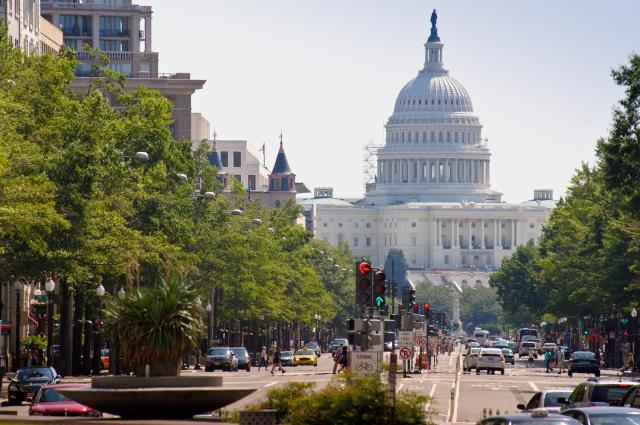
The House approved its version of the National Defense Authorization Act (NDAA) on Wednesday in a 216-212 vote, advancing a $1.15 trillion defense policy package that authorizes military programs and sets national security priorities for the next fiscal year.
The bill includes language barring the use of funds to reduce U.S. Forces Korea below the current level of 28,500 troops. The provision is not new, as previous NDAAs have also included language aimed at maintaining the U.S. troop presence on the Korean Peninsula.
The House bill would amend the fiscal 2026 NDAA by expanding the funding restriction to cover money “otherwise made available for fiscal years 2026 or 2027,” extending the guardrail beyond funds authorized under the NDAA itself.
The expanded wording appears aimed at limiting the administration’s ability to use money provided through other legislation to carry out a troop reduction, amid renewed concerns over President Donald Trump’s views on overseas deployments and defense cost-sharing with U.S. allies.
Trump has repeatedly pressed allies to shoulder more of the cost of hosting American forces and has raised questions over the scale of U.S. military commitments abroad.
The measure, however, is not yet final. The Senate is considering its own version of the NDAA, and the USFK provision would have to survive Senate consideration and negotiations between the two chambers before becoming law.
The NDAA is an annual defense authorization bill that sets policy and spending priorities for the Defense Department, though actual funding must be provided through separate appropriations legislation.
The Pentagon has said the United States has spent $37.5 billion so far on the Iran war, adding pressure on Congress to replenish defense accounts before the fiscal 2027 budget is finalized.
Separately, the House passed a $95 billion budget package tied to the Iran war and other Trump administration priorities in a 216-214 vote.
The package includes $60 billion for the Defense Department, $13 billion for other national security items, $12 billion in aid for farmers and $10 billion in grants to states for implementing voter identification laws.
The Trump administration has argued that additional funding is needed to refill defense accounts depleted by the Iran war before the regular fiscal 2027 budget process is completed.
For Seoul, the key provision to watch is whether the strengthened USFK funding restriction remains in the final NDAA. If enacted, it would mark another congressional effort to restrain any abrupt reduction of the U.S. military presence on the Korean Peninsula.

Copyright ⓒ Aju Press All rights reserved.
