Despite the war in Ukraine and sweeping Western sanctions, at least 100 ships legally transited Russia's Northern Sea Route last year—about one-third of all cargo vessels using the Arctic passage and a sharp increase from just 13 a year earlier.
Many were aging vessels operating with inadequate insurance, questionable flags or disabled Automatic Identification System (AIS) tracking equipment, reinforcing the route's reputation among major global shipping companies as a high-risk corridor despite its commercial appeal.
Moscow is simultaneously expanding a separate shadow fleet of liquefied natural gas carriers to keep Arctic energy exports flowing despite sanctions. Russia added eight secondhand LNG carriers over the past six months, bringing the fleet to 25 vessels as it seeks to sustain shipments from sanctioned projects such as Arctic LNG 2, one of the Kremlin's key sources of wartime revenue.
The expansion also highlights the Arctic's long-term environmental challenge.
As climate change makes northern waters increasingly navigable, more poorly regulated vessels are entering one of the world's most fragile marine environments, where accidents and oil spills are among the most difficult anywhere to contain.
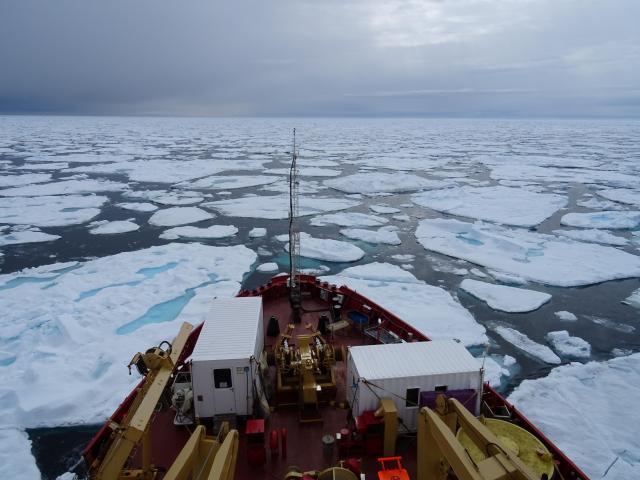
Sigurd Enge, a senior adviser at Norwegian environmental group Bellona, said conventional spill-response equipment is poorly suited to Arctic winter conditions, where darkness, sea ice, rough seas and powerful currents severely hamper containment efforts.
"A number of the vessels in Russia's shadow fleet are grossly violating these regulations," Enge said.
Since 2017, ships operating in polar waters have been subject to the International Maritime Organization's mandatory Polar Code, which establishes standards for ship design, equipment, crew training, operations and pollution prevention. The IMO also prohibited the use and carriage of heavy fuel oil in Arctic waters from July 2024, although exemptions and transitional waivers allow some vessels to continue operating until 2029.
The widening gap between expanding Arctic traffic and uneven environmental compliance is precisely where South Korea believes it can differentiate itself.
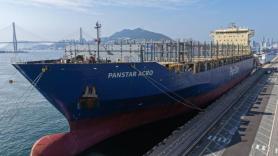
PanStar Group, a midsized Busan-based shipping company, is targeting Aug. 22 for South Korea's first trial container voyage through the Northern Sea Route.
Rather than competing on sanctions avoidance or low-cost operations, Seoul hopes to demonstrate that Arctic shipping can be commercially viable while meeting the environmental, safety and transparency standards increasingly demanded by Western governments and cargo owners.
PanStar plans to deploy the PanStar Acro, formerly HMM's 2,758-TEU container ship Mombasa, acquired from South Korea's largest container carrier.
Although the purchase agreement has been completed, the vessel has yet to be delivered because HMM must first unload cargo from its final commercial voyage. The ship will then undergo modifications required for Arctic navigation before its scheduled departure later this month.
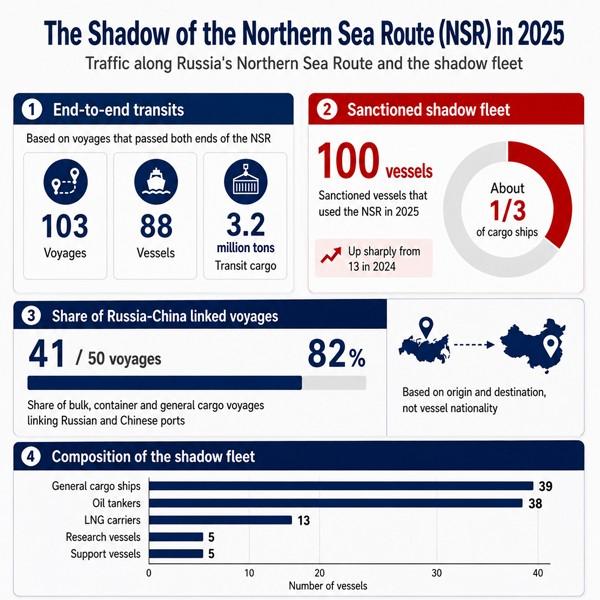
The clearest evasive practices have been associated with Russia's shadow fleet. Some vessels have switched off AIS tracking systems, repeatedly changed names or operated through third-country shell companies, making it harder for authorities to monitor movements, verify compliance or respond quickly when accidents occur.
That enforcement gap may also represent South Korea's greatest commercial opportunity.
Jeong said sustainability now sits at the center of the government's Arctic strategy.
"The basic idea is that the shorter distance can reduce fuel consumption as well as carbon dioxide, black carbon and other pollutants generated during a voyage," he said.
The Northern Sea Route is roughly 30 percent shorter than the traditional passage through the Suez Canal. But Jeong stressed that distance alone does not make Arctic shipping environmentally sustainable.
International maritime regulations are steadily moving toward cleaner fuels and stricter environmental and safety standards for polar operations, he said.
"This direction is inevitable, not optional," Jeong said. "The question is whether Korea can move first and lead the market as those rules take shape."
Korea's competitive advantage extends beyond shipbuilding itself.
An OECD peer review published in April said alternative-fuel-capable vessels accounted for roughly 62 percent of South Korea’s shipbuilding orderbook. Building on its strength in LNG-powered ships, Korean yards are expanding into methanol-, ammonia- and hydrogen-based propulsion, supported by multibillion-dollar government programs for green-vessel development and clean-fuel bunkering infrastructure.
Other countries can also build environmentally friendly ships.
Korea's opportunity lies in combining advanced shipbuilding with transparent operations, reliable tracking and environmental compliance that can earn the confidence of Western regulators, insurers and cargo owners increasingly wary of opaque Arctic shipping.
As the Northern Sea Route gradually shifts from a geopolitical experiment to a commercial trade corridor, the race may ultimately be decided not by who reaches the Arctic first, but by who convinces the world they can navigate it most safely, transparently and sustainably.
AJP Takeaways
△ South Korea's PanStar Group targets August 22, 2026, for the country's first trial container voyage through Russia's Northern Sea Route, using the PanStar Acro (formerly HMM's Mombasa).
△ At least 100 ships transited the Northern Sea Route last year, up from 13 the year before, many linked to Russia's "shadow fleet."
△ Russia's shadow LNG fleet has grown to 25 vessels, supporting exports from sanctioned projects like Arctic LNG 2.
△ Heavy fuel oil was banned in Arctic waters from July 2024 under IMO rules, with exemptions until 2029.
△ An OECD review (April 2026) found alternative-fuel-capable vessels make up about 62 percent of South Korea's shipbuilding orderbook.

Copyright ⓒ Aju Press All rights reserved.