SEOUL, August 14 (AJP) - South Korean equity funds attracted 11.4 trillion won ($8.0 billion) in fresh money in July despite the steepest stock-market rout since 2008, while corporate bank loans increased by 7.7 trillion won as the bond market remained in net repayment.
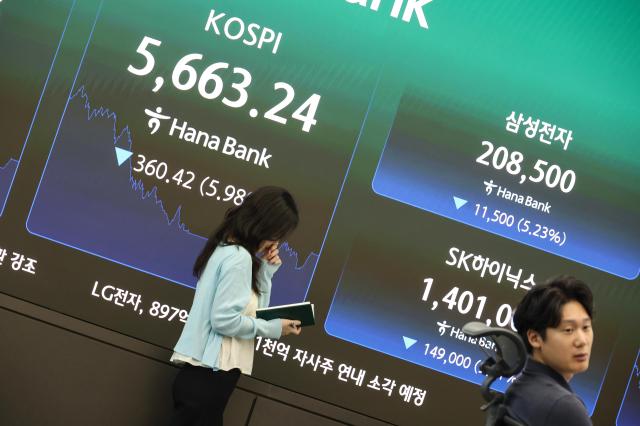
The benchmark KOSPI plunged 22.2 percent to 6,595 at the end of July from 8,476 a month earlier, marking its worst monthly performance since October 2008, the Bank of Korea said Friday in its monthly financial-market report.
The secondary KOSDAQ tumbled 21.4 percent to 720 from 916 as concerns about the artificial-intelligence industry, uncertainty in the Middle East and sustained foreign selling drove a broad market correction.
The rout wiped 56.2 trillion won from the net asset value of equity funds, helping push total fund balances at asset managers down by 42.8 trillion won.
The decline did not reflect a comparable wave of investor withdrawals, as equity funds received 11.4 trillion won in fresh inflows after valuation changes were excluded, while derivative funds attracted another 8.4 trillion won.
Direct stock investment cooled more sharply, with net purchases by individual investors collapsing to 3.4 trillion won from 52.0 trillion won in June and securities investor deposits falling by 17.5 trillion won.
The corporate funding market moved in a different direction as bank loans to companies increased by 7.7 trillion won in July, up from 5.1 trillion won in June and more than double the 3.4 trillion won increase recorded a year earlier.
Corporate bonds remained in net repayment by 1.9 trillion won after a 2.9 trillion won repayment in June, as higher market rates and the seasonal issuance lull continued to weigh on public bond financing.
The cumulative increase in corporate bank loans reached 57.2 trillion won during the first seven months of 2026, up 82.7 percent from 31.3 trillion won a year earlier.
Corporate bonds recorded 16.3 trillion won in net repayments over the same period, reversing from net issuance of 5.5 trillion won during the first seven months of 2025.
The BOK said loans to large companies increased by 3.8 trillion won as firms continued to borrow working capital to repay bonds and redrew loans temporarily repaid at the end of the second quarter.
Loans to small and midsized enterprises rose by 3.9 trillion won on value-added tax payments and expanded lending campaigns by some banks.
Market borrowing costs also climbed, with the yield on three-year AA-minus corporate bonds rising to 4.46 percent at the end of July from 4.38 percent a month earlier, while yields on A-minus and BBB-plus debt increased to 5.56 percent and 7.83 percent, respectively.
Commercial paper and short-term notes nevertheless swung to net issuance of 4.0 trillion won as quarter-end repayments were reissued, while equity issuance increased to 1.5 trillion won on a large rights offering by a major company.
Bank household loans rose by 5.4 trillion won in July, slowing from a 7.6 trillion won increase in June but doubling the 2.7 trillion won gain recorded a year earlier.
The cumulative increase in household loans stood at 21.0 trillion won during the first seven months, below 23.2 trillion won a year earlier, but the composition shifted as mortgage growth slowed to 13.3 trillion won from 23.9 trillion won while other household loans swung to a 7.8 trillion won increase from a 600 billion won decline.
Bank deposits fell by 30.0 trillion won as quarter-end corporate funds were withdrawn and companies made value-added tax payments, while time deposits increased by 42.3 trillion won and money-market funds gained 27.2 trillion won.
July’s data point to a rerouting rather than a uniform withdrawal of money, with fresh cash continuing to enter equity funds while companies leaned more heavily on banks as bond financing contracted.
___________________________________________________________________________________
AJP Takeaways
• South Korean equity funds attracted 11.4 trillion won in fresh money in July 2026 even as the KOSPI plunged 22.2 percent and falling valuations erased 56.2 trillion won from equity-fund assets.
• Corporate bank loans increased by 7.7 trillion won, more than double the rise a year earlier, while corporate bonds remained in net repayment amid elevated market borrowing costs.
• Household-loan growth slowed from June and remained lower on a cumulative annual basis, but borrowing shifted away from mortgages toward other household loans.

Copyright ⓒ Aju Press All rights reserved.