
SEOUL, Aug. 25 (AJP) — South Korea's two chip bellwethers clawed back steep early losses Tuesday after Gartner forecast a memory boom lasting well into next year, giving investors a fresh reason to look past shareholder-return packages that have done little to restore their shares to June peaks.
Samsung Electronics ended Tuesday flat at 257,000 won after losing more than 4 percent earlier in the session. The stock had plunged 8.7 percent Monday after its record shareholder-return plan fell short of elevated market expectations.
SK hynix also closed nearly flat at 1,678,000 won, up 0.42 percent after sliding more than 6 percent in early trading. It had fallen 3.4 percent Monday.
Both stocks initially tracked another retreat in U.S. semiconductor shares overnight as investors reduced exposure ahead of Nvidia's earnings and continued to reassess valuations across the artificial intelligence trade.
The tone shifted as investors were relieved by Gartner's latest semiconductor forecast.
The research firm in a report issued on Monday projected the global semiconductor revenue to jump 92 percent this year to $1.56 trillion from $809 billion in 2025 and reach $1.94 trillion in 2027, with memory being the main driver.
Gartner forecast global memory revenue at $837.3 billion this year, nearly four times last year's $220.1 billion, before climbing above $1 trillion to $1.08 trillion in 2027. Memory's share of worldwide semiconductor revenue is projected to rise to 54 percent this year from 27 percent in 2025.
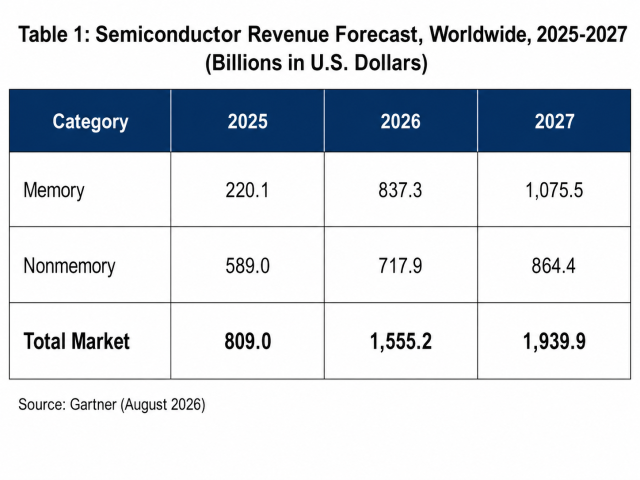
DRAM revenue is forecast to surge 246.6 percent this year and NAND flash revenue 371.9 percent. Gartner expects supply to remain tight even as additional production capacity comes online in 2027 because AI infrastructure will continue absorbing more memory.
"AI infrastructure has fundamentally changed the dynamics of the memory market," Gartner Director Analyst Shrish Pant said. The firm expects sustained high-bandwidth memory demand, rising memory content per AI server and continued data-center construction to support the market through 2027 and beyond.
The outlook directly benefits Samsung and SK hynix, which together dominate global DRAM and high-bandwidth memory production while also operating large NAND businesses.
It also provided a fundamental counterweight to a selloff that even unprecedented shareholder rewards have struggled to arrest.
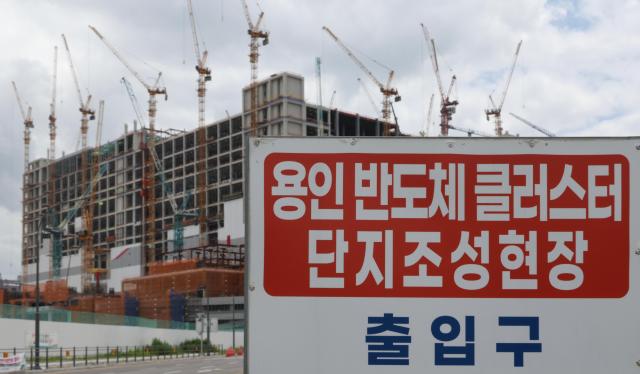
SK hynix last week approved a 40 trillion won ($28.6 billion) program to repurchase about 24.07 million shares, or 3.3 percent of its outstanding stock, between Aug. 20 and Nov. 19 and cancel all of them. The company also raised its shareholder-return target to more than 50 percent of cumulative free cash flow generated from 2025 through 2027.
The announcement initially worked. SK hynix surged 12.7 percent the following day as the company's purchases created an immediate source of market demand and the planned cancellations promised to reduce its share count.
The lift has proved insufficient to reverse the broader retreat. Tuesday's closing price remained 44.1 percent below the June 25 peak of 2,987,000 won.
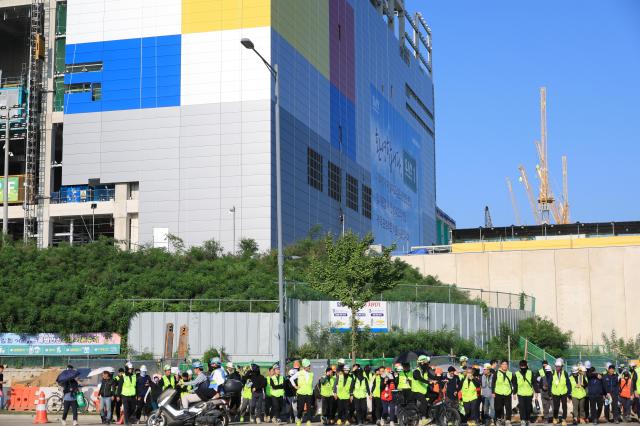
Samsung's package received an even colder reception. The company said Friday that shareholder returns for 2026 would total between 90 trillion won and 110 trillion won, including about 30 trillion won in cash dividends. It also authorized a 15 trillion won share buyback for employee compensation, while leaving the form of the remaining shareholder returns to a January 2027 board meeting.
Investors had expected a large and immediate buyback-and-cancellation program similar to SK hynix's. Instead, much of Samsung's announced return consisted of cash dividends, which distribute money to shareholders but do not create direct buying demand or immediately reduce the number of shares outstanding.
Samsung's ownership structure also makes aggressive cancellations more complicated. Large reductions in its outstanding shares could lift the combined ownership of Samsung Life Insurance and Samsung Fire & Marine Insurance above regulatory limits, one factor analysts have cited in explaining the company's more cautious approach to buybacks.
Samsung shares are now 31.6 percent below their June 19 peak of 374,500 won despite the company's record earnings and its largest shareholder-return package ever.
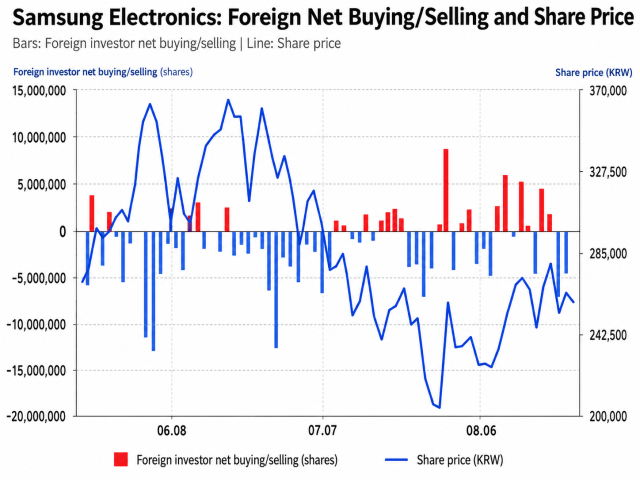
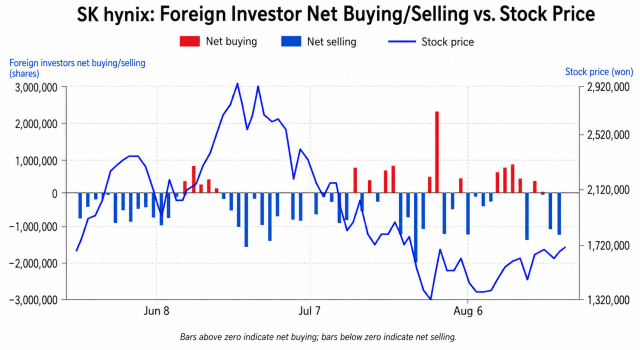
Foreign investors remained net sellers of both Samsung and SK hynix Tuesday, while retail investors continued to absorb shares, suggesting the Gartner forecast encouraged domestic bargain hunting without yet bringing overseas money decisively back into the two names.
The rebound therefore did not erase the market's doubts. But Gartner's forecast shifted attention back toward the factor that ultimately matters more than even record buybacks and dividends: whether AI-driven memory demand can remain strong enough to sustain earnings into 2027.
AJP Takeaways
- Samsung Electronics and SK hynix erased most of their early Tuesday losses after Gartner forecast global memory revenue would exceed $1 trillion in 2027.
- Gartner expects memory revenue to reach $837.3 billion in 2026 as AI data centers drive tight DRAM, NAND and HBM supply-demand conditions.
- Record shareholder-return programs have provided limited lasting support, with Samsung 31.6 percent and SK hynix 44.1 percent below their June peaks.

Copyright ⓒ Aju Press All rights reserved.
