
*Updated with additional information, economic outlook and market response
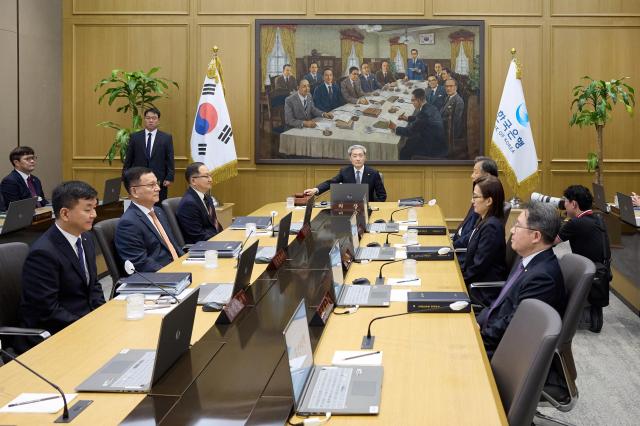
SEOUL, August 27 (AJP) -The Bank of Korea (BOK) on Thursday opted for a back-to-back increase to lift the key rate to 3.00 percent - the highest since January 2025 - in preemptive action to rein in inflationary pressure renewed from an economy expected to grow at its fastest pace in five years on the chip boom.
The move was almost unanimous, with one dissent, and narrowed the interest-rate gap with the United States to 50 basis points at the lower end of the Federal Reserve's target range.
The BOK worried that the economy's strong run could add demand-side price pressure and feed into wages, on top of higher input costs stemming from Middle East tensions, trade frictions and strong AI-related demand.
The BOK said stronger-than-expected growth, supported by robust exports and a recovery in domestic demand, was expected to keep inflation above its 2 percent target for a considerable period.
"The most important factor was our assessment of inflation," Gov. Shin Hyun-song told reporters in post-rate meeting briefing.
Shin said the higher core inflation outlook reflected stronger underlying price pressures as improving income conditions supported demand and that acting earlier could reduce the eventual cost to the economy and limit the intensity and duration of tightening needed later.
Six of the seven Monetary Policy Board members supported the 25-basis-point increase. Hwang Kun-il dissented, arguing that the base rate should remain at 2.75 percent. It was the first dissent in favor of a hold during a rate-hike decision since January 2023, when two board members opposed an increase.
The BOK's six-month conditional rate projections shifted markedly higher, signaling that Thursday's move may not be the end of the tightening cycle.
Of 21 probability-weighted dots submitted by the seven board members, 10 were placed at 3.25 percent and six at 3.50 percent. Five remained at the current 3.00 percent.
In May, only two dots had been above 3.00 percent. Ten were at 3.00 percent, seven at 2.75 percent and two at 2.50 percent.
The BOK in post-rate statement said it would determine the timing and pace of further rate increases after assessing inflation, economic growth and financial-stability conditions.
The central bank at the same time sharply upgraded its economic outlook alongside the rate decision.
It raised growth forecast to 3.3 percent from 2.6 percent in May estimate for this year and to 2.9 percent from 2.1 percent for 2027.
The BOK expects strong semiconductor conditions to sustain rapid growth in exports and investment, while improving income conditions gradually broaden the recovery in consumption.
Risks include the extent of the semiconductor upcycle, how strongly export gains spill over into domestic demand, developments in the Middle East and changes in the global trade environment.
The bullish economic outlook should have supported capital markets, but retail1 investors focused instead on higher borrowing costs, which add to the burden of leveraged bets on stocks and housing.
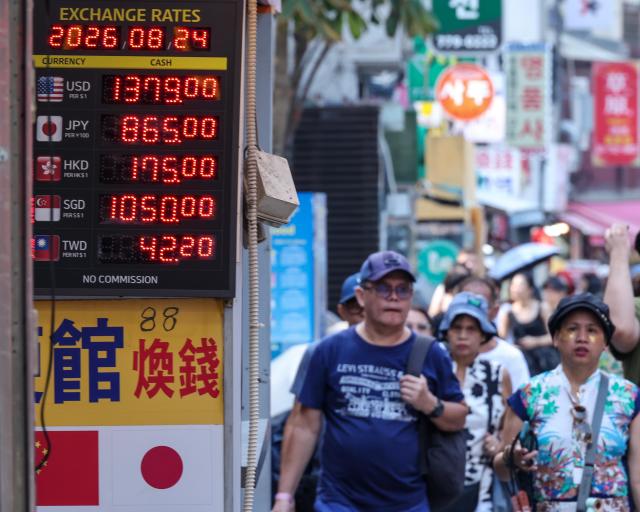
By midday, the KOSPI was up about 0.8 percent at 6,863, paring an earlier gain of more than 2 percent after the rate decision. The Korean won strengthened 5.8 won from the previous session to around 1,379 per dollar.
Longer-dated government bond yields rose on the BOK's hawkish tone. The 10-year yield added 1.4 basis points to 4.302 percent, while the 20-year yield climbed 1.5 basis points to 4.557 percent.
Headline consumer inflation forecasts were unchanged at 2.7 percent for this year and 2.3 percent for next year.
Consumer inflation slowed to 2.8 percent in July as increases in petroleum and agricultural prices moderated, but core inflation excluding food and energy accelerated to 2.6 percent as personal-service and durable-goods prices rose faster.
Short-term inflation expectations among consumers remained in the upper 2 percent range.
The central bank expects accumulated cost pressures to continue feeding through to prices, while improving income conditions gradually strengthen demand-side pressure.
It identified oil prices, exchange-rate movements, the pace of domestic-demand recovery and the extent of wage increases as major uncertainties surrounding the inflation outlook.
Financial-stability concerns also strengthened the case for another hike. The BOK said housing prices in Seoul and surrounding areas continued to rise rapidly and household lending increased substantially.
Seoul home prices rose 1.1 percent in July from the previous month, while prices across the broader capital region gained 0.7 percent. Bank household lending increased by 5.4 trillion won during the month, including a 3.4 trillion won rise in mortgage lending.
The decision came against widespread expectations for a pause in the domestic bond market. A Korea Financial Investment Association survey released ahead of the meeting showed 79 percent of respondents expected the BOK to hold the rate.
South Korea's benchmark rate had remained at 2.50 percent from May last year until the BOK raised it by 25 basis points to 2.75 percent in July, its first increase since January 2023.
The two consecutive hikes have reversed half of the 100 basis points of easing delivered between October 2024 and May 2025, when the BOK lowered the base rate from 3.50 percent to 2.50 percent.
The global backdrop remains complicated. The BOK said the world economy continues to grow moderately despite persistent Middle East tensions, supported in part by robust AI investment, while inflation is likely to remain elevated for some time because of higher energy prices.
It also cited uncertainty over U.S. monetary policy and the Middle East, rising concerns over fiscal soundness in major economies and higher long-term bond yields. The U.S. dollar has weakened even as global equities broadly advanced on solid corporate earnings.
The BOK said its policy focus will remain on bringing inflation back toward target over the medium term while guarding against financial instability.
Further moves will depend on the path of inflation and growth as well as housing prices, household debt and other financial-stability risks.
AJP Takeaways
- The BOK raised the benchmark rate to 3.00 percent in a 6-1 decision, delivering a second straight increase as it moved preemptively against persistent inflation pressure.
- The six-month rate outlook turned sharply more hawkish, with 16 of 21 probability-weighted dots pointing above the current 3.00 percent rate.
- Growth forecasts were raised sharply to 3.3 percent for 2026 and 2.9 percent for 2027, reflecting stronger semiconductor exports, investment and recovering consumption.
- Headline inflation forecasts were unchanged, but core inflation was revised higher, while rising Seoul home prices and household debt reinforced the case for continued tightening.
Copyright ⓒ Aju Press All rights reserved.
