HWASEONG, August 27 (AJP) - At Lotte Department Store in Dongtan, a saleswoman sizing up a customer offers a pitch that would sound peculiar almost anywhere else.
"Your husband makes a lot of money this time. You can afford to treat yourself," she coos.
There is no need to specify who the husband works for.
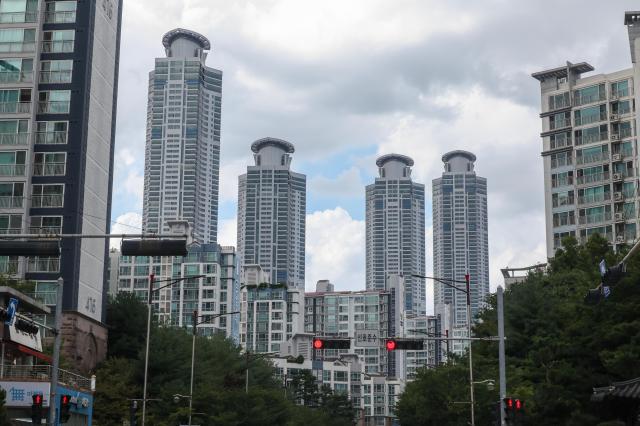
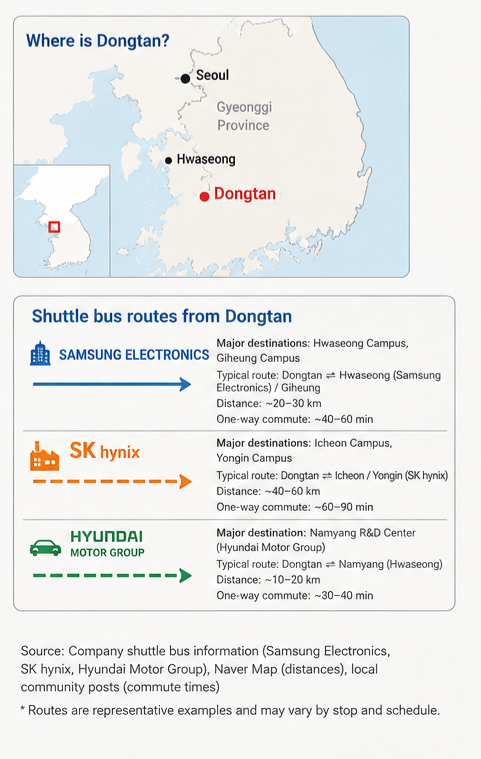
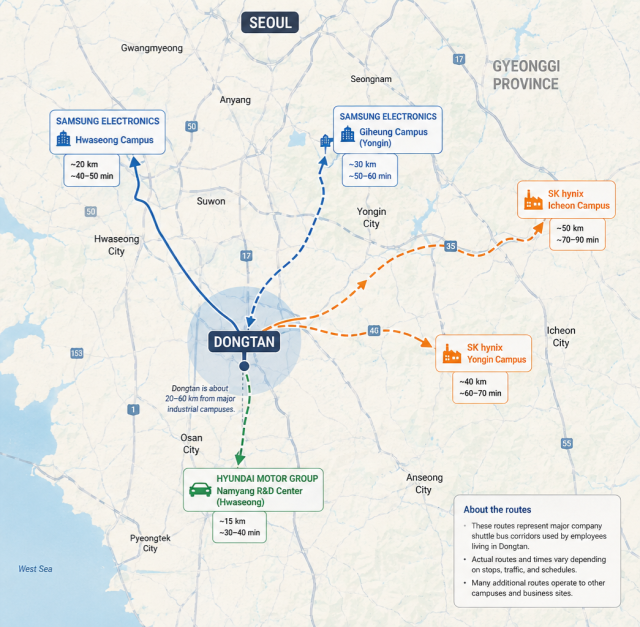
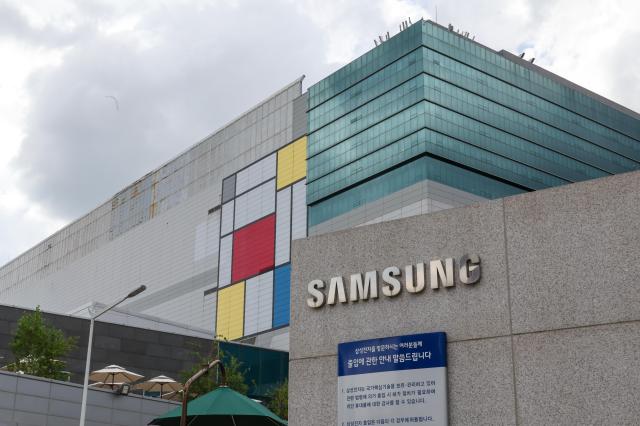
Dongtan sits inside South Korea's semiconductor heartland, within commuting distance of Samsung Electronics' chip operations in Hwaseong and Giheung as well as SK hynix Icheon connected by company shuttle buses to the country's increasingly prosperous cleanroom class.
After an extraordinary run in artificial intelligence-driven memory demand, Samsung Electronics and SK hynix workers are receiving bonuses that would have sounded fantastical barely two years ago.
SK hynix is doling out packages worth as much as 700 million won ($507,000) in cash and shares, while Samsung has promised semiconductor employees packages worth around 600 million won, mostly in stock. Some workers outside the chip divisions receive only a fraction of that.
The money is certainly going somewhere.
It is showing up in record apartment prices, imported cars, foreign-brand watches and jewelry, and families squeezing two overseas vacations into one summer break.
What is harder to find is the boom on Dongtan's Main Street.
Café owners say business remains grim. An optician says sales have actually fallen. Private academies have not seen parents suddenly double their spending. A local travel agency says the bonus bonanza has barely registered.
Dongtan offers a close-up view of a peculiar wealth effect taking shape around Korea's semiconductor boom: when the windfall becomes large enough, workers stop treating it like extra salary and start treating it like capital.
The result is an enclave getting richer without necessarily making the neighborhood around it richer.
Samsung Electronics and SK hynix are expected to generate roughly 650 trillion won in combined operating profit this year, an extraordinary sum equivalent to nearly a quarter of South Korea's 2025 nominal gross domestic product of 2,676.7 trillion won.
Their earnings, share prices and employee bonuses have dominated financial headlines for much of the year. For Korean retail traders, the two names have alternately represented heaven and hell as their shares swung wildly.
Inside semiconductor communities, however, the newly minted wealth has remained more discreet.
The profligacy is rarely overt. The cleanroom society tends to keep to itself.
Housing prices have been less discreet.
Apartment prices in Dongtan have risen 16.3 percent so far this year, the steepest increase in the country, while rents have climbed 10.9 percent, according to Korea Real Estate Board data.
An analysis of Ministry of Land, Infrastructure and Transport transaction records by Woori Bank's Real Estate Research Lab found that 319 of 494 apartment unit types traded in Dongtan between June and Aug. 25 — 64.6 percent — fetched their highest-ever transaction price during the period.
That was the highest proportion anywhere in Gyeonggi Province.
Some jumps have been startling.
A 97-square-meter apartment at The Sharp Central City in Cheonggye-dong sold for 2.16 billion won, 500 million won above its previous record. A 128-square-meter unit at Dongtan Station Demonstration Hanwha Dream & Green Prestige changed hands for 2.4 billion won, exceeding its previous peak by 420 million won.
For some Samsung employees, property prices have been rising faster than their bonuses can catch them.
"After receiving the bonus, I started looking into moving to Dongtan," said Hwang, an employee in Samsung Electronics' Device Solutions division. "But prices rose so much in the meantime that now I can't even dream of moving there."
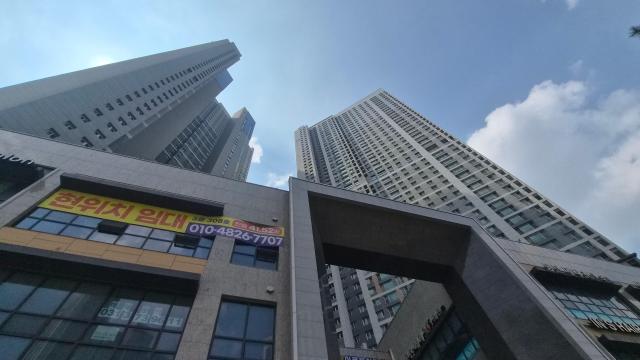
Even within Dongtan, the boom has picked favorites.
The planned city south of Seoul is divided broadly between the older Dongtan 1 district and newer Dongtan 2, where newer apartments, transport connections and proximity to semiconductor workplaces have made property especially attractive.
A real estate agent in Dongtan 1 said Samsung employees are everywhere in the neighborhood. Their money is not.
"We don't really feel it here," the agent said. "Apartment prices have gone up, but Dongtan 2 has risen much more."
The distinction captures something important about semiconductor wealth: it concentrates.
Seo Jeong-ryeol, a professor of real estate studies at Youngsan University, said employees receiving large payouts are unlikely to scatter their money indiscriminately across nearby housing markets.
They seek some combination of commuting convenience, residential quality and investment potential.
"If conditions are similar, people inevitably prefer places with the best residential environment or the highest investment value," Seo said.
Inside what he calls the "shuttle-bus sphere" of Samsung Electronics and SK hynix, the best-positioned homes therefore benefit first.
"People don't buy a house somewhere random just because a big company or SK hynix is making money," Seo said. "The priorities become proximity to work and apartments with investment value."
Another stream of money arrives Sept. 1.
Samsung Electronics plans to offer eligible employees who do not own homes loans of up to 500 million won at an annual interest rate of 1.5 percent.
In the Seoul metropolitan area, the program is expected to cover homes priced at 2.5 billion won or below with residential space of up to 85 square meters.
The anticipation is already producing behavior usually associated with a rapidly rising property market.
Kim, a Dongtan resident, had agreed to move into an apartment when the owner abruptly walked away from the deal.
"The landlord didn't say anything and just sent back twice the deposit," she said. "I think the owner believed they could get a higher price."
Under a common Korean property-contract practice, a seller can cancel after returning twice the buyer's deposit.
Seo said owners become willing to absorb the penalty when they think the property will appreciate by even more.
"If they are paying double the deposit to cancel, it means they believe there is a good chance the price will rise further," he said.
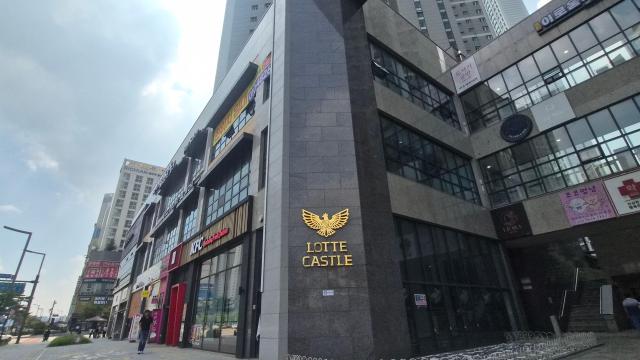
Local merchants had expected a bumper year after news spread of semiconductor employees collecting record performance bonuses.
Instead, some are wondering where everybody took the money.
"People ask whether the local economy has improved, but it hasn't," said an optician who has worked in the area and serves many employees of large companies. "Bonuses were paid out, but sales haven't increased. They've actually decreased."
From what the optician sees, younger workers would rather own another stock than another pair of glasses.
"From what we see, they invest a lot in stocks," the optician said, adding that property is another favored destination.
A café owner had made the same assumption many merchants did when Samsung's earnings began surging.
"I have to admit we expected to share the windfall," she said. "I thought that if Samsung was paying out bonuses, there would be more economic activity."
The customers never quite arrived.
In earlier boom periods, large company orders for snacks or other supplies would occasionally spill into neighborhood businesses, she said. This time, merchants around her complain that conditions remain unusually difficult.
Her own spending priorities help explain why.
"If I suddenly had a large sum of money, I would move house or pay down some debt," she said. "Shopping isn't something that leaves you with anything."
Shopping does become attractive when the purchase is big enough.
Lotte Department Store's Dongtan branch recorded a 25 percent increase in sales in the first half from a year earlier, beating growth of roughly 20 percent across Lotte's department-store network.
Sales of luxury goods and foreign-brand watches and jewelry at the Dongtan store jumped roughly 40 percent to 45 percent.
The pattern suggests semiconductor money is bypassing routine purchases and concentrating instead on things substantial enough to feel like rewards.
Cars fit the pattern.
New registrations of imported vehicles in Hwaseong, which includes Dongtan and Samsung Electronics' Hwaseong semiconductor campus, surged 42.5 percent to 4,273 in the first half from 2,998 a year earlier, according to the Korea Automobile Importers & Distributors Association.
Imported-car registrations nationwide rose 33.2 percent during the same period.
The numbers do not establish that Samsung bonuses are buying BMWs and Mercedes-Benzes. Some Samsung workers, however, say the payouts have made previously postponed purchases easier to contemplate.
"I've wanted to replace my car for a while," said Lee, a Samsung Electronics employee. "I'm thinking this might be the chance, so I've been looking at different models."
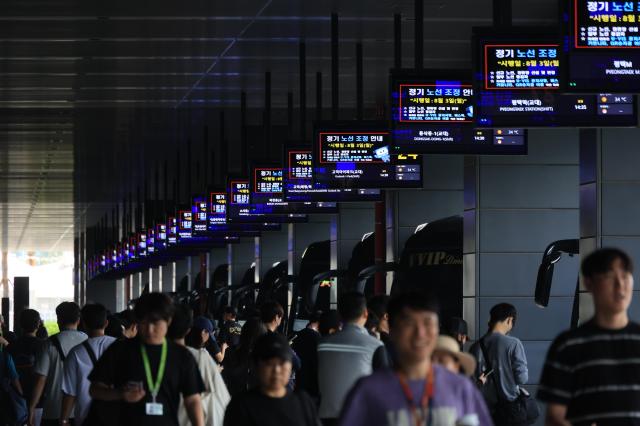
Travel money is harder to trace.
A Dongtan travel agency has seen little obvious bonus-related surge, an employee said, partly because workers at large corporations often book through company-affiliated benefit platforms offering employee discounts.
"There are separate travel agencies linked to their companies," the employee said. "Even for the same travel product, they tend to book through those channels to get employee discounts."
"Sales haven't increased enough for us to really feel it."
Younger workers are even harder for neighborhood agencies to capture because they book flights and hotels themselves through mobile apps.
The money may be going abroad. It simply does not stop at the local travel agent first.
One educator noticed the departures.
Yoo, who works with school-age children in Dongtan, said this summer produced an unusual number of absences as families took repeated trips.
"In the past, families would go abroad for three or four days during vacation and that was it," Yoo said. "This time, they keep going."
Some squeezed multiple domestic and overseas trips into the relatively short summer break.
"They went to Vietnam, and then they would say they had to go to Japan too — two trips," she said.
The same families were not suddenly spending twice as much on education.

Lee Eun-hee, professor emeritus of consumer science at Inha University, said performance bonuses occupy a different mental account from monthly salaries.
Education is already considered a priority expense for many Korean households. A large unexpected payment therefore does not necessarily persuade parents to add another private tutor or move their children to a more expensive academy.
The bonus instead creates an opportunity to do something ordinary income could not easily finance.
"When money that wasn't expected suddenly comes in, people may think about upgrading their home," Lee said. "That means adding to their assets."
Savings and asset accumulation are likely to absorb a substantial portion, she said, with another share going toward expensive wants households have postponed.
"Travel, luxury goods and imported cars — things they wanted to do but couldn't normally do," Lee said.
Yang Joon-mo, professor of economics at Yonsei University, puts the matter more simply.
"People there aren't going to eat two dinners," Yang said. "Children who already attend academies aren't suddenly going to pay twice the tuition."
Once a bonus reaches hundreds of millions of won, he said, it stops behaving like spending money.
"If someone receives, say, 600 million won, the question becomes whether they buy a home in Dongtan or add that money and move to Gangnam," Yang said. "The money flows according to a completely different logic."
Korea has seen versions of the pattern before.
Yang said windfalls created during previous export booms often migrated from the places where the money was earned toward higher-value property and financial assets elsewhere.
"When someone suddenly comes into a large amount of money, the concept changes to asset investment," he said.
The semiconductor enclave may prefer to keep its newfound riches to itself.
But Dongtan's soaring apartment prices, crowded airport itineraries and department-store sales counters are making that increasingly difficult.
AJP Takeaways
• South Korea's AI-driven semiconductor boom is creating a concentrated wealth effect in Dongtan, where Samsung Electronics and SK hynix employees are channeling record bonuses into housing, stocks and other assets.
• Dongtan apartment prices have surged 16.3 percent in 2026, while nearly two-thirds of apartment types traded from June through Aug. 25 set record prices, highlighting how chip wealth is feeding property demand.
• Luxury goods and imported cars are benefiting more than neighborhood businesses, with Dongtan department-store luxury sales up roughly 40 percent to 45 percent even as cafés, opticians and travel agencies report little improvement.
• Economists say exceptionally large semiconductor bonuses behave more like investment capital than ordinary income, helping explain why Korea's chip windfall is lifting asset values without producing an equally broad Main Street spending boom.

Copyright ⓒ Aju Press All rights reserved.