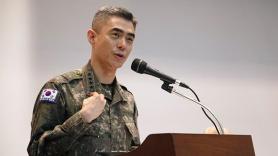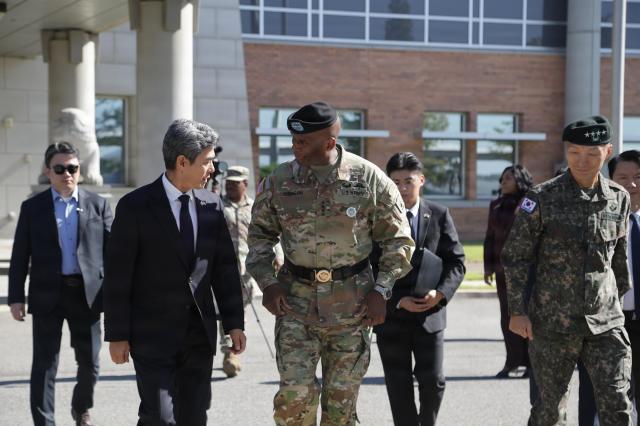
Gen. Xavier Brunson, commander of U.S. Forces Korea (USFK), argued Wednesday in Washington that changes in the security environment and military planning require updated standards for the handover.
“Because the conditions have changed, because we’ve changed our plan, we have new standards which we have to uphold,” Brunson said at an Indo-Pacific security forum hosted by the Gold Institute for International Strategy.
Brunson described himself as a supporter of the transfer but stressed that it should depend on military capabilities rather than a political timetable.
His remarks came as Seoul seeks to complete the transfer before President Lee Jae Myung’s term ends in 2030.
Seoul remains firm to the original timetable.
The defense ministry reaffirmed Thursday that the process should follow the conditions and evaluation criteria previously agreed upon by the allies.
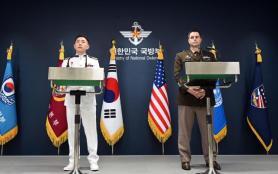
“If the goalposts keep moving, I think the transfer can never happen,” ministry spokesperson Jeong Bit-na said at a regular briefing, emphasizing that this was her personal opinion rather than the ministry’s official position.
She said the South Korean military had spent the past 20 years working to meet the agreed conditions.
The ministry’s official position remains that the transfer will proceed once those conditions are met, she said. The allies are continuing close consultations under the existing transition plan.
Brunson cited North Korea’s recent missile launches as evidence of the changing security environment.
Pyongyang has conducted missile tests on three occasions this month. It test-fired an intermediate-range hypersonic ballistic missile on Oct. 3, followed by multiple ballistic missile launches on Oct. 12, with at least one traveling more than 900 kilometers. On Oct. 14, it tested two types of submarine-launched strategic cruise missiles in the East Sea.
The launches followed a Sept. 21 land mine explosion inside the Demilitarized Zone that injured three South Korean soldiers. South Korea’s military concluded on Oct. 5 that North Korean troops had deliberately planted antipersonnel mines south of the Military Demarcation Line. Pyongyang has denied responsibility.
The dispute centers on how such developments should affect the handover process. Neither side has formally announced changes to the jointly agreed criteria, and Brunson did not specify which standards had changed or whether they would require a revision of the agreement.
“The recent differences appear to reflect a more fundamental gap in how the two sides approach the OPCON transfer, rather than simply whether the conditions have been met,” said Jung Kyeong-woon, a research fellow at the Korea Association of Military Studies.
The researcher suggested that Seoul’s push to complete the transfer within the current administration could be creating friction over whether additional requirements should enter the evaluation process.
Under the Conditions-based OPCON Transition Plan agreed upon in 2015, the handover depends on three broad requirements: South Korea’s ability to lead combined defense operations, the alliance’s capability to counter North Korea’s nuclear and missile threats, and a security environment conducive to a stable transition.
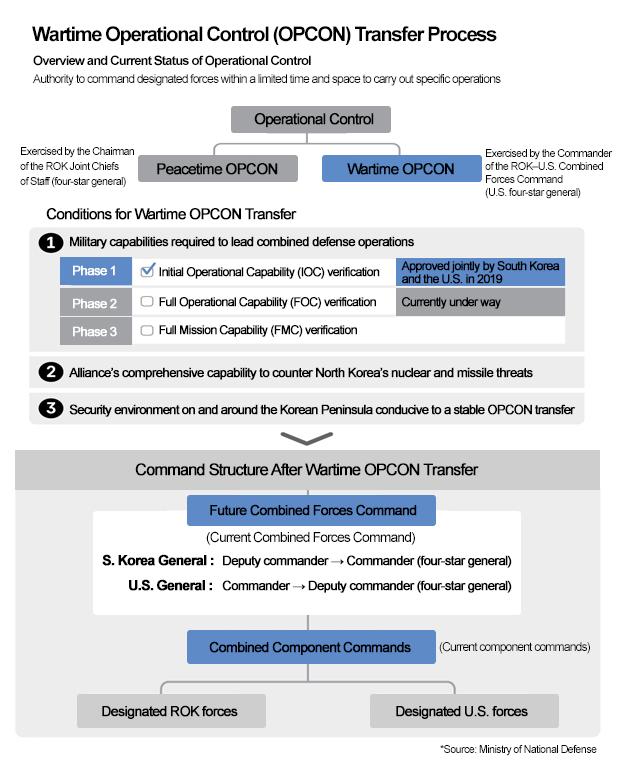
The process is in the second stage. Seoul aims to complete Full Operational Capability verification this year and propose a target year for the transfer, although differing assessments of military readiness could complicate that timetable.
The ministry spokesperson said Seoul would seek to resolve outstanding differences through bilateral consultations based on the existing conditions and evaluation criteria ahead of the annual Security Consultative Meeting.
The meeting, normally held in late October or early November, is reportedly being considered for December. A date has not been finalized.
The latest exchanges contrast with Defense Minister Kang Shin-chul’s remarks to lawmakers on Oct. 7 that the allies had no significant differences over the transfer.
Both sides continue to endorse a conditions-based handover. The unresolved question is whether the conditions Seoul has been working toward will remain the benchmark as the security environment changes.

Copyright ⓒ Aju Press All rights reserved.