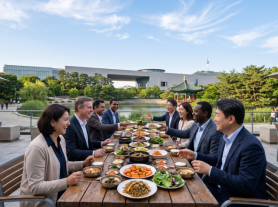
SEOUL, December 24 (AJP) - Heavy is the head that wears the crown, and nowhere is that crown greasier, spicier or more relentlessly filmed than in South Korea's food universe.
Once again this year, the surprise breakout star from Korea's global content pipeline is not a pop idol or a prestige drama, but food — turbocharged by its cameo-laden role in Netflix's most-watched-ever series, "KPOP Demon Hunters," and freshly canonized as culture by the Wall Street Journal, which named Korean cup noodles among its "objects that defined 2025."
K-food, having conquered the world, now faces the more perilous task: staying interesting.
Korea, after all, invented mukbang — the performance art of eating too much, too loudly, and preferably on camera. The country learned early that food no longer just needs to taste good. It needs to perform. Today, food companies don't merely test recipes; they beta-test reactions, scroll-stopping potential and how a dish behaves under a ring light.
Across Instagram, TikTok and YouTube, mukbang creators have become food directors, staging meals less for flavor than for visual payoff: the slurp, the stretch, the snap, the slow reveal. The most successful dishes don't whisper comfort. They demand attention.
Take one of this year's most improbable hits: buldak ramen meets seaweed soup. On paper, it sounds like culinary couples therapy — the volcanic heat of buldak sauce softened by miyeokguk, a mild, briny soup traditionally eaten by postpartum mothers. On screen, it works because contrast always does. Fire meets calm. Chaos meets nurture. Add the choreography — noodles lifted high, slurped whole, never cut — and suddenly the dish feels less like dinner and more like a suspense sequence.
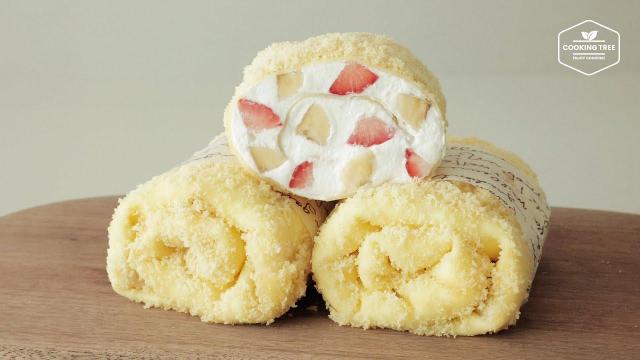
Enter the towel cake: a crepe cake folded and rolled to resemble a freshly laundered towel. The dessert, which originated in China, went viral not because of taste — cream and crepes rarely shock — but because of the reveal. The unfolding. The moment of disbelief when fabric turns edible. In Korea, convenience stores like CU and GS25 democratized the trend, while home bakers turned the cake into social-media origami.
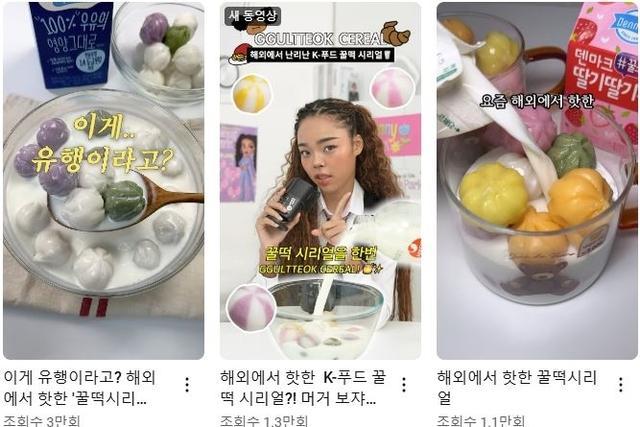
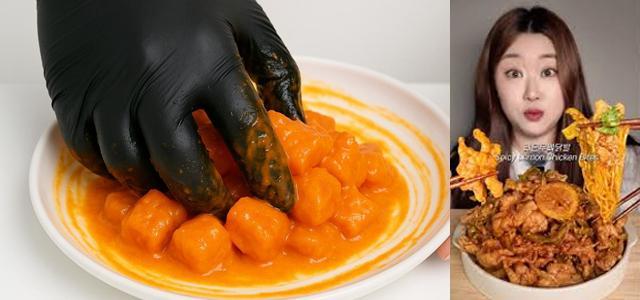
Salmon kkakdugi swaps fermented radish for raw, cubed salmon, tossed in spicy, creamy dressing and often wrapped in gim. It is kimchi's cousin who studied abroad and came back wearing athleisure. Lemon boneless chicken feet take a bar-snack staple and splash it with citrus, earning reviews like "tteokbokki with a lemon highball" — a phrase that could only exist in 2025.
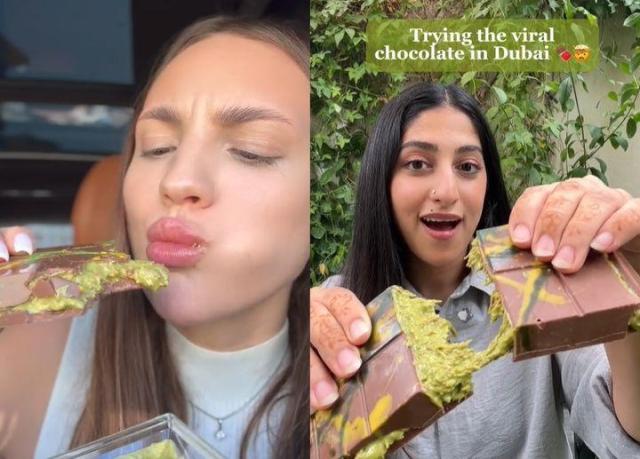
This visual arms race coincides with a broader explosion of food-centered storytelling. Competitive cooking shows like "Culinary Class Wars," now in its second season, frame technique and plating as a gladiatorial sport. Scripted dramas such as" Bon Appétit, Your Majesty" deploy food as a narrative device, lingering lovingly on close-ups that echo mukbang's sensory appeal.
"It relates to what is often described as autonomous sensory meridian response," said Lee Seul-ki, a director at the Tourism Industry Data Analytics Lab. Watching someone eat, he explained, taps into something primal. Comfort by proxy. Pleasure without calories.
In 2025, many of Korea's most talked-about foods were consumed more through screens than at tables. The question is no longer whether a dish is delicious, authentic or even sensible.
The question is simpler — and stranger:
Does it stop the scroll?
And if it makes you slightly uncomfortable while doing so, all the better.

Copyright ⓒ Aju Press All rights reserved.